
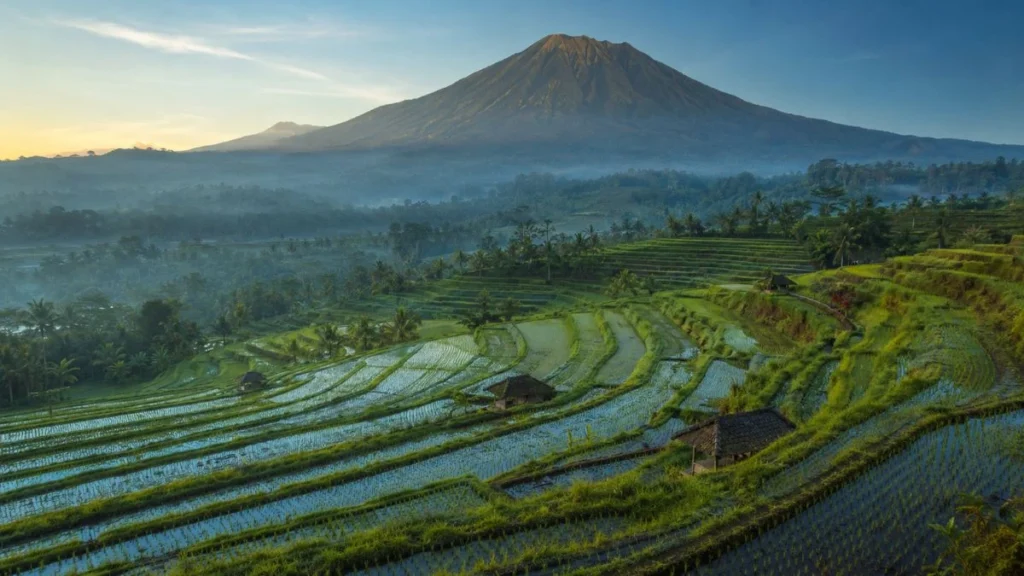
Belimbing rice terrace sits at the foot of Mount Batukaru in West Bali’s Tabanan Regency, and it’s the kind of place that comes up again and again when travelers and guides talk honestly about where Tegalalang and even Jatiluwih have gone in recent years — more restaurants, more construction cranes, more of a managed tourist product than a working landscape. Belimbing is what those two places used to feel like: no entrance gate, no swing park, no souvenir strip, just genuinely vast terraced rice fields worked by the people who actually live there.
This is a longer drive than most Ubud day-trip content, and worth being upfront about that before you commit. But if the 2026 shift toward slower, less-crowded travel in Bali is what you’re actually looking for, Belimbing is one of the clearest examples of it still existing.
Quick Facts
- Location: Belimbing village, Tabanan Regency, West Bali, roughly 600 metres elevation on the slopes of Mount Batukaru
- Distance from Ubud: roughly 1.5–2 hours by car or motorbike
- Entrance fee: no formal ticketed entrance like Jatiluwih; a small guide fee or informal contribution is standard if you engage a local guide
- Getting there: no public transport runs directly to the village — self-drive by scooter (rental from IDR 50,000/day) or hire a private driver (from IDR 500,000/day)
- What’s genuinely different here: water channels run visibly through and down the terraces, distinct from the drier, flatter look of Jatiluwih’s UNESCO-listed fields
Why Belimbing Rice Terrace Feels Different From Tegalalang or Jatiluwih
The comparison to Bali’s more famous rice terraces comes up in nearly every account of this stretch of Tabanan, and it’s not exaggeration. Tegalalang, just outside Ubud, has become dense with cafes, swings, and restaurants stretched along the viewing path — genuinely beautiful, but unmistakably a managed tourist product at this point. Jatiluwih, while still more open and less commercial than Tegalalang, has its own ticketed entrance, marked trekking routes, and a steady flow of tour groups. Belimbing has none of that infrastructure. What you get instead is trekking paths that wind directly through working terraces, water audibly running down through the paddies via the same centuries-old Subak irrigation system that defines rice farming across the island, and villagers going about actual daily work rather than posing for it.
There are no cafes or souvenir shops built into the visitor experience here — a genuine trade-off. You’re not getting a curated Instagram backdrop; you’re getting a rural West Bali village that happens to have spectacular rice terrace views, largely because it hasn’t been developed around tourism the way its more famous counterparts have.
What There Is to Actually Do
Trekking is the main activity, and the terrain here rewards it — trails wind through the rice fields themselves, along irrigation channels, and up to several vantage points with clear views of Mount Batukaru looming over the valley. Beyond the rice terraces, Belimbing sits within genuinely productive agricultural land: coffee, cacao, cloves, durian, mangosteen, and rambutan plantations surround the village, and a guided walk often includes stops to see how these crops are actually grown and processed, rather than the staged plantation-tour format found closer to Ubud. The area also has several waterfalls tucked into the surrounding forest, along with a temple known locally for resident monkeys — hiring a local guide is genuinely worth it here, both for orientation on unmarked paths and for safely navigating the temple’s monkey population.
Should You Actually Make the Trip?
Be honest with yourself about the time commitment: 1.5 to 2 hours each way from Ubud means this isn’t a quick add-on to another day’s itinerary the way Tegalalang can be. Most people who visit Belimbing build it into a fuller West Bali day, sometimes combined with nearby Soka or Antasori’s rice terraces, the Pupuan cacao and coffee growing area further along the same route, or West Bali’s coastline. A private driver for the day is worth the cost given the distance and the lack of public transport — it also means you’re not navigating unfamiliar rural roads solo after a full day of trekking.
If your Bali trip is short and centered on Ubud, Belimbing is a genuine stretch. If you’ve got the time, or you’re specifically chasing the “quieter, more authentic” version of Bali that’s become the defining 2026 travel trend, it delivers on that in a way few remaining rice terrace destinations still can.
FAQ
How far is Belimbing from Ubud?
Roughly 1.5 to 2 hours by car or motorbike, in Tabanan Regency on Bali’s western side.
Is there an entrance fee?
No formal ticketed entrance like Jatiluwih. A small fee or contribution to a local guide is the standard way to support the village if you engage one, which is recommended for orientation on the trekking paths.
How is Belimbing different from Jatiluwih or Tegalalang?
Belimbing has no cafes, swings, or souvenir infrastructure, and its terraces feature visibly flowing water channels rather than the drier look of Jatiluwih. It’s a working village landscape rather than a managed tourist attraction.
Do I need a guide to visit Belimbing?
Not strictly required, but genuinely useful — trekking paths aren’t well marked, and a local guide can point out plantation crops, waterfalls, and help navigate the nearby temple’s monkey population safely.
Can I visit Belimbing as a quick day trip from Ubud?
It’s possible but rushed, given the 1.5–2 hour drive each way. Most visitors combine it with other West Bali stops — Soka, Antasori, or Pupuan — to make the distance worthwhile.
Final Thought
Belimbing rice terrace is what the “beyond Tegalalang” search is actually looking for — not a marginally quieter version of the same tourist infrastructure, but a genuinely undeveloped working landscape that takes real effort to reach. If that trade-off appeals to you more than convenience, it’s one of the clearest examples left of what Bali’s rice terraces looked like before they became a circuit. For the more accessible comparison closer to Ubud, our Tegalalang Rice Terrace guide and Jatiluwih vs Tegalalang guide cover the more accessible options.