
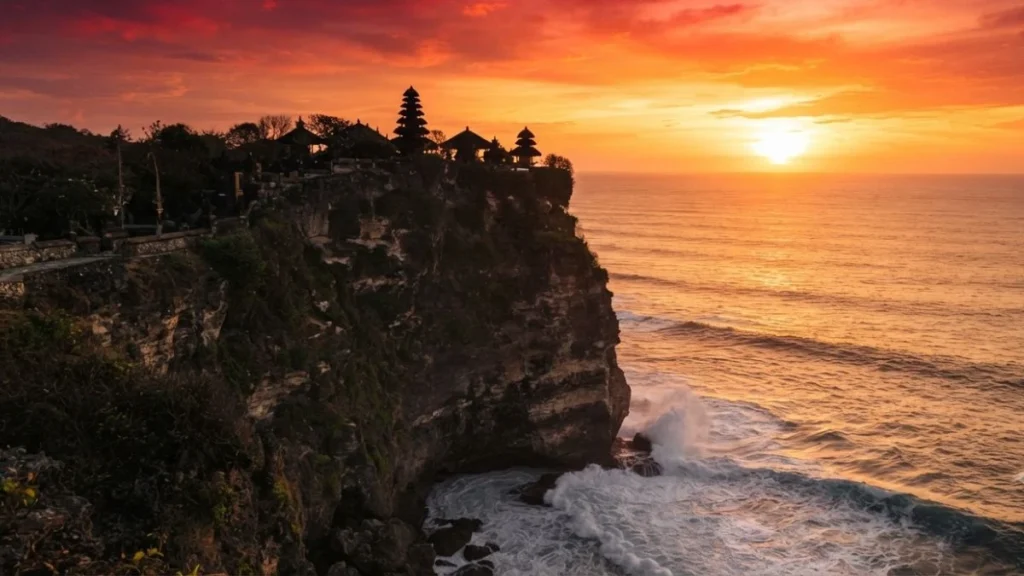
Uluwatu Temple sits on a genuinely dramatic 70-metre limestone cliff on Bali’s southern Bukit Peninsula, and unlike some of the island’s more commercialized sacred sites, it mostly earns its reputation without much asterisk attached — the ocean views are real, the sunset Kecak fire dance is one of the few “must-see” cultural performances that consistently lives up to its billing, and the monkeys are exactly as bold as everyone warns you about. This guide covers the practical details, including a genuine pricing inconsistency worth knowing about, and how to actually enjoy the cliff walk without losing your sunglasses to a macaque.
Quick Facts
- Location: Pecatu village, Bukit Peninsula, South Kuta, roughly 1.5–2 hours from Ubud
- Temple entrance fee: reported inconsistently across sources, roughly IDR 50,000–60,000 for adults, IDR 30,000–40,000 for children — confirm current pricing at the gate
- Kecak Fire Dance ticket: a separate charge, roughly IDR 150,000 per person, cash only at the venue (though some tours allow online booking)
- Hours: 7am–7pm daily; the Kecak dance typically runs around 6pm, with a possible second 7pm show added during peak season
- Watch your belongings: resident long-tailed macaques are well known for grabbing sunglasses, phones, hats, and food
The Cliff Walk Itself
Even without the evening performance, Uluwatu is worth the drive for the clifftop walk alone — paved paths trace the edge of the limestone cliff with wide, uninterrupted views of the Indian Ocean below, considered among the most dramatic coastal scenery on the Bukit Peninsula. The temple’s inner sanctum, like most active Balinese temples, is reserved for worshippers, but the surrounding grounds and courtyards are open to all visitors, with traditional gates and shrine architecture worth taking in even if you’re not staying for sunset. Most people spend 45 minutes to an hour just walking the cliff paths before the Kecak show, longer if you’re taking photos at every viewpoint.
The Kecak Fire Dance: Worth the Hype
If there’s one sunset cultural performance in Bali that consistently gets genuine, unprompted praise rather than lukewarm “it was fine” reviews, it’s this one. The Kecak dance tells the Ramayana story through a “human orchestra” of 50 to 100 chanting men — no instruments, just rhythmic vocal chanting — building to a fire dance finale as the sun sets behind the ocean. It runs about an hour, typically starting around 6pm, in a 1,200-seat open-air amphitheater carved into the cliffside setting.
Seating isn’t assigned, and tickets frequently sell out by 5pm during peak season, so arriving by 4:30–5pm matters if you want a decent seat, not just a good view. Middle and upper-tier seats give you the best combined view of the performers and the sunset behind them; front rows put you closer to the fire dance finale’s heat and smoke but without back support, and shorter visitors may find standing guests blocking sightlines. Rainy season (November–March) regularly forces cancellations or venue relocations, so if you’re visiting during those months and the Kecak show is a priority, build in flexibility rather than counting on a fixed date.
The Pricing Confusion, Honestly Explained
Worth flagging directly: reported Uluwatu entrance prices vary more than you’d expect for an official government-run site, with different sources over the same general period citing IDR 50,000, 60,000, or other figures for adult entrance, alongside inconsistent child pricing. This isn’t necessarily a scam pattern the way some other Bali temples have — it more likely reflects genuine periodic price adjustments combined with outdated articles still circulating online. Treat any online price as an estimate and confirm the actual current rate at the ticket booth, which is cash-only regardless of the exact figure. The Kecak dance ticket is a separate, additional cost from general temple entrance either way — don’t assume one covers the other.
Managing the Monkeys
This part of Uluwatu’s reputation is entirely accurate: the resident macaque troops here are experienced, opportunistic, and specifically known for snatching sunglasses, hats, phones, and food from visitors who aren’t paying attention. Multiple independent sources give the same core advice — secure loose items before you start walking, don’t carry food or drinks visibly, and if a monkey does grab something, don’t chase it or try to take it back yourself. Notify temple staff, who are experienced at negotiating (sometimes literally trading a snack for the item) to get things returned. Reviews specifically praising a guide’s ability to navigate the monkeys calmly come up often enough that a local guide, even just for this part of the visit, can genuinely reduce stress if you’re visiting with kids or carrying valuable gear like a camera.
Dress Code and Practical Tips
As with any active Balinese temple, shoulders and knees should be covered — a sarong and yellow sash are provided free at the entrance if you’re not already dressed appropriately, the sash specifically symbolizing the setting aside of worldly desires before entering sacred ground. Bring water, sunscreen, and a hat, since the clifftop paths are largely unshaded and the afternoon sun is intense even close to sunset. There are no vendors past the parking area, so pick up any snacks or drinks before you head in rather than assuming you’ll find something along the cliff walk.
Getting There and Timing Your Day
Traffic on the Bukit Peninsula gets genuinely congested after 5pm as everyone converges on Uluwatu for sunset, and the roughly 22 km route back toward Kuta or Seminyak can turn into a lengthy crawl if you’re leaving right after the Kecak show ends. Arriving by 4–4:30pm gives you time to walk the cliffs, secure Kecak tickets, and settle into a seat before the crowd peaks, while also getting you ahead of the worst of the return traffic if you choose to leave slightly before the absolute end of the show.
FAQ
How much does it cost to enter Uluwatu Temple?
Reported prices vary, roughly IDR 50,000–60,000 for adults and IDR 30,000–40,000 for children. Confirm the current rate at the ticket booth, which is cash-only. The Kecak Fire Dance is a separate ticket, roughly IDR 150,000 per person.
Do monkeys actually steal things at Uluwatu?
Yes, consistently and reliably. Secure sunglasses, phones, hats, and food before walking the cliff paths. If something is taken, notify temple staff rather than chasing the monkey yourself.
Is the Kecak Fire Dance worth watching?
Widely considered one of Bali’s most consistently impressive cultural performances — genuine praise rather than tourist-trap reviews. Arrive by 4:30–5pm for good seating, since tickets often sell out and seating isn’t assigned.
What should I wear to Uluwatu Temple?
Clothing covering shoulders and knees, as with any active Balinese temple. A sarong and sash are provided free at the entrance if needed.
Does rain affect the Kecak Dance schedule?
Yes. Rainy season (November–March) regularly causes cancellations or venue relocations for the outdoor performance. Build in flexibility if visiting during these months.
Final Thought
Uluwatu Temple is one of the rarer Bali attractions that delivers close to exactly what the marketing promises — dramatic cliffs, a genuinely impressive sunset performance, and yes, some cheeky monkeys along the way. Secure your belongings, arrive early for the Kecak show, and confirm current pricing at the gate rather than trusting an old blog post. For more of Bali’s iconic sea temples, our Tanah Lot Temple guide covers the island’s other major sunset temple, and our Ubud Monkey Forest guide has more on staying safe around Bali’s resident macaques.