
Bali food guide local eating: Balinese cuisine is spice paste cooking at its foundation — every significant dish begins with a freshly ground basa gede (great spice paste) made from shallots, garlic, galangal, turmeric, lemongrass, and candlenut. Understanding this one fact changes how you experience every meal on the island, from a IDR 30,000 nasi campur at a warung to a IDR 150,000 babi guling at a specialist restaurant.
This bali food guide local eating covers the dishes you need to know, the formats and venues that serve them genuinely versus the ones that serve a tourist-adjusted version, and the specific locations where the food is worth travelling to eat. It is not a restaurant review list. It is a guide to understanding Balinese food culture well enough to find excellent food anywhere on the island rather than depending on a pre-approved list that goes out of date within six months.
The most important practical orientation for this guide: the best food in Bali is not the most expensive food. The IDR 35,000 nasi campur at a family warung made with a stone-ground spice paste is better than the IDR 150,000 nasi campur at a tourist restaurant made with pre-blended paste. The difference is in the spice paste, the freshness of the cooking, and whether the food was made for someone who eats this way every day or for someone who is visiting for a week.
For the specific warung culture of Canggu, the best warung Canggu honest guide covers that area’s food landscape in detail. This guide covers the broader Bali food picture.
The Foundation: Basa Gede and What It Does
Every Balinese meal worth eating begins with basa gede — the great spice paste. The ingredients vary slightly by family and region but consistently include: shallots, garlic, ginger, galangal, turmeric, lemongrass, candlenut (kemiri), dried chilli, fresh chilli, shrimp paste (terasi), and palm sugar.
The paste is made fresh, daily, by grinding each ingredient on a stone grinder (batu giling) in a specific sequence that allows each element to release its oils before the next is added. The result is not interchangeable with a blended paste — the grinding process produces a different texture, a different oil distribution, and a different flavour than a machine blade achieves.
Every time you eat something in Bali that tastes genuinely distinct from the same dish elsewhere — a satay that is more complex than any you have had in Singapore, a fried rice with a depth of flavour that supermarket fried rice kits cannot explain — basa gede is the reason. Understanding it before you arrive makes the food more legible and the differences between establishments more intelligible.
The Dishes Worth Understanding
Nasi Campur — The Daily Meal
Nasi campur (mixed rice) is the format around which most Balinese eating is organised. A mound of white rice with a selection of surrounding dishes — typically a protein, a spiced vegetable dish, sambal, fried tempe or tahu, and a small portion of whatever the warung made that morning.
The version at a genuine warung is assembled from a counter display of dishes that were cooked that morning. The version at a tourist restaurant is often assembled from pre-prepared components that have sat for longer. The warung version is almost always better and costs IDR 30,000–50,000. The restaurant version costs IDR 80,000–150,000.
The specific nasi campur dish that defines the format’s ceiling: Warung Wardani in Denpasar — a family-run counter operation that has been serving the same style of Balinese home-cooking for decades. The drive to Denpasar is worth it for visitors who want to understand what the format can achieve.
Babi Guling — The Ceremonial Roast
Babi guling is spit-roasted suckling pig, traditionally prepared for temple ceremonies and significant occasions. A whole pig is rubbed inside and out with a spice paste made from turmeric, lemongrass, galangal, shrimp paste, and chilli, then slow-roasted over an open fire for several hours. The result: crispy skin, intensely flavoured meat, and a smell that announces a proper babi guling operation from the street.
The critical variable: babi guling must be eaten fresh. A pig roasted at 7am and eaten at 11am is good. The same pig eaten at 3pm is not. Operations that roast fresh daily and close when it is gone are categorically better than those that keep it warm for extended service periods.
Warung Ibu Oka in Ubud is the most famous babi guling operation in Bali and has been so for long enough that its quality has become consistent — you are eating at a professional operation rather than a ceremonial kitchen. The famous market stalls in Denpasar (Men Weti) serve a version closer to the ceremonial original.
Be Tutu — The Slow-Cooked Duck
Be tutu (or bebek betutu) is duck slow-cooked in banana leaves with a complex spice paste that includes a broader range of aromatics than basa gede — adding kencur (sand ginger), base genep (complete spice), and sometimes coconut milk to the rubbing paste. The preparation takes a minimum of eight hours and traditionally overnight. The result is fall-apart duck with a depth of flavour that no quick-cook method replicates.
Finding genuinely slow-cooked be tutu requires asking — the version at restaurants that serve it “fresh daily” without specifying the cooking time is usually a shortened version. The most reliable approach: ask at your accommodation which family-run establishment in the area makes it the traditional way. This question, answered honestly, will lead you to the right place.
Sate Lilit — The Balinese Satay
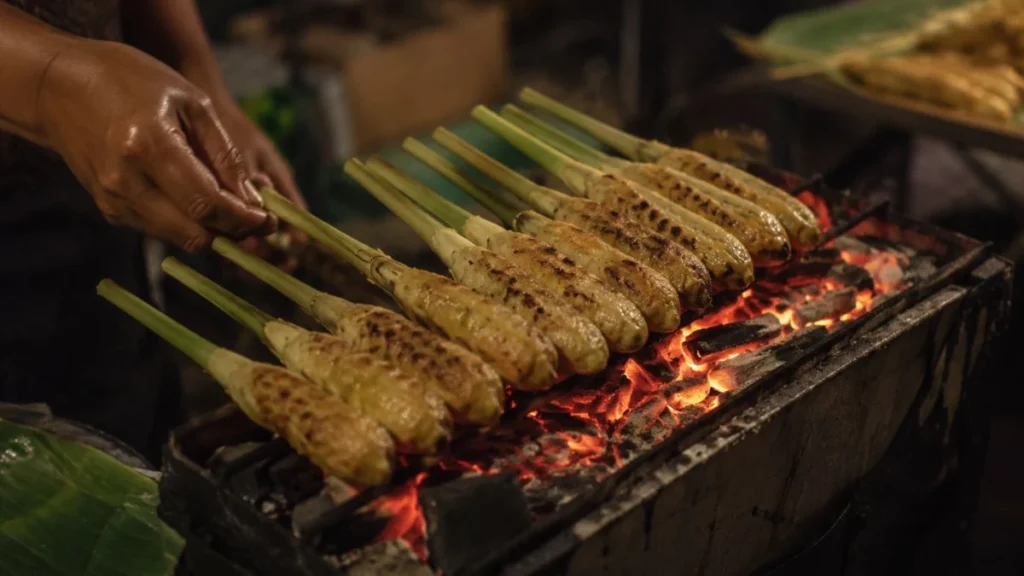
Sate lilit is minced fish, chicken, or pork mixed with grated coconut, coconut milk, shallots, and spices, then moulded around a lemongrass stalk or bamboo skewer and grilled over charcoal. It is distinctly different from the skewered-chunk satay format of other Indonesian regions — the minced meat mixture has a texture and flavour that reflects the coconut and fresh herb additions rather than just the protein itself.
Sate lilit appears at almost every warung and restaurant in Bali. Quality variation is significant — the best version uses fish freshly minced with full spice paste; the worst uses mechanically processed chicken protein with minimal seasoning. The test: if the sate lilit has a pale, uniform colour and no visible herb texture, it was made from pre-processed ingredients. If it is irregular in colour with visible flecks of herb and coconut, it was made from scratch.
Lawar — The Ceremonial Salad
Lawar is a ceremonial dish made from finely chopped vegetables, grated coconut, and minced meat — traditionally pork or chicken, sometimes with the addition of fresh blood (lawar merah). It is seasoned with basa gede and fresh herbs. In ceremonial contexts, lawar is made in large quantities by groups of men working together in the days before a temple ceremony — the communal production is itself a ritual obligation.
The version available at warungs and restaurants is a simplified household version that omits the blood and uses pre-cooked rather than ceremonially fresh meat. It is still good — the coconut and herb balance is characteristic and distinctive. But understanding that what you are eating is a domestic version of a ceremonial dish changes its context.
Jamu — Traditional Herbal Drinks
Jamu is the umbrella term for traditional Indonesian herbal medicine drinks — consumed daily as preventive health practice rather than as a remedy for specific conditions. In Bali, the most common jamu varieties are:
Jamu kunyit asam — turmeric, tamarind, palm sugar. Slightly sour, warming, anti-inflammatory. Loloh cemcem — pressed from Graptophyllum pictum leaves with coconut water and sweetener. Bitter, cooling. Specific to Bali — most distinctively encountered at Penglipuran village. Jamu jahe — ginger-based, warming, stimulating.
Jamu vendors operate from motorcycles and carts in village and market areas early in the morning. The daily jamu routine — buying a small bottle from a passing vendor — is as embedded in Balinese daily life as the canang sari morning placement. It costs IDR 5,000–10,000 per bottle. Trying it from a street vendor rather than a café that serves it as a wellness product is a different experience in every respect.
Where to Eat: The Formats That Matter
The Morning Market
Every Balinese town and village has a morning market that operates from approximately 4am to 9am. The market contains fresh produce, spice ingredients, ready-to-eat food including jajan Bali (traditional Balinese sweets and cakes), and occasionally cooked food stalls serving breakfast.
The Ubud morning market (Pasar Ubud) on Jalan Raya Ubud is the most accessible for visitors — a short walk from any central Ubud accommodation. The market is at its fullest and freshest before 7am. After 9am it transitions to tourist craft selling and loses most of its food character.
The Gianyar night market — 15km east of Ubud — is the most celebrated food market on the island. It operates from approximately 4pm to midnight and serves dozens of dishes from open stalls: sate lilit, babi guling, nasi jinggo (small banana-leaf rice parcels), grilled corn, pisang goreng (fried banana), and es campur (shaved ice desserts). Arriving by scooter from Ubud takes 25 minutes. There is nothing equivalent to it in south Bali.
The Warung
Covered extensively in the best warung Canggu honest guide, with the same principles applying island-wide. The markers of a genuine warung: family-run, counter service, cash only, under IDR 50,000 for a full meal, and food made that morning.
The specific warung experiences worth seeking beyond Canggu:
Warung Men Weti, Denpasar — widely regarded as the most authentic babi guling available for general visitors. The operation is basic — plastic chairs, concrete floor, the pig displayed at the counter — and the food is the best version of the ceremonial original available outside an actual ceremony.
Mak Beng, Sanur — operating since 1941 at the same location on Jalan Hang Tuah, serving the same menu: grilled fish, fish head soup, rice, and a small selection of Balinese sides. The fish is sourced from the Sanur fishing community. The meal costs IDR 60,000–80,000 and has not changed because it does not need to. Arrive before noon; it closes when the fish is gone.
Market stall cooking, Gianyar — the market stalls cooking directly over charcoal at the Gianyar night market represent the best street food cooking available in Bali. The sate lilit made at these stalls, moulded and grilled to order, is different from any restaurant version.
The Night Market
Beyond Gianyar, several other night market operations are worth knowing:
Sanur Night Market (Sindhu Market) — less well known than Gianyar but accessible from south Bali without the 30-minute Ubud drive. Operates evenings on Jalan Danau Tamblingan. Strong on grilled fish and nasi campur.
Kreneng Night Market, Denpasar — the most local of the accessible markets, primarily oriented toward Balinese residents rather than visitors. The food is exceptionally good precisely because it is calibrated to Balinese palates rather than tourist expectations.
The Dishes That Mark Regional Differences
Bali’s food is not uniform — the island has regional variations that most general food guides do not address:
North Bali (Lovina, Singaraja) — known for exceptional grilled fish from the north coast fishing community. The ikan bakar (charcoal grilled fish) available at beachside warungs in Lovina is genuinely different from the inland fish preparations — fresher, with simpler seasoning that allows the fish quality to dominate.
East Bali (Karangasem) — the most traditionally Balinese regional food. The least tourist-adjusted. Nasi campur in Amlapura and Karangasem town reflects home-cooking rather than restaurant cooking. If you are doing the East Bali road circuit, stop at any local warung in Amlapura for lunch — the food will be better than anything in tourist-facing Ubud at a fraction of the price.
Ubud area — the most varied food scene on the island by food type, but the most commercially adjusted in its Balinese food offering. The warungs on the back lanes of Nyuh Kuning and Penestanan retain genuinely local cooking; the restaurants on Jalan Monkey Forest do not.
The Tourist Restaurant Trap
Tourist-facing restaurants in Bali serve a version of Balinese food that has been adjusted for Western palates: less shrimp paste, less chilli, sweeter spice profiles, and occasionally blended rather than stone-ground spice paste. This food is not bad. It is less interesting than the version made for daily Balinese consumption.
The specific adjustment worth knowing: the sweetness. Tourist-facing Balinese food uses more palm sugar than the traditional version because Western palates consistently rate sweeter food more positively in short-term preference testing. Genuine Balinese food is more savoury, more fermented, and more shrimp-paste forward than the tourist restaurant version. If the food you are eating in Bali consistently reminds you of the Indonesian food you have eaten in your home country, you are eating the adjusted version.
The adjustment is not deceptive — it reflects real market feedback. But knowing it exists helps you calibrate your restaurant choices if the genuinely Balinese version is what you came for.
The Practical Eating Strategy for Slow Travellers
Breakfast: Morning market or warung. IDR 20,000–35,000. Nasi goreng (fried rice) or bubur ayam (chicken porridge) from a market stall before 8am is the best breakfast in Bali.
Lunch: Nasi campur warung. IDR 30,000–50,000. Arrive before noon for the full counter selection.
Afternoon: Jamu from a street vendor or a cup of kopi Bali (Balinese coffee — coarse-ground, poured directly into the cup, drunk after the grounds settle) at a local café. IDR 8,000–15,000.
Dinner: Night market or a warung that stays open into the evening. IDR 30,000–60,000. The Gianyar night market is worth making a trip for at least once per Bali stay.
Special occasion: Babi guling at a specialist operation (Warung Ibu Oka, Men Weti) or bebek betutu from a family establishment that prepares it properly. IDR 60,000–120,000.
FAQ
What is the most popular local food in Bali?
Nasi campur — mixed rice with a selection of surrounding dishes — is the daily staple of Balinese eating. It is served at every warung and represents the most direct access to Balinese home-cooking at prices starting from IDR 30,000. Babi guling (spit-roasted suckling pig) is Bali’s most celebrated ceremonial dish and the one most visitors seek out specifically. Sate lilit (minced fish or meat satay on lemongrass) is the most distinctly Balinese version of a form found across Southeast Asia.
Where is the best food market in Bali?
The Gianyar night market, 15km east of Ubud, is the most celebrated food market on the island. It operates from approximately 4pm to midnight and serves dozens of dishes from open charcoal-cooking stalls including sate lilit, babi guling, and traditional sweets. The Ubud morning market is the most accessible market for visitors based in Ubud, operating before 9am daily with fresh produce and traditional Balinese food.
What is basa gede in Balinese cooking?
Basa gede is the great spice paste that forms the foundation of most Balinese cooking. It is made by grinding shallots, garlic, ginger, galangal, turmeric, lemongrass, candlenut, fresh and dried chilli, shrimp paste, and palm sugar on a stone grinder. The stone grinding process produces a different texture and flavour from machine blending. Every significant Balinese dish begins with a variant of this paste — understanding it explains why Balinese food tastes distinctly different from other Southeast Asian cuisines.
What is jamu and where can I try it in Bali?
Jamu is traditional Indonesian herbal medicine drink consumed daily as preventive health practice. Common Balinese variants include turmeric-tamarind (jamu kunyit asam), ginger (jamu jahe), and loloh cemcem — a Bali-specific drink made from pressed Graptophyllum pictum leaves. Jamu is sold by vendors from motorcycles and carts in village and market areas early in the morning, typically before 9am, for IDR 5,000–10,000 per bottle. It is also available at cafés and wellness restaurants at a significant price premium.
How do I find good local food in Bali without a restaurant guide?
Walk toward the smell of charcoal and cooking spice paste in the morning. Find the warung that has a counter full of dishes before noon. Look for plastic chairs, cash-only signage, and prices under IDR 50,000 per meal. Ask your accommodation host where they eat — not where they recommend tourists eat, but where they personally eat. These four approaches produce more reliable results than any pre-published restaurant list, which goes out of date faster than any local knowledge network.