
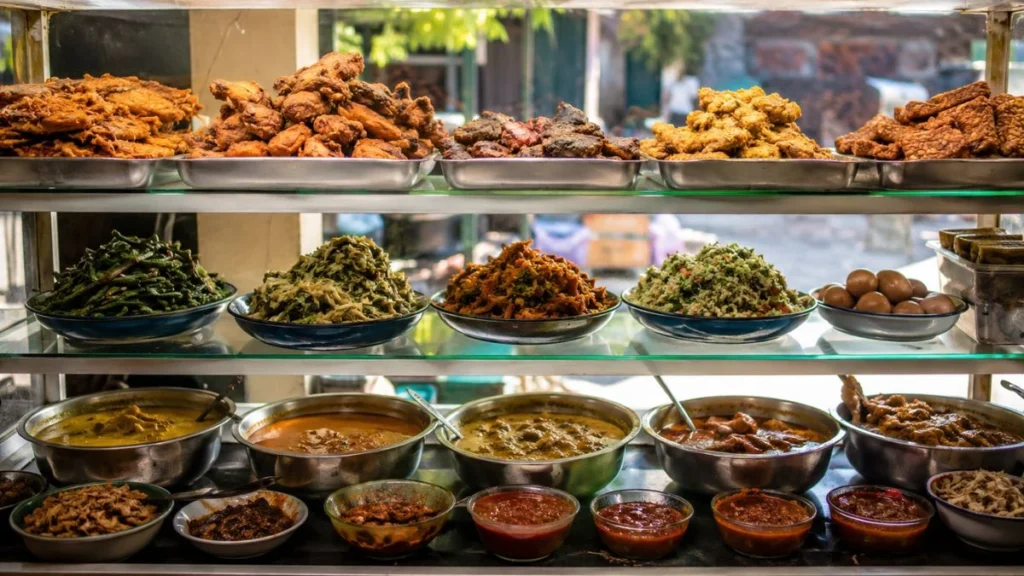
Best warung Canggu honest guide: A warung is a family-run eatery — not a brand, not a concept, not a brunch spot with a curated Instagram feed. In Canggu in 2026, the word “warung” appears on the signage of establishments that charge IDR 150,000 for a bowl of smoothie. This guide covers the ones where the word still means what it originally meant.
The best warung Canggu honest guide requires one clarification before any specific names appear: Canggu has changed more than any other area of Bali in the past decade, and the food landscape reflects that. There are genuine family-run warungs in Canggu serving authentic Balinese food at IDR 25,000–50,000 per meal. There are also restaurants with “warung” in the name charging IDR 180,000 for a grain bowl with a rice cracker garnish. The distinction matters, and most guides do not make it.
This guide makes it clearly and covers both categories honestly — because there is a legitimate version of Canggu dining at every price point, and knowing which is which before you sit down saves both money and disappointment.
For travellers considering Canggu as a base versus other Bali areas, the honest trade-off is covered in detail in the best areas to stay in Bali for slow travel — Canggu’s food infrastructure is one of its genuine strengths even as its slow travel character has eroded considerably.
What a Real Warung Is — and How to Spot One in Canggu
A genuine warung has five characteristics that hold regardless of location:
Family-run — the people cooking and serving are typically members of the same household. The owner is usually present.
Counter-service or minimal menu — food is displayed at a counter (nasi campur style) or the menu is short and handwritten or spoken. No QR code menu with forty-seven items.
Cash only — almost universally. The absence of a card machine is a reliable indicator.
Plastic chairs and formica tables — or wooden benches, or cement floors. The absence of designed interior is not neglect — it is function over aesthetics.
Price under IDR 50,000 for a full meal — a nasi campur plate with rice, two or three sides, and a drink should cost IDR 25,000–45,000 at a genuine warung. Above IDR 60,000 for a single dish, the establishment is something else regardless of its name.
In Canggu, these characteristics narrow the field considerably. Much of what trades as warung culture in the Batu Bolong and Berawa areas is visitor-facing. The genuine warungs are on the lanes behind the main roads and in the village pockets between the villa developments.
The Warungs Worth Going To
Warung Sika — For Nasi Campur Done Properly
Warung Sika is the most consistently recommended genuine warung in Canggu, mentioned by both locals and long-term expats across multiple years of reviews. The format is nasi campur buffet — a glass counter displaying twenty or more dishes including curries, spiced vegetables, fried tempeh, chicken in various preparations, eggs, sambal in multiple heat levels, and often a slow-cooked pork dish. You point at what you want, it is portioned onto your plate with rice, and you pay by the dish count.
The honey chicken and spicy fried tempeh are consistently the most popular dishes. The counter changes daily based on what is available — part of what makes it worth returning to across multiple days.
There are no signs identifying most dishes. This is intentional and standard — you point, you eat, you discover. The communal tables mean you are likely sitting with other visitors and occasionally with Balinese families. The lunchtime crowd is significant — arrive before noon or after 1:30pm to avoid the queue.
Location: Jl. Canggu Padang Linjong area. Cash only. IDR 30,000–55,000 for a full plate with drink.
Babi Guling Men Lari — For the Dish Canggu Does Not Usually Do Well
Babi guling — spit-roasted suckling pig — is Bali’s most celebrated ceremonial dish and also one of the most frequently executed poorly in tourist-facing restaurants that produce it continuously rather than roasting it fresh each morning in the traditional way.
Men Lari does it properly. The pig is roasted fresh daily, and once it is sold out — typically by early afternoon — the warung closes. The skin is crisp. The meat is seasoned with a spice paste that uses turmeric, lemongrass, galangal, and shrimp paste in the proportions that distinguish Balinese babi guling from a generic roast pork plate. The lawar (spiced minced meat and vegetable accompaniment) is made fresh and changes slightly depending on the day.
Arrive before 11am for the best portion of the pig. Arrive after 12:30pm and you may find only the less popular cuts remaining or the warung already shut.
Location: Canggu area, near Echo Beach corridor. Cash only. IDR 45,000–65,000 for a full plate.
Warung Dapur Tegal Gundul — For the Back Lane Version of Canggu
This warung operates on a lane behind the main Batu Bolong strip — the kind of location that requires someone to tell you it exists. The format is straightforward nasi campur with a rotating counter of home-cooked Balinese dishes. The cooking is noticeably different from tourist-facing warungs — less sweet, more aromatic, with the fermented shrimp paste (terasi) present in the sambal at a level that most visitor-oriented places tone down.
The clientele is predominantly Balinese residents, construction workers from nearby villa projects, and a small number of long-term expats who have found it. The tables are plastic. The floor is concrete. The food is very good.
Location: Back lanes east of Batu Bolong, walkable from the main strip. Cash only. IDR 25,000–40,000.
Oma Jamu Vegan — For Plant-Based Balinese Food Without the Concept Restaurant Markup
For vegetarian and vegan visitors, Oma Jamu occupies an unusual position: it serves plant-based Balinese food at warung prices rather than at the wellness café prices that most vegan-friendly Canggu establishments charge. The menu includes jamu traditional herbal drinks made fresh, tofu and tempeh preparations in Balinese spice bases, jackfruit preparations that handle like pulled meat, and vegetable dishes that reflect actual Balinese home cooking rather than adapted international cuisine.
The loloh herbal drinks — variations on the loloh cemcem tradition from highland Bali — are made fresh daily and worth ordering alongside the food.
Location: Canggu area. Cash preferred. IDR 35,000–60,000 for a full meal.
The Warung-Named Establishments Worth Knowing Are Not Warungs
Canggu has a category of place that calls itself warung, charges restaurant prices, and delivers an experience that is neither fish nor fowl — too expensive to be a warung, not polished enough to be a restaurant, and confusing to visitors trying to calibrate expectations.
Times Warung — a recognised brand with multiple locations, serves Indonesian food at IDR 80,000–150,000 per dish. Good food, reasonable quality, fair pricing for the level of service. Not a warung by any traditional definition.
Inklusiv Warung — a social enterprise employing staff who are deaf or hard of hearing, with a genuine community mission. Food quality is solid, prices are mid-range. The “warung” label reflects its values more than its format. Worth supporting if that matters to you; do not arrive expecting IDR 30,000 nasi campur.
Where to Eat in Canggu by Neighbourhood
Batu Bolong — the highest density of cafés and tourist-facing restaurants. Genuine warungs still exist on the back lanes but require walking five to ten minutes from the main strip. The main road itself is predominantly visitor-facing.
Berawa — more residential feel, fewer genuine warungs. The food scene here skews toward mid-range cafés and international cuisine. Not the right area for warung hunting.
Pererenan / Cemagi — the quieter western edge of the Canggu corridor, where rice paddies still exist between villas. Several small warungs operate on the back lanes here serving the local community, with almost no visitor-facing signage.
Echo Beach area — a mix of surf warung culture and tourist restaurants. The warungs immediately adjacent to the beach serve simple rice and noodle dishes to surfers at IDR 25,000–35,000. One step back from the beach and prices normalise to standard warung rates.
How to Order at a Nasi Campur Warung
For first-time visitors, the nasi campur counter format can feel intimidating. It is not. The process:
Step 1 — Take a plate or indicate you are ready. The server will add rice automatically.
Step 2 — Point at each dish you want. You do not need to know the name. Pointing is standard and expected.
Step 3 — Indicate quantity with fingers if you want more or less of something.
Step 4 — Sit down. The plate will be brought to you or you carry it.
Step 5 — Order a drink separately — es teh (iced tea) or es jeruk (iced orange juice) are the standard warung drinks at IDR 8,000–15,000.
Step 6 — Pay after eating. Cash. Round up slightly if the food was good.
The total for a full nasi campur plate with drink at a genuine Canggu warung is IDR 35,000–55,000. If the bill comes to IDR 120,000 for what appeared to be a warung-format meal, you are in one of the establishments that uses the warung aesthetic for branding purposes.
Kenji had been in Canggu for four days eating at places his hotel concierge recommended — brunch cafés with forty-minute queues and grain bowls that cost IDR 160,000. On day five, a fellow guest at his guesthouse gave him directions to Warung Sika: “Turn left at the junction, walk past the construction site, you’ll smell it before you see it.” Kenji arrived at 11:30am, pointed at five dishes without knowing what any of them were, sat at a communal table with two Balinese construction workers and a Dutch woman who had been coming for six months, and paid IDR 42,000 for the best meal he had eaten in Bali. He went back the following three mornings.
FAQ
What is a warung in Bali?
A warung is a family-run informal eatery serving home-cooked Indonesian and Balinese food at low prices — typically IDR 25,000–50,000 for a full meal. The format is usually a counter displaying pre-cooked dishes (nasi campur style) or a short handwritten menu. Cash only is standard. In Canggu, the word “warung” appears on the signage of establishments ranging from genuine family operations to mid-range restaurants using the term for branding purposes.
What is nasi campur?
Nasi campur translates as “mixed rice” — a plate of white rice accompanied by a selection of dishes chosen from a counter display. The selection typically includes a protein (chicken, fish, pork, tofu, or tempeh), one or two vegetable dishes, sambal, and sometimes a fried egg or crackers. The combination changes daily based on what is freshly cooked. It is the standard everyday meal format at genuine Balinese warungs and costs IDR 25,000–45,000 at a warung versus IDR 80,000–130,000 at a tourist restaurant serving the same format.
Is Warung Sika the best warung in Canggu?
It is the most consistently recommended across multiple years of reviews from both locals and long-term expats. The nasi campur counter is among the most varied in Canggu, the prices are genuine warung prices, and the communal table format makes it easy to navigate alone. The lunchtime crowd is significant — arriving before noon or after 1:30pm improves the experience considerably.
Are warungs in Canggu cash only?
Genuine warungs almost universally operate cash only. Establishments with card payment infrastructure are typically mid-range cafés and restaurants regardless of their name. Carry small denomination IDR notes — IDR 10,000, 20,000, and 50,000 — specifically for warung visits.
What time do warungs in Canggu open and close?
Most genuine warungs open between 7–8am and close when the day’s food is sold — typically between 2–4pm. They do not operate on the evening restaurant schedule. Babi guling warungs are particularly time-sensitive — the pig is roasted once per day and sold until it is gone, often by early afternoon. For the best selection at any nasi campur warung, arrive before noon.