
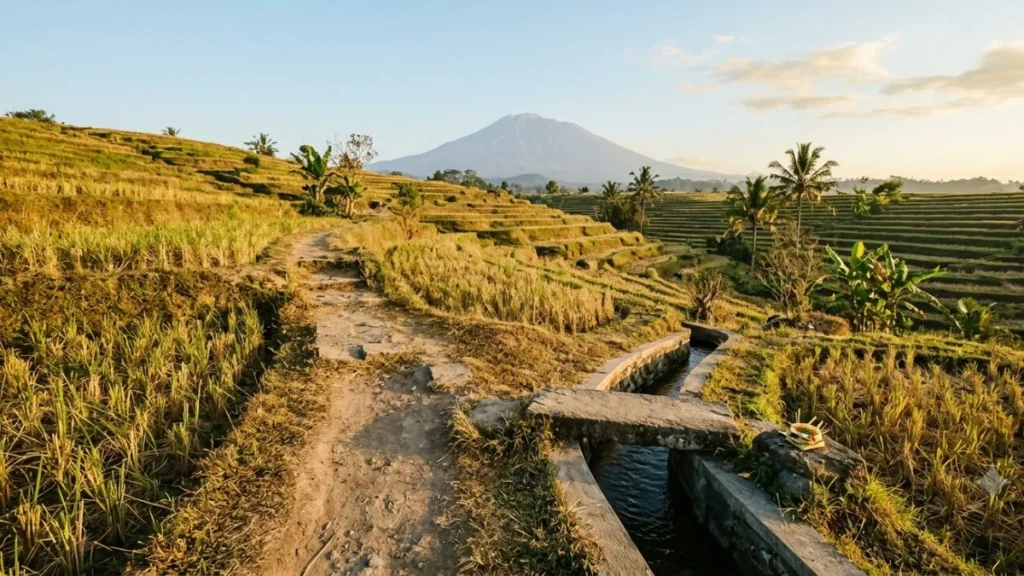
Best time to visit Bali: The dry season from May to October delivers the most reliable weather and the clearest conditions for trekking, snorkeling, and outdoor activity. But the honest answer is more specific than that — the best time depends on what you are trying to do, which part of Bali you are visiting, and whether you want to be there during the island’s major festivals or avoid them.
The best time to visit Bali is not a single answer that applies to every traveller. It is four different answers depending on four different priorities: weather, festivals, crowds, and budget. This guide covers all four honestly, month by month, so you can make a decision based on what actually matters for your specific trip rather than the generic dry-season recommendation that most guides stop at.
The two things that most affect the Bali experience for slow travellers are the festival calendar and the rain pattern — and both are specific enough to plan around rather than accepting as background variables. The Galungan festival guide and the Nyepi Day guide each cover those events in detail. This article tells you when they fall and what that means for trip planning.
The Two Seasons: What They Actually Mean
Dry season (May to October): Reliable sunshine, low humidity, minimal rain in south and central Bali. The clearest conditions for: rice terrace trekking, snorkeling visibility, Mount Agung views from Sidemen and Amed, sunrise spots, and any outdoor activity where rain disrupts the experience. July and August are peak season — highest prices, most crowded tourist sites, accommodation books furthest in advance.
Wet season (November to April): Daily afternoon rain, typically 1–3 hours, rarely all-day. Mornings are usually clear. The rice fields are greener and more lush. Waterfalls run at full strength. The landscape is more photogenic in many ways. Temperatures are slightly higher. The main practical issue: Bali’s coastal roads, particularly the East Bali coastal circuit, become more challenging after heavy rain. Trekking paths in Sidemen and Munduk become muddy.
The wet season is not a reason to avoid Bali. It is a reason to structure your days differently — outdoor activities in the morning, flexibility in the afternoon. Long-stay visitors and slow travellers frequently prefer the wet season: lower prices, fewer crowds, and the island’s natural landscapes at their most vivid.
Month by Month: The Honest Picture
January
Weather: wet season peak. Frequent afternoon rain. Some mornings are grey. Humidity is high. Crowds: low to moderate. Post-New Year departure reduces tourist numbers. Prices: low to moderate. Good value for accommodation. Festivals: none major in January 2026. Practical note: Waterfalls are spectacular. Rice fields are intensely green. The east Bali coastal road requires more care after overnight rain. Who it suits: Budget travellers, long-stay visitors, rain-tolerant slow travellers.
February
Weather: wet season. Similar to January. Some years bring heavier rain than others. Crowds: low. One of the quietest months of the year. Prices: lowest of the year alongside November and January. Festivals: none major. Practical note: The best month for negotiating long-stay villa rates and for experiencing Bali’s tourist areas without their typical density. Who it suits: Budget travellers, digital nomads starting a long stay, visitors who specifically want quiet.
March
Weather: wet season transitioning toward dry. Rain decreases through the month. Crowds: low to moderate, then a spike around Nyepi. Prices: low, then premium around Nyepi dates. Nyepi 2026: Thursday 19 March. The airport closes for 24 hours. Roads close island-wide. Every visitor must stay indoors. The ogoh-ogoh parade on the evening of 18 March is one of the most spectacular events in Bali’s calendar. The Melasti procession to the beach in the days before Nyepi is equally worth experiencing. Practical note: Check your flight dates against 19 March before booking. Arriving 17–18 March allows you to experience the full Nyepi cycle. Accommodation around Nyepi books out months in advance in some areas. Who it suits: Travellers specifically wanting to experience Nyepi, or travellers who have checked their dates carefully and plan to avoid it.
April
Weather: transition month. Rain decreasing. By late April, dry conditions becoming reliable. Crowds: moderate. Prices: moderate — not yet peak season rates. Festivals: none major in 2026. Practical note: One of the underrated months for Bali. Weather is improving, crowds have not peaked, and prices are below July–August rates. Good balance across all variables. Who it suits: Most travellers — good weather without peak-season premiums.
May
Weather: dry season beginning. Reliable sunshine. Lower humidity. Crowds: moderate. Not yet peak. Prices: moderate, beginning to rise toward peak. Festivals: none major in 2026. Practical note: May is one of the most consistently recommended months for a first Bali trip — the weather is reliable, the crowds are manageable, and the accommodation is available. East Bali trekking in May is excellent. Who it suits: First-time visitors, trekkers, snorkelers, families.
June
Weather: dry season. Consistent sunshine. Cool evenings in highland areas (Ubud, Sidemen, Munduk). Crowds: increasing toward July–August peak. Prices: increasing. Galungan 2026: Wednesday 17 June. Kuningan: Saturday 27 June. The most significant festival in the Balinese Hindu calendar. Every village is decorated with penjor poles. The island is visually transformed. Ceremonies are active throughout the ten-day period. Practical note: June 2026 is exceptional — the only Galungan of the year (the 210-day cycle means 2026 has only one occurrence, unlike most years). For anyone planning to experience Bali’s most distinctive festival, mid-to-late June 2026 is the window. Book accommodation well in advance — Ubud area fills significantly. Who it suits: Travellers specifically wanting Galungan, cultural-immersion focused visitors, anyone planning a Bali trip who has flexibility to align with this date.
July
Weather: dry season peak. Very reliable. Best conditions of the year for outdoor activities. Crowds: peak. The busiest month of the year alongside August. Prices: highest of the year. Accommodation premium in Ubud, Canggu, and popular areas. Festivals: Galungan ends early July 2026 (Kuningan June 27). Practical note: July delivers the best weather in Bali. It also delivers the most tourists. Major temples are at maximum visitor density. Campuhan Ridge Walk before 7am, Tegallalang before 8am, and any sunrise viewpoint before 6am are the ways to get quality experiences in peak conditions. Who it suits: Visitors who prioritise weather and can manage crowds or plan around them.
August
Weather: dry season peak. Equivalent to July. Crowds: peak. Second busiest month. Prices: peak. Festivals: none major in 2026. Practical note: Everything that applies to July applies to August. The southeast trade winds create occasional strong swells on the south coast — Kuta and Seminyak surf can be more challenging. East Bali coast (Amed, Candidasa) is calmer. Who it suits: School holiday travellers, families — peak season is unavoidable for those with school schedules.
September
Weather: dry season continuing. Still reliable through September. Crowds: decreasing significantly from August peak. Prices: decreasing. Good value for dry season conditions. Festivals: none major. Practical note: September is the underrated dry season month. Weather quality is essentially equivalent to July–August. Crowds have dropped. Prices are lower. Accommodation is available with less advance booking. For flexible travellers, September is the optimal month of the year. Who it suits: Almost everyone with schedule flexibility — the best month for combining dry season weather with manageable crowds.
October
Weather: dry season ending. Generally still reliable but variable by region. Rain returning to North Bali first. Crowds: low to moderate. Prices: low to moderate. Festivals: none major in 2026. Practical note: October marks the shoulder period. The first half of October is still comfortably dry in south and central Bali. North Bali and highland areas see rain returning earlier. A good month for budget travellers who want reliable weather without July–August premiums. Who it suits: Budget travellers, flexible schedule visitors, long-stay expats returning to Bali.
November
Weather: wet season beginning. Rain increasing through November. Humid. Crowds: low. One of the quietest periods. Prices: low. One of the best value months of the year. Festivals: none major in 2026. Practical note: The trade-off between wet season conditions and low prices/crowds is clearest in November. For travellers who know Bali well and are comfortable adapting activity timing to avoid afternoon rain, November offers genuine value. Who it suits: Repeat visitors, slow travellers, budget-focused visitors.
December
Weather: wet season. Frequent rain. High humidity. Some years bring very heavy December rain. Crowds: surging toward Christmas and New Year. The December 20–January 5 period is second only to July–August for tourist numbers. Prices: surging significantly around Christmas–New Year. Some of the highest rates of the year for this period, then falling sharply after January 5. Festivals: none major in 2026. Practical note: Early December (1–15) combines wet season character with low crowd levels and low prices — a genuinely good window for budget visitors. The Christmas–New Year period is the worst combination of weather (wet), crowds (high), and prices (peak) on the calendar. Who it suits: Early December: budget travellers. Late December: visitors who specifically want the festive atmosphere and can absorb the price premium.
The Festival Calendar Summary for 2026
| Festival | Date 2026 | Impact |
|---|---|---|
| Nyepi (Day of Silence) | Thursday 19 March | Airport closed 24hrs, roads closed, all visitors indoors |
| Melasti (pre-Nyepi) | 15–16 March | Spectacular beach procession worth witnessing |
| Ogoh-Ogoh Parade | Wednesday 18 March evening | Most dramatic public event of the year |
| Galungan | Wednesday 17 June | Island-wide penjor decoration, temple ceremonies |
| Kuningan | Saturday 27 June | Closing day of Galungan period |
The Summary for Different Traveller Types
First-time visitor wanting reliable weather: May, June, or September.
Cultural immersion specifically: June 2026 for Galungan — exceptional year with only one Galungan occurrence.
Budget conscious: February, November, or early December.
Avoid crowds: February, September, November.
Best weather without peak prices: September — the single best month for most travellers with schedule flexibility.
Experiencing Nyepi: Arrive 17–18 March 2026. Book accommodation months in advance.
Families with school schedules: July–August (best weather, unavoidable crowds) or April school holiday period.
Long-stay digital nomads: February, March (outside Nyepi), October, November — lowest competition for long-stay accommodation, best negotiating position on rental rates.
The One Variable Most Guides Ignore
Most best-time-to-visit guides assess weather and crowds. The variable they consistently underweight is where in Bali you are visiting.
The dry season recommendation is calibrated for south and central Bali. East Bali (Sidemen, Amed, Karangasem) and North Bali (Munduk, Lovina) have slightly different patterns — North Bali’s highlands receive more year-round moisture, and the east coast is somewhat sheltered from the south’s weather systems. The Sidemen Valley is greener and more photogenic in the wet season than in the dry. The Munduk waterfall circuit runs at full strength only after significant rain.
Slow travellers spending significant time in East or North Bali find the wet season trade-offs less significant than visitors optimising for a two-week south Bali holiday. This is the nuance that a single-answer best-time recommendation cannot capture.
FAQ
What is the best month to visit Bali in 2026?
September is the optimal month for most travellers with flexible schedules — dry season weather without July–August crowd levels, and prices below peak. May and June are excellent alternatives with similar weather and the addition of Galungan (June 17) for cultural interest. February and November offer the lowest prices and crowds for travellers comfortable with wet season conditions.
When should I avoid visiting Bali?
The Christmas–New Year period (December 20–January 5) combines wet season rain, peak crowds, and the highest accommodation prices of the year — the worst combination of all three variables. July and August deliver peak crowds and peak prices alongside the best weather. If your schedule allows flexibility, avoiding these windows saves money and improves the experience without sacrificing much in weather quality.
Is it worth visiting Bali during Nyepi 2026?
Yes, if you arrive before it. The ogoh-ogoh parade on March 18 and the Melasti beach procession on March 15–16 are among the most spectacular events in Bali’s calendar. Nyepi itself — 24 hours of silence, darkness, and stillness — is a genuinely singular experience when spent in a village guesthouse rather than a hotel room. Check your flight dates against March 19 before booking.
Is June 2026 a good time to visit Bali?
Yes — particularly for travellers interested in Balinese Hindu culture. Galungan falls on June 17, 2026, and 2026 is a rare year with only one Galungan occurrence (unlike most years with two). Every village on the island is decorated with penjor poles, temple ceremonies are active island-wide, and the cultural immersion available during the ten-day Galungan–Kuningan period is the most direct access to Balinese Hindu practice available in the calendar year.
What is Bali like in the wet season?
The wet season (November–April) brings afternoon rain, typically 1–3 hours, with most mornings clear. The rice fields are greener and more photogenic than in the dry season. Waterfalls run at full strength. Crowds are lower and accommodation prices are significantly cheaper. The main practical adjustments: schedule outdoor activities for mornings, carry a light rain jacket, and check road conditions before driving the east Bali coastal circuit after heavy overnight rain.