
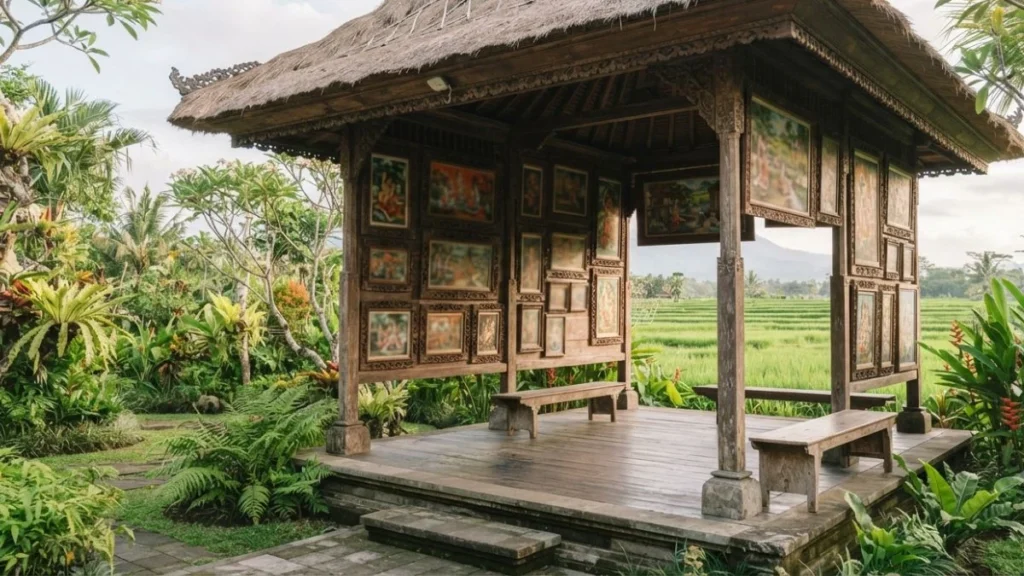
Ubud calls itself Bali’s “Capital of Art,” and its cluster of Ubud art museums is where that claim actually gets tested. The three most commonly compared — ARMA (Agung Rai Museum of Art), Neka Art Museum, and the Blanco Renaissance Museum — each cover different ground, charge noticeably different prices depending on where you book, and appeal to fairly different kinds of visitors. If you’ve only got time for one or two, this comparison covers what each actually offers, honestly, including a welfare concern at one of them worth knowing before you go.
Quick Facts
- ARMA: Jalan Raya Pengosekan, entrance roughly IDR 80,000–150,000 depending on source and booking channel, open-air layout, evening dance performances
- Neka Art Museum: Jalan Raya Sanggingan Campuhan, entrance roughly IDR 75,000–150,000, 7 buildings, largest single collection, 2–3 hours to see properly
- Blanco Renaissance Museum: Jalan Raya Campuhan, entrance around IDR 100,000, former home and studio of Antonio Blanco, most divisive of the three
- All three: open roughly 9am–6pm daily, cash accepted, photography generally allowed (flash often restricted)
ARMA: The One Most Repeat Visitors Return To
Agung Rai Museum of Art, founded in 1996 by Balinese collector Agung Rai, is consistently the most warmly reviewed of the Ubud art museums, and not just among dedicated art fans. The layout is bright and open-air rather than the dim, indoor gallery feel of some competitors, set among rice field views and gardens that make it a pleasant place to spend an afternoon even if the paintings aren’t your main draw. The collection spans traditional Batuan-style and classical Kamasan paintings alongside work from international artists who lived and worked in Bali, including Walter Spies. Evening dance performances (Kecak and Legong Telek, accompanied by live gamelan) are a genuine highlight if you time your visit right, and the museum also runs workshops in woodcarving, batik, and Balinese cooking for visitors who want a more hands-on cultural experience. Entrance fee reports vary noticeably by source, from around IDR 60,000 to 150,000 — booking online in advance is generally cheaper than paying at the gate.
Neka Art Museum: The Largest, Most Comprehensive Collection
Neka, founded by Suteja Neka in 1976, is the biggest of the three by a clear margin — seven separate buildings, and genuinely worth allocating 2 to 3 hours if you want to see everything rather than rush through. Its standout feature is a keris (traditional ceremonial dagger) collection considered unmatched among Ubud’s art museums, alongside a strong holding of works by Arie Smit and other influential Balinese and Indonesian painters. Some visitors specifically praise Neka as offering the broadest overview of Indonesian and Balinese art history in one place.
The honest trade-off here is price versus experience: at the higher end of reported entrance fees (up to IDR 150,000), several recent visitors have suggested that ARMA or Museum Rudana offer more for the money, and a handful of reviews mention parts of the Neka complex feeling somewhat run-down and in need of maintenance. If depth and scale matter most to you, Neka still delivers; if you’re deciding between paying a premium here versus elsewhere, it’s worth weighing against ARMA specifically.
Blanco Renaissance Museum: The Most Divisive
The Blanco Renaissance Museum sits right across from the Campuhan Ridge Walk entrance and is the former home, studio, and gallery of Antonio Blanco, a Spanish-Filipino artist sometimes nicknamed “the Dali of Bali” for his surreal, theatrical style. This is less a traditional art museum and more an experience built around one eccentric personality — visitors walk through his actual mansion, see his studio, and encounter oddities like a lotus-flower-shaped toilet and a 3D hologram of the artist himself. His paintings, largely surreal and sensual depictions of Balinese women, are genuinely divisive; some visitors find them striking and unusual, others find the subject matter and repetition not to their taste. Entrance runs around IDR 100,000.
Here’s the honest concern worth flagging before you go: the museum grounds feature live birds, including cockatoos and parrots, presented to visitors as “free to fly.” At least one detailed 2026 visitor account describes staff confirming the birds are allowed to roam, only for the birds to remain in the same spot for the full length of the visit, with one bird’s wings visibly clipped. If animal welfare matters to your travel choices, this is worth knowing and asking about directly before you commit to visiting.
Which One Should You Actually Visit?
If you only have time for one and want the most consistently enjoyable overall experience, ARMA is the safer bet — better reviewed across the board, a pleasant setting regardless of how deep your art interest runs, and evening performances that add value beyond just viewing paintings. If depth and scale of collection matter more than atmosphere, Neka delivers the most comprehensive overview, provided the entrance fee at the higher end doesn’t feel steep for what you get. Blanco is worth visiting specifically if the eccentric-artist-mansion format appeals to you more than a conventional gallery — just go in aware of both the divisive artwork and the bird situation, and decide for yourself whether either is a dealbreaker.
FAQ
Which Ubud art museum is the best?
ARMA is the most consistently well-reviewed among general visitors, thanks to its atmosphere, gardens, and evening performances. Neka offers the largest and most comprehensive collection if depth matters most to you.
How much does it cost to visit ARMA, Neka, or Blanco?
Reported entrance fees vary by source and booking channel: roughly IDR 60,000–150,000 for ARMA, IDR 75,000–150,000 for Neka, and around IDR 100,000 for Blanco. Booking online in advance is often cheaper than paying at the gate.
How long should I spend at each museum?
ARMA and Blanco can both be seen in 1 to 2 hours. Neka is the largest, with seven buildings, and is worth 2 to 3 hours if you want a thorough visit.
Is the Blanco Renaissance Museum worth visiting?
It depends on your taste — the format is unusual and memorable, but the artwork itself (largely surreal depictions of women) and the presence of caged birds advertised as free-flying are both worth knowing about before you decide.
Can I visit all three Ubud art museums in one day?
It’s physically possible since all three sit within a reasonably short drive of central Ubud, but doing justice to Neka alone takes 2 to 3 hours, so combining all three in one day means a rushed experience at each rather than a proper visit.
Final Thought
Ubud’s art museums cover genuinely different ground — ARMA for atmosphere and evening performances, Neka for depth and history, Blanco for something stranger and more personal. Pick based on what you actually want out of the visit rather than trying to check all three off in a single afternoon. For more on central Ubud’s cultural landmarks, our Ubud Palace guide and Saraswati Temple guide cover what else fits into the same art-focused day.