
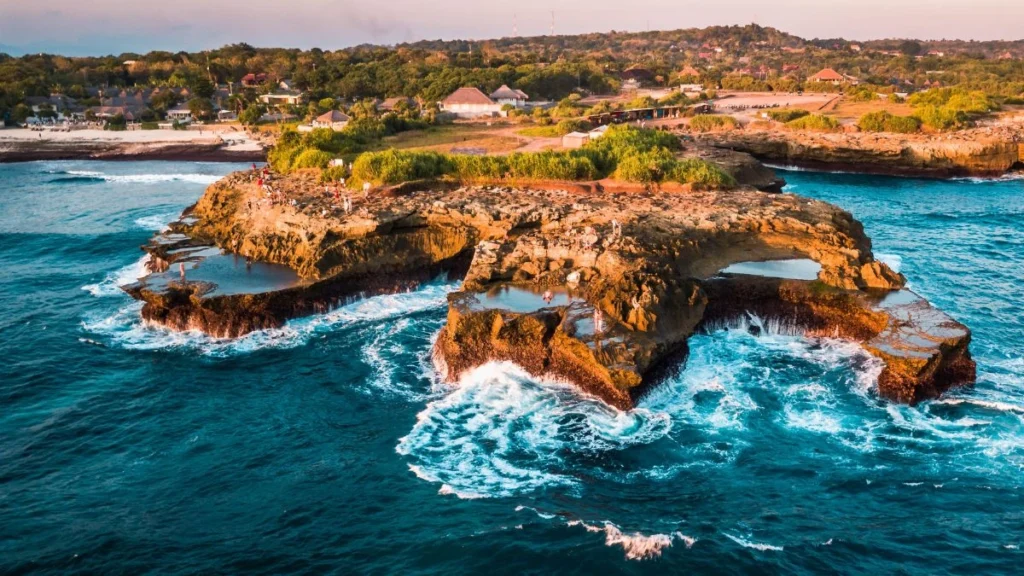
Nusa Lembongan tends to get reduced to one side of a comparison — Penida or Lembongan, which island wins — but that framing undersells what Lembongan actually offers as a destination in its own right. This is the calmest, most developed-but-not-overdeveloped of the three Nusa Islands, genuinely well suited to spending two or three nights rather than rushing through as a single day trip squeezed in from Bali.
This guide covers what to actually do here, realistic timing, and one honest first-impressions warning worth knowing before you arrive.
Quick Facts
- Getting there: fast boat from Sanur, roughly 30–40 minutes
- Recommended stay: 2–3 nights to properly cover the island; a single day trip is possible but rushed
- Getting around: scooter rental is the main option; roads are rougher and hillier than mainland Bali in places
- Main draws: Devil’s Tear, Dream Beach, Mushroom Bay, mangrove tours, Manta Point snorkeling, and a genuinely relaxed, low-traffic village atmosphere
- Best season: dry season (April–October) for calm seas and the best snorkeling and diving visibility
The Honest First Impression
Worth saying upfront, because more than one visitor account mentions it: your first hour or two on Nusa Lembongan can feel a little underwhelming, particularly if you arrive without a scooter or a plan. The main roads near the harbor are rough, the village feels quiet in a way that can read as sleepy rather than charming at first, and if the sunset hasn’t happened yet on day one, it’s easy to wonder what the appeal actually is. Give it that first scooter ride around the island before judging — the coastline, the cliffs, and the water genuinely earn Lembongan’s reputation once you’re past the immediate harbor area.
Devil’s Tear: Dramatic, and Genuinely Not for Swimming
Devil’s Tear, on the island’s southwest coast near Dream Beach, is Lembongan’s signature natural feature — a rugged limestone cliff formation where waves crash with enough force to send spray several metres into the air, often catching a rainbow in the mist on sunny days. It’s also one of the best sunset spots on the island, and pairing it with the nearby tidal pools (best visited mid-tide) is a common and worthwhile combination for photos and a slower evening.
Be clear-eyed about the water here: there are no official, marked jumping spots, and the currents and rock conditions genuinely aren’t safe for casual swimming. If you’re determined to get in the water near here, most people instead swim from the calmer shores of Dream Beach itself rather than attempting anything directly at the blowhole.
Mangrove Tour: Quiet, and Worth Doing Once
On the island’s northeast side, a mangrove forest offers a genuinely different pace from the cliffside drama elsewhere — a small boat, kayak, or stand-up paddleboard ride through calm channels, generally arranged through a local guide at the site rather than booked online in advance necessarily, though tour packages exist too. Private boat trips run roughly IDR 300,000, and it’s usually possible to share a boat with other visitors if you’re not in a rush and want to split the cost. It’s a slow, quiet 30 to 45 minutes rather than a major attraction, best treated as a calm counterpoint to the rest of the island’s more active offerings.
Manta Point and Snorkeling: The Underwater Draw
A roughly 20 to 30 minute boat ride from Lembongan brings you to Manta Point, where snorkeling alongside genuinely enormous manta rays is one of the most consistently praised experiences among visitors who make the trip. Most operators run this as a half-day tour combining Manta Point with a few other stops — Crystal Bay, Gamat Bay, and Mangrove Point are common additions — with hotel pickup and drop-off included. Coconut Beach on Lembongan itself offers reliable year-round surf for beginner and intermediate surfers, while more experienced surfers head to the tougher breaks at Mahana Point on neighboring Nusa Ceningan.
Seaweed Farming: The Island’s Actual Economy
Beyond the tourist-facing beaches and cliffs, seaweed farming remains a genuine, longstanding part of Lembongan’s economy, introduced in the 1980s and still a primary income source for many local families. The best place to see it is the channel between Lembongan and Ceningan, where you’ll spot the distinctive checkerboard bamboo frames used to grow the seaweed, harvested after about 45 days of physically demanding, financially unpredictable work. Walking through the farms at low tide gives a genuine, unstaged look at daily island life that’s easy to miss if you stick purely to the beach clubs and viewpoints.
Getting Around and How Long to Stay
Lembongan and neighboring Ceningan are small enough to circle by scooter in under an hour, but that undersells how much there actually is to do once you slow down — most repeat visitors and travel guides land on two to three nights as the right amount of time to properly cover Dream Beach, Devil’s Tear, a mangrove tour, and at least one snorkeling or diving trip without rushing. If sunbathing and doing very little is the actual goal, a week here is entirely reasonable too, given how low-key and unhurried the island’s pace naturally is.
Roads away from the main strip get rough and hilly in places, so a scooter with decent tires and some riding confidence matters more here than on flatter parts of mainland Bali. The island’s low traffic, small-village feel, and generally safe, relaxed atmosphere make it a genuinely solid choice for families and couples alike, not just the younger backpacker crowd sometimes associated with island-hopping.
FAQ
How long should I stay on Nusa Lembongan?
Two to three nights is the commonly recommended minimum to properly see Dream Beach, Devil’s Tear, a mangrove tour, and get in at least one snorkeling trip. A single day trip is possible but genuinely rushed given how much there is to do.
Can you swim at Devil’s Tear?
Not safely, and there are no official designated swimming or jumping spots there. The currents and rocky conditions make it a viewpoint rather than a swimming destination — Dream Beach nearby is the calmer alternative for actually getting in the water.
How do you get to Nusa Lembongan?
A fast boat from Sanur Harbour, taking roughly 30 to 40 minutes.
Is Nusa Lembongan good for families?
Yes, generally considered one of the more family-friendly of the Nusa Islands, with low traffic, a relaxed village atmosphere, and calm beach areas suitable for kids.
What’s the best time of year to visit?
Dry season, roughly April to October, for calmer seas, better snorkeling and diving visibility, and more reliable weather overall.
Final Thought
Nusa Lembongan holds up well once you get past the harbor and give it a proper scooter loop — Devil’s Tear at sunset, a slow mangrove paddle, and a Manta Point snorkel trip add up to a genuinely full couple of days rather than a rushed side note to Nusa Penida. For the fuller picture of the Nusa Islands as a group, our Nusa Penida vs Nusa Lembongan comparison and Nusa Ceningan guide round out the rest of the archipelago.