
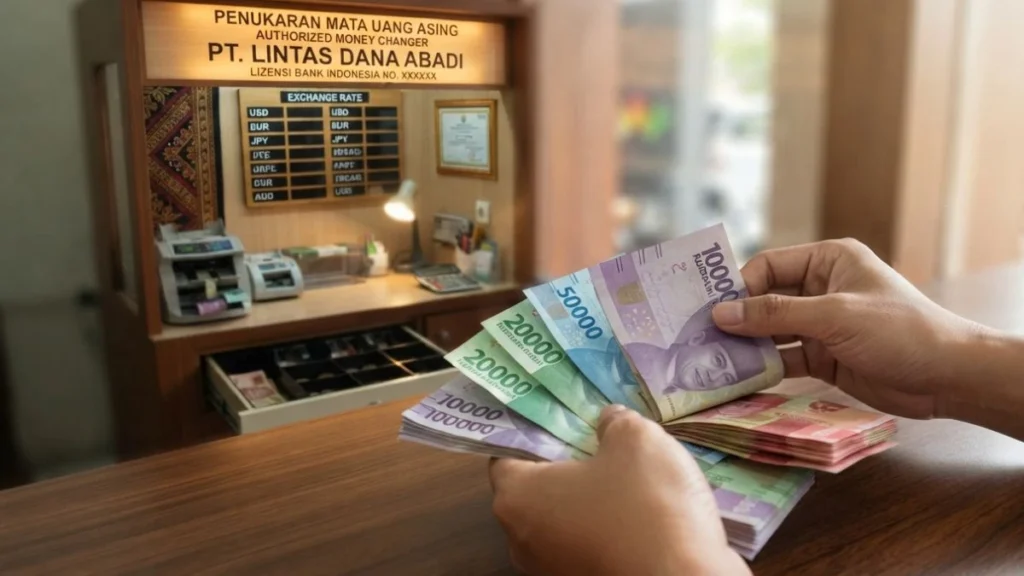
A money changer in Bali offering a noticeably better rate than everywhere else around it isn’t a lucky find — it’s very likely the setup for one of the island’s most consistently reported tourist scams. A short-count sleight-of-hand trick, filmed in Ubud, went viral in 2025 with nearly 2 million views, and the pattern behind it is well-documented enough that Bank Indonesia has since launched an official portal specifically to help tourists verify legitimate operators before handing over cash.
This guide covers exactly how the scam works, how to spot a legitimate money changer, and what to do instead if you’d rather avoid street-side counters entirely.
Quick Facts
- The lure: an exchange rate advertised noticeably higher than nearby competitors — often IDR 500–1,000 better per unit of foreign currency
- The trick: sleight-of-hand short-counting during the handover, using techniques like a “fast-fold” (rapidly folding notes while quietly removing some) or a deliberate early miscount to reset your attention
- How to verify a licensed operator: check for the PVA (Licensed Foreign Exchange Trader) logo from Bank Indonesia, or use the official verification portal at moneychangerbali.com
- Airport rates: typically worse than in-town official rates, by a reported margin of roughly 5%, so exchange only what you need immediately at the airport
- Safer alternative: travel cards like Wise or Revolut, offering close to mid-market rates with low fees, increasingly accepted at cafes and shops in areas like Canggu, though cash remains necessary for markets, parking, and street warungs
How the Scam Actually Works
The pattern is consistent enough across independent reports that it’s worth understanding the mechanics directly, rather than just the warning. A fraudulent money changer displays a rate meaningfully better than every licensed competitor nearby — if legitimate operators are offering something like IDR 16,000–16,200 per US dollar, a fraudulent board might show 16,500–17,000. That gap isn’t generosity; it’s specifically calibrated to be smaller than the amount they intend to short you during the handover, so the transaction still looks like a win even after you’ve been cheated.
Once you commit to the exchange, the short-counting happens through one of a few sleight-of-hand techniques: a “fast-fold,” where the cashier rapidly folds and re-folds a bundle of notes while quietly palming some away during what looks like careful counting, or a distraction technique, where a small, obvious counting “mistake” early in the process resets your attention and makes you less likely to scrutinize the final total closely. Staff running this are typically friendly and chatty — asking where you’re from, making conversation — which isn’t incidental; a relaxed, distracted customer is easier to shortchange than an alert one.
How to Spot a Legitimate Operator
A handful of concrete checks meaningfully reduce your risk. Look specifically for the PVA (Licensed Foreign Exchange Trader) logo, issued by Bank Indonesia, displayed at the counter — legitimate operators carry this credential, fraudulent ones generally don’t. If you want to verify before committing, Bank Indonesia’s official portal at moneychangerbali.com lets you check whether a specific operator is licensed. Physically, legitimate money changers tend to operate from proper storefronts with clear signage, rather than tiny unbranded booths tucked into alleys or attached to souvenir shops that aren’t primarily in the currency business. Widely recommended names that come up repeatedly across independent traveler reports include BMC and Central Kuta, along with foreign exchange counters inside established banks like Bank BPD Bali.
Treat a rate that looks meaningfully better than everything around it — not slightly better, but IDR 500–1,000 or more above the nearest competitor — as a warning sign rather than a deal. “No commission” signage specifically is worth extra scrutiny too, since it’s a common lure phrase used by both legitimate and fraudulent operators alike, and doesn’t by itself indicate anything about trustworthiness.
Protecting Yourself During the Transaction
Even at a licensed changer, count your money yourself before walking away — and do it independently, not by watching the cashier recount it for you, since a recount performed by the same person who may have shorted you the first time doesn’t actually protect you. Count twice if it makes you feel more confident, and don’t feel rushed or embarrassed to take your time at the counter; a legitimate operator won’t mind, and reluctance to let you count carefully is itself a red flag worth walking away from.
The Airport Rate Reality
Worth knowing plainly: exchange rates at Ngurah Rai International Airport consistently run worse than rates available at legitimate money changers in town, by a margin some travelers report as high as 5% or more. This doesn’t mean avoid airport exchange entirely — having some rupiah on hand immediately after landing is genuinely useful for a taxi or initial expenses — but exchange a smaller amount there and handle the bulk of your currency needs at a verified, licensed changer once you’re settled.
Cash Alternatives Worth Considering
Digital-first travelers increasingly rely on cards like Wise or Revolut, which offer rates close to the actual mid-market exchange rate with comparatively low fees, and are now accepted at a growing number of cafes, restaurants, and boutiques, particularly in areas like Canggu. That said, cash remains genuinely necessary in Bali for art markets, parking at waterfalls and temples, and the countless small warungs and roadside stalls that don’t take cards at all — a travel card can meaningfully reduce how much cash you need to carry and exchange, but it won’t replace it entirely for most trips.
FAQ
How do I know if a money changer in Bali is legitimate?
Look for the PVA (Licensed Foreign Exchange Trader) logo from Bank Indonesia, or verify the operator directly through the official portal at moneychangerbali.com. Legitimate operators typically run from proper storefronts with clear signage.
Why do scam money changers offer better rates?
The inflated rate is specifically designed to lure customers in — the difference between the advertised rate and the real market rate is smaller than the amount they intend to short you during the handover, so the transaction still appears favorable even after being cheated.
Is it safe to exchange money at Bali’s airport?
It’s safe from a fraud perspective, but rates are typically worse than in-town licensed changers, by a reported margin of roughly 5%. Exchange only what you need immediately, and handle the rest once you’ve reached your accommodation.
What should I do if I think I’ve been shortchanged?
Count your money independently before leaving the counter, not via a recount performed by the same cashier. If the total doesn’t match, raise it immediately while still at the counter rather than after walking away.
Are travel cards like Wise or Revolut a good alternative to cash in Bali?
Yes, for a meaningful portion of spending — they offer close to mid-market rates with low fees and are increasingly accepted at cafes and shops. Cash is still necessary for markets, parking, and many smaller warungs that don’t accept cards.
Final Thought
A money changer in Bali offering the best rate on the street is, more often than not, the one worth walking past. Stick to licensed operators with visible credentials, count your cash independently before leaving the counter, and treat an unusually good rate as a warning sign rather than a stroke of luck. For more on avoiding common tourist scams beyond currency exchange, our Bali scams guide covers the rest of what to watch for.