
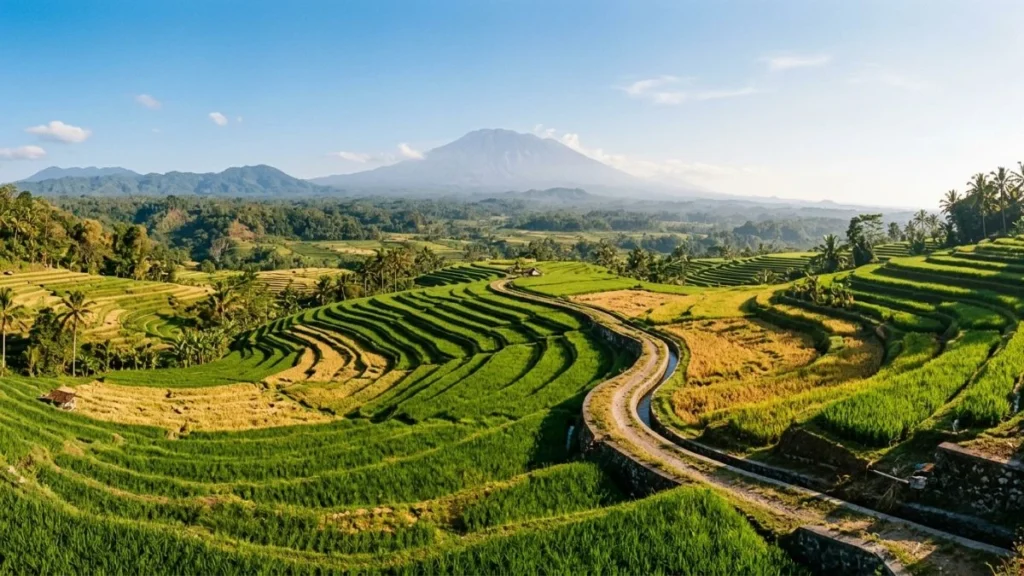
September sits in an interesting position on the Bali calendar. The peak of peak season — July and August — has just passed. Prices are dropping. Crowds are thinning. But the weather hasn’t changed: September is still firmly in the dry season, still sunny, still the kind of Bali that the island’s reputation is built on.
The bali in september picture is straightforward for most travellers: you get the same weather as August at meaningfully lower prices and with noticeably fewer people. For anyone with flexibility on dates, it’s one of the more rational choices available.
This guide covers what September actually delivers — weather, crowds, prices, what’s happening culturally, and where to be.
Quick Facts — Bali in September
- Season: Dry season — tail end, transitioning toward wet in late October
- Average temperature: 26–30°C (79–86°F)
- Rainfall: Very low early September, increasing slightly by late month
- Humidity: Low to moderate
- Crowd level: Medium — noticeably quieter than July/August
- Price level: Mid — 15–25% below August peak rates
- Surf: Good to excellent on west-facing breaks
The Weather in September: Still Dry, Starting to Shift
Early and mid September is effectively an extension of the August dry season. Days are sunny, humidity is low by Bali standards, and rain is rare. The same conditions that make July and August the island’s busiest months are still fully present — just without the crowds that accompany them.
By late September, the first hints of the seasonal shift begin to appear. An occasional afternoon cloud build-up, a brief shower here and there. Nothing like the sustained wet season rain of November through March — more a reminder that the dry season has a closing time. For most itineraries, this is irrelevant. A week or two in September will almost certainly be dry throughout.
Temperature stays consistent across the month: 28–32°C in south Bali, 2–4 degrees cooler in Ubud and the central highlands. The evenings in Ubud are genuinely pleasant in September — warm enough to eat outside, cool enough to sleep without air conditioning if you have good airflow.
The surf on the west-facing coasts — Canggu, Echo Beach, Medewi, Uluwatu — remains strong through September. The Indian Ocean swell that drives Bali’s best surf season peaks in July and August but maintains good size and consistency well into September. For intermediate and experienced surfers, September is arguably the better month: same waves, fewer people in the water.
Crowds and Prices: The Main Reason to Choose September
This is the honest case for September over July or August.
The European and Australian school holiday periods that drive Bali’s peak season end in late August. By the first week of September the drop is noticeable — fewer group tours, shorter queues at popular sites, easier walk-in availability at restaurants that were fully booked a month earlier.
Accommodation prices in September typically run 15–25% below August rates. Villas that were booked out weeks in advance in peak season have availability on shorter notice. Flight prices from Australia and Europe also ease from the late-August peak, though they remain higher than the true shoulder months of April–May.
The practical effect: Tegallalang without the 10am crowd. Tirta Empul with room to move through the bathing pools. The Campuhan Ridge walk without passing a tour group every five minutes. These aren’t dramatic differences — Bali in September is still a popular destination — but they’re real.
What’s Happening Culturally in September
September doesn’t carry a fixed major festival the way June carries Galungan, but the Balinese ceremonial calendar operates year-round and September will have temple ceremonies, village celebrations, and cremation processions depending on the Balinese Pawukon calendar cycle.
The Balinese calendar runs on a 210-day cycle, which means significant ceremonies fall on different Gregorian dates each year. What’s consistent: there will be something happening. The evening Kecak and Legong performances at Ubud Palace run year-round. The daily temple offerings and morning market activity in every village continue regardless of season.
One September-specific note for 2026: check the Balinese calendar for Kuningan and related ceremonies — the 210-day cycle means these can fall in September in some years, bringing decorated streets and family temple visits similar in character to the Galungan period.
Where to Go in Bali in September
The dry season conditions make September good across the island, but a few areas particularly reward a September visit.
Ubud and the Central Highlands
September is one of the cleaner months for Ubud. The rice terraces are at a late-dry-season green — not the luminous wet-season green of December, but deep and textured. The Campuhan Ridge walk is dry underfoot and the mornings are clear. Crowds at Tegallalang and Tirta Empul are thinner than August without the occasional wet-season cloud cover of October.
For what to do specifically in Ubud, the things to do in Ubud Bali guide covers the full territory. For the market, the Ubud market guide has timing and what’s worth buying.
East Bali
Amed, Candidasa, and the Karangasem coast are at their best in the dry season and September is no exception. Water visibility for diving and snorkelling at Tulamben and Jemeluk bay is consistently good — the dry season clarity that draws serious divers peaks in July–August and holds through September.
The drive from Ubud through Sidemen valley to the east coast is particularly good in September: clear skies, the rice terraces in their late-dry-season state, Mount Agung visible most mornings before cloud builds in the afternoon.
South Bali
Canggu, Seminyak, and the Bukit Peninsula are fully operational in September with the August crowds gone. Beach clubs have space. The surf breaks at Uluwatu, Padang Padang, and Bingin are still working well. The Kecak performance at Uluwatu at sunset is at its most atmospheric in September’s clear-sky conditions — the kind of evening where the light on the Indian Ocean turns everything orange for twenty minutes before dark.
North Bali
Lovina and the north coast are worth considering in September for travellers who want the dry season without any of the tourist infrastructure of the south. The dolphin watching trips that run from Lovina at dawn operate year-round but September mornings are reliably clear and calm. The drive over the central mountains from Ubud — through Kintamani, past Lake Batur, down to the north coast — takes around 2.5 hours and is one of the better road trips available in Bali.
What to Pack for Bali in September
September is a straightforward packing month. The dry season means rain gear is low priority — a light packable jacket covers the occasional late-month shower. The usual warm-weather kit applies: light breathable clothing, good sandals, sun protection with a high UV index in mind.
A couple of September specifics worth noting. The surf is running, so if you’re planning to get in the water — even just to swim — reef shoes are useful at the rockier entry points in East Bali and on the Bukit cliffs. And a light layer for Ubud evenings, where the temperature drops enough after dark to make a single extra layer comfortable.
For a full breakdown by activity and area, the Bali packing list covers the dry season specifics.
September vs Other Months: The Honest Comparison
September vs July/August: Same weather, 15–25% cheaper, noticeably fewer crowds. September wins on value and comfort for most travellers.
September vs October: October is cheaper still and still largely dry in early weeks, but the wet season transition is more pronounced — there’s genuine rain risk in the second half of October. September is the safer choice for weather reliability.
September vs April/May: April and May are the true shoulder season — cheaper and quieter than September, but the surf is smaller and some travellers find the post-wet-season green already fading. September has better surf and the dry season is more established.
September vs June: June has the Galungan festival, which adds something September doesn’t have. Weather and prices are similar. If the cultural calendar matters, June has the edge. If crowds matter more, September is quieter.
FAQ
Is September a good time to visit Bali?
Yes — genuinely one of the better months. The dry season weather is still fully in place, prices are meaningfully below the July–August peak, and the crowds have thinned. For travellers with date flexibility, September often makes more sense than peak season.
Is it hot in Bali in September?
Temperatures are 26–30°C across most of the island, with Ubud and the highlands running 2–4 degrees cooler. Hot by northern European standards, comfortable by Southeast Asian standards. Humidity is lower than the wet season months, which makes the heat more manageable.
Does it rain in Bali in September?
Early and mid September is reliably dry. Late September can bring occasional brief afternoon showers as the seasonal transition begins. A full week of rain in September is very unlikely — this is not wet season behaviour yet.
Is Bali busy in September?
Less busy than July and August. The European and Australian school holiday crowds have returned home, and the drop is noticeable at popular sites. Bali in September is not empty — it remains a popular destination — but it’s meaningfully more comfortable than peak season.
Is September good for surfing in Bali?
Yes. The Indian Ocean swell that drives Bali’s best surf season maintains good size and consistency through September. West-facing breaks — Canggu, Uluwatu, Medewi — are all working well. With the August crowds gone, September is often the pick for surfers who want quality waves without the peak-season competition for sets.
September is not Bali’s most dramatic month. There’s no single festival that transforms the island the way Galungan does in June. But it delivers something quieter and arguably more valuable: the full dry season experience — the weather, the surf, the clear-sky views of Agung from the rice terraces — without the price premium or the crowds that come with peak timing.
The bali in september case is simple. If you can go in August, you can go in September for less money, with more space, in the same weather. Most people who visit in September say they’d do it again over peak season. Most people who visit in peak season don’t know September exists as an option.
For planning the rest of the trip, the bali travel advisory 2026 covers entry requirements and what’s changed. The things to do in Ubud Bali guide and Ubud market guide cover the cultural interior.