
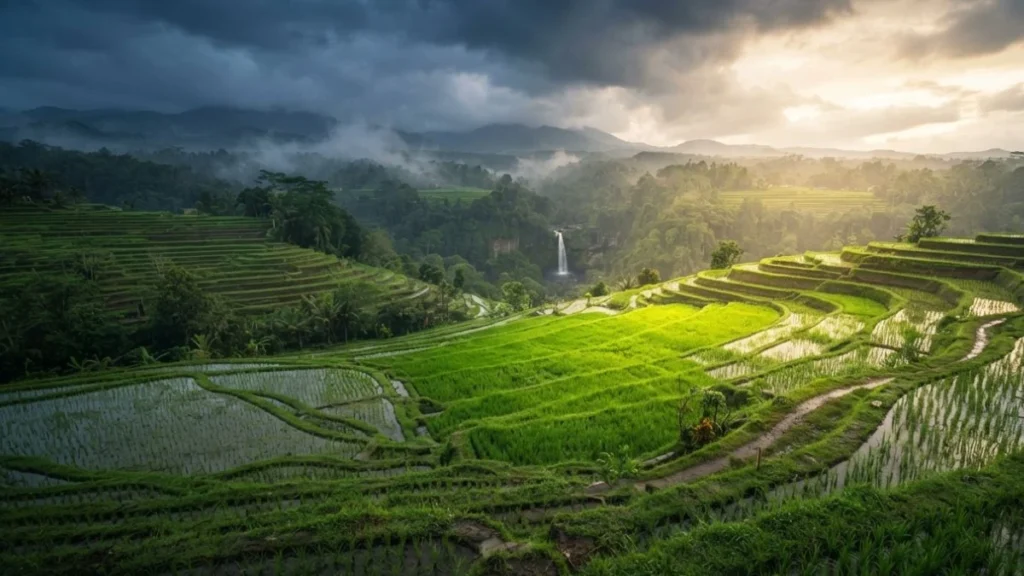
Bali rainy season conjures up an image most visitors quietly worry about — grey skies, endless monsoon downpours, an entire trip spent watching rain from a villa window. The honest reality, consistently reported across recent seasons, looks nothing like that for most days. What you actually get is a bright, often sunny morning, a heavy but genuinely short burst of rain sometime in the afternoon or evening, and clear skies again not long after. It’s a different Bali, not a broken one.
This guide covers what the wet season genuinely involves month by month, the real trade-offs worth weighing, and how to plan around the rain rather than around a myth of it.
Quick Facts
- Rainy season dates: roughly November to March, driven by the northwest monsoon
- Wettest months: December through February, with January typically the single wettest
- Typical daily pattern: clear or partly cloudy mornings, a concentrated downpour in the afternoon or evening, then clearing again — rarely a full day of continuous rain outside major weather systems
- Temperatures: stay warm throughout, roughly 24–29°C, with humidity noticeably higher than dry season
- Regional variation: North Bali (Munduk, Lovina) sees heavier, longer showers; central Bali (Ubud, Sidemen) gets steadier but shorter rain; parts of South Bali tend to run drier overall
The Actual Daily Pattern, Not the Monsoon Myth
The single biggest misconception about this season is picturing it like a prolonged grey-sky monsoon straight through the day. In practice, most days follow a fairly consistent rhythm: bright mornings good for temple visits, rice terrace walks, or waterfall trips, followed by a genuinely heavy but short-lived downpour sometime in the afternoon or evening, often lasting anywhere from a few minutes to a couple of hours before clearing. January and February can bring longer wet stretches and more overcast days than the rest of the season, but even then, full days of continuous rain are the exception rather than the rule.
This pattern makes the wet season considerably more manageable than its reputation suggests — plan the outdoor half of your day for the morning, build in flexibility for the afternoon, and you’ll rarely lose an entire day to weather.
What You Actually Gain
The trade-offs genuinely favor certain kinds of travelers. Crowds drop noticeably at temples, rice terraces, and popular viewpoints compared to the July–August and December peak crush, and flight and hotel prices trend lower across the board, particularly January through March. The landscape itself transforms — rice terraces turn a deeper, more saturated green, and waterfalls near Ubud and beyond run at full, dramatic flow rather than the thinner trickle common in the driest months. Surfers get a genuine bonus too: the northwest monsoon sends good swell into east-coast breaks like Keramas, Sanur, and Nusa Dua, making this season a legitimate draw rather than a compromise for that specific crowd.
What You Genuinely Trade Off
Humidity is the most constant, unavoidable factor — even between downpours, the air stays warm and sticky in a way dry season simply doesn’t. Boat crossings to the Gili Islands and Nusa Penida become more prone to delays or outright cancellation as seas roughen, especially from December through February, so build flexibility into any island-hopping plans during peak wet months rather than a single fixed departure. Heavy downpours can also cause temporary flooding on low-lying roads and rice paddies for a few hours at a stretch, and standing water after rain brings a seasonal rise in mosquitoes, alongside a modest increase in dengue fever cases reported across Indonesia during these months — reasonable justification for consistent repellent use rather than a reason to cancel a trip outright.
Where You Feel It Differently Across the Island
Rain doesn’t fall evenly across Bali, and knowing the regional pattern helps with planning. North Bali — Munduk, Lovina — tends to see heavier and longer showers, which suits travelers chasing misty mountain views, roaring waterfalls, and moody coffee plantation scenery, but means less reliable dry stretches for outdoor activities. Central Bali, including Ubud and Sidemen, generally gets steadier but shorter rain, keeping the rice terraces vividly green without disrupting plans too severely. Parts of South Bali, particularly the Bukit Peninsula around Nusa Dua and Uluwatu, tend to run somewhat drier overall, worth considering if a beach-focused stay during these months matters more to you than inland scenery.
Should You Actually Book This Season?
The honest answer depends entirely on what kind of trip you’re planning. If your itinerary is built around guaranteed beach days, all-day sunshine, and boat trips you can’t afford to have cancelled, the dry season (April–October) remains the safer, more predictable choice, and this is especially true for first-time visitors who want the classic, uncomplicated version of a Bali holiday. If you’re chasing lower prices, thinner crowds, lush green scenery, and don’t mind planning around an afternoon shower here and there, the wet season genuinely delivers — and for slow travel specifically, quieter temples and empty rice terrace viewpoints are arguably a better version of the experience than fighting through peak-season tour groups.
The shoulder months, late October through early November and March, offer a reasonable middle ground: lighter, less frequent rain than the December–February peak, while still carrying some of the price and crowd benefits of the wet season proper.
FAQ
When is Bali’s rainy season?
Roughly November through March, with December, January, and February the wettest months. January is typically the single wettest month of the year.
Does it rain all day during Bali’s rainy season?
Rarely. Most days bring clear or partly cloudy mornings followed by a concentrated, often short downpour in the afternoon or evening. Full days of continuous rain do happen, particularly in January and February, but aren’t the norm.
Is it worth visiting Bali during rainy season?
For many travelers, yes — lower prices, thinner crowds, lush scenery, and full-flow waterfalls are genuine upsides. If your trip depends on guaranteed sunshine or uninterrupted boat travel, the dry season remains the more reliable choice.
Which part of Bali stays driest during rainy season?
The Bukit Peninsula, including Nusa Dua and Uluwatu, tends to run somewhat drier than North or Central Bali during these months, though no part of the island is fully rain-free.
Do boat trips to Nusa Penida or the Gili Islands still run during rainy season?
Generally yes, but delays and cancellations become more common as seas roughen, particularly December through February. Build flexibility into any island-hopping plans rather than a single fixed departure.
Final Thought
Bali rainy season rewards travelers who plan around a genuine daily rhythm rather than an exaggerated monsoon myth — mornings for exploring, afternoons for flexibility, and a quieter, greener version of the island as the reward. If lower prices and thinner crowds matter more to you than a guaranteed sunny week, this season is worth serious consideration rather than automatic avoidance. For more on choosing the right month for your specific priorities, our best time to visit Bali guide covers the full year, and our Munduk travel guide has more on the North Bali experience during the wetter, mistier months.