
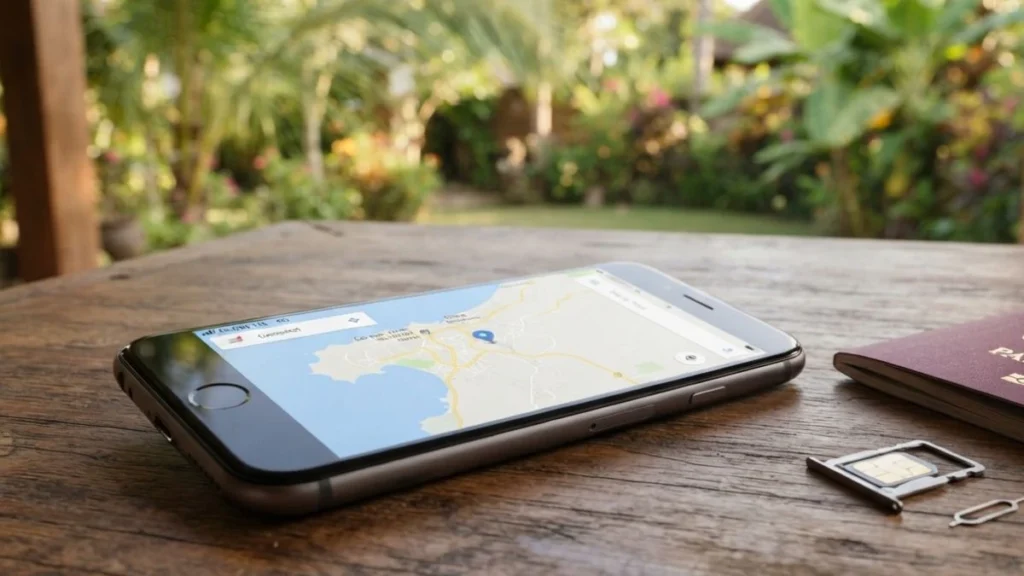
Search SIM card Bali or eSIM Bali and you’ll land on a wall of near-identical “best eSIM 2026” roundups, most of them running affiliate codes for a specific reseller and ranking that reseller first regardless of what actually fits your trip. Strip away the discount codes and the sponsored placements, and the decision is genuinely simple: which carrier’s network you’re on matters far more than which company sold you the plan, and that’s true whether you go physical SIM or eSIM.
This guide covers what actually matters — coverage, real pricing, and the one legal rule that trips up long-stayers — without pushing you toward a specific paid provider.
Quick Facts
- Best network coverage in Bali and beyond: Telkomsel, consistently ranked first for reliability in rural areas, remote islands, and North Bali
- Cheaper alternative for South Bali specifically: XL Axiata, solid in Canggu, Seminyak, Kuta, and other high-traffic tourist zones, less reliable further out
- Physical SIM price: roughly IDR 50,000–85,000 for 7–20GB, valid 14–30 days, from Telkomsel or XL Axiata
- Physical SIM registration: passport required by law since 2018, handled at point of purchase
- The 90-day rule: long-term physical SIM users must register their phone’s IMEI or risk it being blocked from Indonesian networks; this does not apply to international eSIMs, which roam onto local networks rather than registering as an Indonesian SIM
Physical SIM vs eSIM: The Actual Trade-off
A physical SIM bought locally, at the airport or a convenience store like Indomaret or Alfamart in town, gets you the cheapest per-gigabyte pricing and, if you buy directly from Telkomsel or XL, guaranteed access to their actual network. The trade-off is the hassle: finding a shop, showing your passport for the legally required registration, and dealing with a tiny SIM tray if you’re switching from your home number.
An eSIM skips all of that — activate it before you land, and you’ve got data the moment you land. The catch worth knowing: many popular international eSIM resellers don’t actually run on Telkomsel, Indonesia’s strongest network, instead using XL, Indosat, or Smartfren as their backend. Coverage in Ubud, Canggu, and Seminyak is generally fine on any of these networks, but if your trip includes remote waterfalls in North Bali, hidden beaches around Uluwatu, or a hop to Nusa Penida or the Gili Islands, checking specifically which network your eSIM provider actually uses matters more than the headline price.
Airport SIM counters are a legitimate option and not inherently a scam, but it’s worth asking the price before agreeing to a package — some counters have been known to quote higher than the standard in-town rate to arriving tourists who haven’t seen the alternative pricing yet.
The 90-Day IMEI Rule, Explained Plainly
If you’re staying in Bali longer than 90 days and using a local physical SIM card, Indonesian regulation requires you to register your phone’s IMEI, or risk having your device blocked from local networks until import taxes are paid. This catches long-stayers and digital nomads off guard more than short-term tourists, since most vacation trips fall well under that window. International eSIMs, because they work by roaming onto Indonesian networks rather than being issued as a registered local SIM, aren’t subject to this rule at all — worth factoring in if you’re planning an extended stay and want to avoid the registration process entirely.
What Actually Determines a Good Choice
Coverage area matters more than almost anything else in this decision. If your Bali trip stays concentrated in Ubud, Canggu, Seminyak, and similar well-covered tourist zones, XL Axiata or a budget eSIM running on XL’s network will serve you fine at a lower cost. If your plans include North Bali, remote waterfalls, East Bali’s temple circuit, or island hopping to Nusa Penida or the Gilis, Telkomsel’s broader reach is worth the modest price premium — patchy signal partway through a rural drive is a genuinely bigger inconvenience than a slightly higher data bill.
Data volume is the other real variable: most tourists comfortably cover a week or two of maps, messaging, and social media on 10–20GB, while heavier use (video calls, streaming, extensive photo/video backup) pushes that considerably higher. Buying a plan sized to your actual trip length and habits, rather than defaulting to whatever a roundup site ranks first, avoids both running out mid-trip and paying for data you’ll never use.
A Word on the “Best eSIM” Roundups
Worth saying plainly: most “best eSIM for Bali” articles online are affiliate marketing, with rankings shaped at least partly by referral commissions rather than pure network performance. That doesn’t mean every recommendation in them is wrong — several of the providers mentioned across these guides genuinely do use Telkomsel’s network and deliver solid service — but it’s worth treating the specific #1 ranking with some skepticism and checking which actual carrier network sits behind any eSIM you’re considering, rather than trusting the marketing copy alone.
FAQ
Should I get a physical SIM or eSIM for Bali?
Either works well. Physical SIMs are generally cheaper per gigabyte and guarantee network choice, while eSIMs offer convenience by activating before you land, though many eSIM resellers don’t run on Telkomsel specifically.
Which network has the best coverage in Bali?
Telkomsel consistently ranks as the most reliable, particularly in rural areas, North Bali, and remote islands like the Gilis and Nusa Penida. XL Axiata is a solid, cheaper alternative if you’re staying mainly in South Bali’s tourist areas.
Do I need to register my SIM card in Bali?
Yes, passport registration is legally required for any Indonesian SIM card, physical or otherwise, and is handled automatically at the point of purchase.
What is the 90-day IMEI rule?
Long-term users of a local physical SIM card must register their phone’s IMEI with Indonesian customs after 90 days, or risk the device being blocked from local networks. International eSIMs, which roam onto local networks rather than registering as an Indonesian SIM, aren’t subject to this rule.
How much data do I actually need for a Bali trip?
Most short-term tourists comfortably manage on 10–20GB for a one- to two-week trip covering maps, messaging, and social media. Heavier users (video calls, streaming) should budget noticeably more.
Final Thought
The SIM card versus eSIM decision in Bali comes down to two questions worth answering honestly: how far off the main tourist areas are you actually going, and how much do you value convenience over the lowest possible price. Check which network sits behind whatever option you choose, rather than trusting a roundup’s top pick blindly, and you’ll land on something that works for the trip you’re actually taking. For more practical logistics before you land, our Bali entry requirements guide and Bali digital nomad guide cover the rest of the pre-trip checklist.