
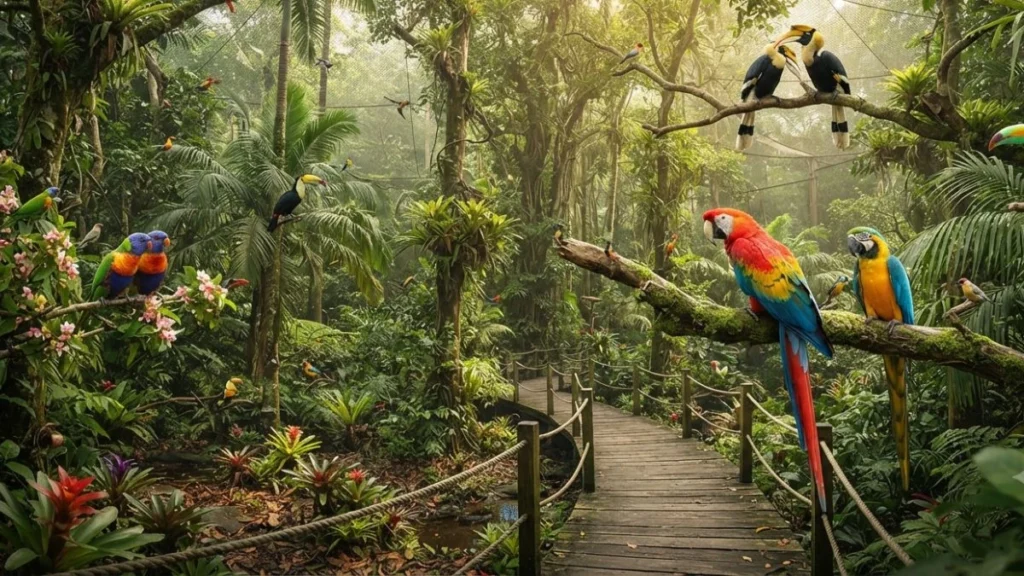
Bali Bird Park, in Batubulan roughly 20 to 30 minutes from central Ubud, is one of the better-regarded animal attractions on the island — a conservation-driven park credited with successfully breeding endangered species like the Bali Starling, some of which have gone on to support wild release programs. It’s also a place where the pricing genuinely confuses people, since foreign tourists and domestic visitors pay dramatically different rates, and reported prices online vary enough that it’s worth checking directly before you go.
This guide covers what the park actually offers, how the pricing works, and how it compares to other Ubud-area animal attractions on the welfare front.
Quick Facts
- Location: Batubulan, Sukawati, roughly 20–30 minutes from central Ubud, on the road toward Denpasar
- Size: around 1,000–1,300 birds across nearly 250 species, spread across 7–8 themed habitat zones
- Foreign tourist entrance fee: roughly IDR 305,000–385,000 for adults, depending on source and booking method
- Domestic visitor fee: roughly IDR 126,000–140,000 — considerably less than the foreign rate
- Hours: 9am–5:30pm daily
- Reptile Park next door: separate attraction, separate ticket, roughly IDR 100,000–200,000
What You’ll Actually See
The park is organized into themed zones recreating natural habitats from Sumatra, Papua, and beyond, along with sections dedicated to South American and African species — macaws, hornbills, birds of paradise, and a large free-range aviary where visitors can walk among birds like the striking Victoria Crowned Pigeon rather than viewing them through glass. Feeding sessions and shows run through the day (pelican feeding, eagle demonstrations, parrot encounters), and several reviewers specifically highlight the hands-on element — large, calm birds like macaws and hornbills placed on your arm for photos, along with guided feeding of smaller species.
The park’s conservation credentials are genuinely more substantial than most animal attractions in the Ubud area: it runs an active breeding program for the endangered Bali Starling, among Indonesia’s most threatened native birds, with some individuals bred specifically to support reintroduction into the wild. Most visitors spend 2 to 4 hours here, and morning (9–11am) is consistently recommended as the best window, when birds are most active and the heat hasn’t set in yet.
The Foreigner Pricing Gap, Honestly Explained
Here’s the detail worth knowing before you book: Bali Bird Park charges a substantially higher rate to foreign tourists than to Indonesian visitors — foreign adult tickets run roughly IDR 305,000–385,000 depending on the source and whether you book online or at the gate, while domestic visitors pay closer to IDR 126,000–140,000. This isn’t unique to Bali Bird Park; dual pricing for locals versus foreign tourists is common practice across many Indonesian attractions, generally justified as making cultural and natural sites accessible to local visitors on local incomes. It’s still worth knowing about directly, since the gap here is close to threefold, and reported online prices vary enough between sources that booking through a verified official channel or checking the park’s own site before you go is the more reliable way to know what you’ll actually pay.
Booking online in advance is consistently cheaper than paying at the gate, and combo tickets that bundle Bird Park and Reptile Park admission together tend to offer better value than buying each separately if you plan to see both.
Is It Actually Ethical?
This is a fair question to ask about any animal attraction in Bali, and Bali Bird Park generally comes out better than most on the welfare front, though it’s not entirely without nuance. Reviewers consistently describe well-maintained habitats, visibly engaged and knowledgeable staff, and a genuine emphasis on education and conservation rather than pure spectacle — one visitor specifically noted that despite generally opposing captive animal entertainment, they left feeling the birds were being well looked after. That said, some species — including the endangered Bali Starling — are kept in more traditional caged enclosures rather than the open, free-range zones, which is standard practice for active breeding programs protecting genuinely endangered populations, but worth knowing if cage-free is a hard requirement for you personally.
Compared to more contested Bali animal attractions — elephant riding (now banned outright as of 2026), the caged, non-flying birds noted at some other tourist sites — Bali Bird Park’s active breeding and release track record puts it in a genuinely different category, closer to a legitimate conservation facility than a straightforward photo-op business.
Practical Tips
Bring cash for any additional feeding sessions or the on-site restaurant, and note that outside food and drinks generally aren’t permitted inside the park. If you’re visiting with young kids, the compact, walkable layout and frequent scheduled activities make it an easy half-day rather than an exhausting one, and several parents specifically mention it as a more relaxed alternative to busier, louder Ubud attractions.
FAQ
How much does Bali Bird Park cost for foreign tourists?
Roughly IDR 305,000–385,000 for adults, depending on the source and booking method, with online booking generally cheaper than paying at the gate. Domestic visitors pay a considerably lower rate, closer to IDR 126,000–140,000.
Is the Reptile Park included in the Bird Park ticket?
No. The Reptile Park next door requires a separate ticket, typically IDR 100,000–200,000 for adults, though combo tickets covering both are often better value than buying separately.
How long should I plan for a visit?
Most visitors spend 2 to 4 hours, longer if you’re interested in photography or want to catch multiple feeding sessions and shows throughout the day.
Is Bali Bird Park ethical?
Generally considered one of the better animal attractions in the Ubud area on welfare grounds, with an active, documented conservation breeding program for endangered species like the Bali Starling. Some species are kept in caged enclosures as part of that breeding program, which is standard conservation practice but worth knowing if that matters to you.
What’s the best time to visit Bali Bird Park?
Morning, between 9 and 11am, when birds are most active and temperatures are cooler.
Final Thought
Bali Bird Park earns a genuinely stronger conservation reputation than most Ubud-area animal attractions, but the foreigner-versus-local pricing gap and inconsistent online rates make it worth double-checking the current price before you commit. For more on navigating Bali’s animal attractions and their varying welfare standards, our guides to Ubud Monkey Forest and elephant riding in Bali cover similar ground.