
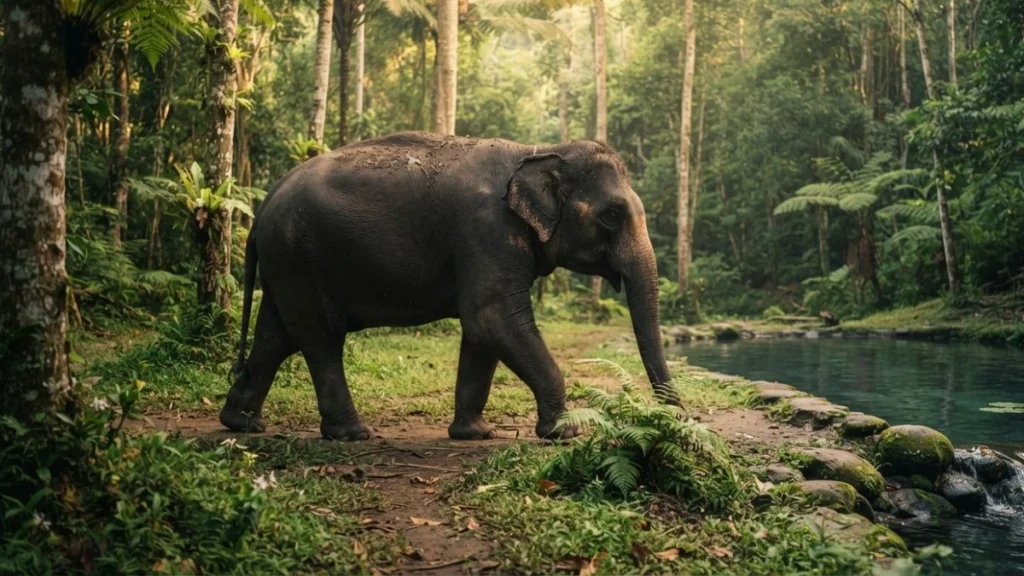
Elephant riding Bali searches used to return a straightforward list of parks offering rides through the jungle. As of 2026, the honest answer has changed: elephant riding is now banned across Indonesia. If a tour operator or park still offers you a ride, that’s no longer just an ethical question — it’s a compliance issue on their end, and worth knowing before you book anything elephant-related in Bali.
This guide covers what actually changed, why it happened, and what remains genuinely contested even among the parks now marketing themselves as ethical sanctuaries.
Quick Facts
- Legal status as of 2026: elephant riding is banned nationwide in Indonesia, following a directive from the Ministry of Forestry’s conservation directorate at the end of 2025
- Enforcement: facilities that continue offering rides risk having their operating permits revoked
- Mason Elephant Park: one of the last major Bali venues offering rides, halted the practice in early 2026 following government warnings
- What’s still offered: observation, walking alongside elephants, and in some cases bathing or feeding interactions
- Still contested: animal welfare organizations argue that even non-riding direct contact (bathing, feeding, close photo ops) can still involve welfare issues depending on the facility
What Actually Changed
At the end of 2025, Indonesia’s Ministry of Forestry issued a formal directive ending elephant riding at all conservation and tourism facilities nationwide, requiring a shift toward observation-based experiences instead. This followed years of campaigning by international animal welfare organizations, including a petition signed by more than 10,000 people specifically targeting Mason Elephant Park, historically one of Bali’s most visited elephant attractions. Bali Zoo announced an end to its own elephant rides just before the directive took effect, and Mason Elephant Park followed within days, after receiving two separate government warnings for its earlier refusal to move away from riding.
This is a genuinely significant shift, not a minor policy tweak. Facilities found continuing to offer rides now risk losing their operating permits entirely, and Bali’s Natural Resources Conservation Agency has been actively monitoring compliance on the ground.
Why the Ban Happened
Investigations into Bali’s elephant tourism industry, including undercover reporting by international welfare organizations, documented conditions at several well-known venues that contradicted their marketing as ethical sanctuaries. Reports described elephants chained for extended periods — in some cases from late afternoon until the following morning — visible scarring consistent with the use of bullhooks (a handling tool with a sharp metal hook), and handlers using physical force and food deprivation to control the animals when they weren’t cooperating for tourist rides and photo sessions. Elephants naturally live in complex social herds, foraging and moving significant distances daily; welfare investigators linked the chained, ride-focused model directly to physical problems like joint and foot damage, along with signs of chronic stress in captive individuals.
Bali’s elephant population is entirely captive — there are no wild elephants on the island — and most of the elephants at these facilities were originally rescued from habitat loss in Sumatra, where the Sumatran elephant is critically endangered. That rescue origin is part of what makes this a genuinely complicated topic rather than a simple boycott case: these animals generally can’t be returned to the wild, and sanctuary-style tourism remains one of the practical ways their ongoing care gets funded.
What’s Still Genuinely Contested
Here’s where honest nuance matters: even with riding now banned, welfare organizations like PETA maintain that any direct physical interaction with captive elephants — bathing, feeding, close-contact photo ops — still carries welfare concerns and shouldn’t be treated as automatically “ethical” just because riding specifically has stopped. Their position is that a genuine sanctuary allows elephants to live freely with minimal forced human contact, with visitors observing from a distance rather than participating directly.
Operators positioning themselves as ethical alternatives, including Mason Elephant Park itself, describe their current model differently — framing supervised bathing and walking-alongside interactions as welfare-positive compared to the old riding format, while acknowledging they operate as a rescue and conservation park rather than a strict hands-off sanctuary. Independent welfare frameworks generally split the difference: recommending walk-alongside and bathing interactions as preferable to riding, while still flagging that facilities vary considerably in actual practice, from chaining policies to mahout-to-elephant ratios to whether independent welfare audits are permitted at all.
Questions Worth Asking Before You Book Anything Elephant-Related
If you’re considering any elephant experience in Bali, a handful of direct questions separate a genuine welfare-focused operation from a rebranded photo-op business: Do the elephants have daily access to a natural bathing pool, or is the “bath” a staged tourist activity? Are elephants chained overnight, or do they move freely within an enclosure? What’s the ratio of mahouts to elephants? Is there still a riding program on the menu in any form, and if so, does the operator allow independent welfare observers in? Can staff clearly explain where each individual elephant came from and why it can’t return to the wild? An operator that can’t answer these plainly is worth treating with real skepticism, regardless of how the marketing reads.
FAQ
Is elephant riding still legal in Bali?
No. As of the end of 2025, elephant riding is banned across Indonesia by government directive, with facilities risking permit revocation for continuing the practice. Mason Elephant Park, one of the last major Bali venues offering rides, halted them in early 2026.
Is Mason Elephant Park ethical now that riding has stopped?
It’s genuinely contested. Some welfare frameworks consider the shift to walking-alongside and bathing interactions a meaningful improvement over riding. Animal welfare organizations like PETA maintain that any direct physical interaction with captive elephants still carries welfare concerns, regardless of whether riding specifically has ended.
Why can’t Bali’s elephants just be released into the wild?
Bali’s elephant population is entirely captive, mostly rescued from habitat destruction in Sumatra, where their natural habitat is now too fragmented or destroyed to support reintroduction. Sanctuary-style care is generally the realistic long-term outcome for these individuals.
What questions should I ask before visiting an elephant park in Bali?
Ask about daily bathing pool access, overnight chaining policies, mahout-to-elephant ratios, whether riding is still offered in any form, and whether staff can explain each elephant’s rescue origin. Vague or evasive answers are a red flag.
Are there elephant-free wildlife experiences in Bali worth considering instead?
Yes — Bali’s broader wildlife tourism includes options with fewer direct-contact welfare concerns, and it’s worth researching any wildlife attraction’s specific practices rather than assuming “sanctuary” branding guarantees ethical treatment.
Final Thought
The 2026 riding ban is a genuine step forward for Bali’s captive elephants, but it doesn’t automatically make every remaining elephant experience ethical by default. Ask the direct questions, be skeptical of vague sanctuary marketing, and remember that “no riding” is a floor, not a guarantee. For more on navigating Bali’s other animal-tourism ethical questions, our guides to Lovina’s dolphin tours and kopi luwak coffee ethics cover similar ground.