
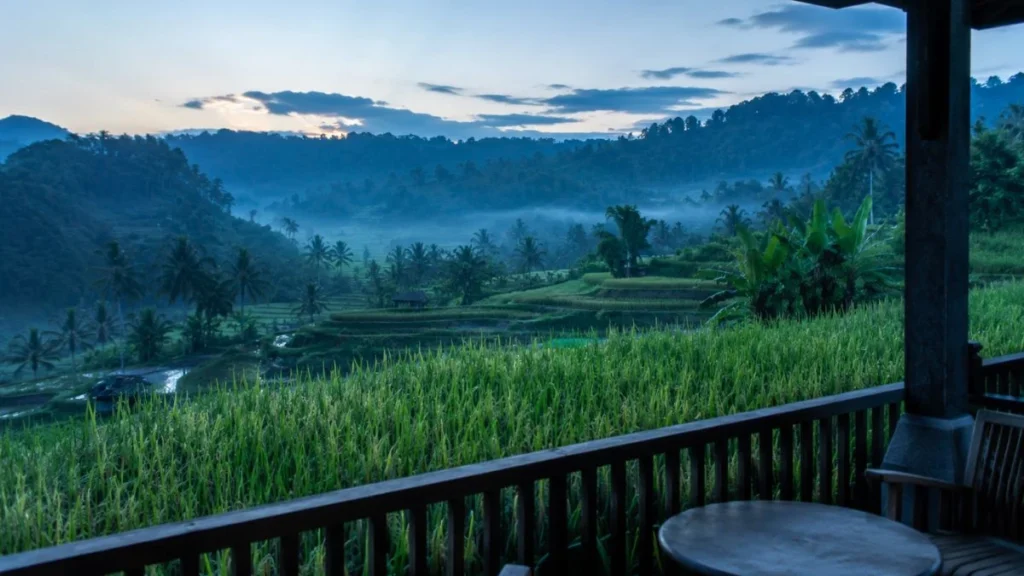
Ubud rice field view accommodation: Not every property marketing a “rice field view” in Ubud has a genuine rice field view. Some face working paddies across an open valley. Others overlook a narrow strip of terracing between two villa developments. Understanding the difference before booking prevents the specific disappointment of arriving to find your balcony faces a construction site where a rice field used to be.
The search for ubud rice field view accommodation is one of the most common Bali booking decisions — and one of the most frequently regretted when the property does not match its listing photographs. This guide covers what a genuine rice field view in Ubud looks like, which areas deliver it reliably, what the different accommodation types offer at different price points, and the specific things to check in any listing before committing.
Ubud’s rice fields are not static. The area around the town has been developing steadily for over a decade, and the paddy that provided a property’s view when it was photographed in 2022 may now be a villa compound or a restaurant. Recency of the listing photographs is the single most important thing to verify.
For travellers deciding between Ubud and other areas for their Bali base, the best areas to stay in Bali for slow travel covers the full trade-off comparison including accommodation character across six different regions.
What a Genuine Rice Field View in Ubud Actually Looks Like
A genuine rice field view from Ubud accommodation means one of three things, in descending order of what most visitors are imagining:
Valley view with active terracing — the best version, and the one most listing photographs represent. The property sits on a ridge or elevated position overlooking a broad valley with multiple tiers of working rice paddies visible, often with Mount Agung or the surrounding jungle ridges visible in the distance. This view exists and is available — but it is confined to specific locations, primarily Penestanan, Sayan, and the northern Ubud outskirts.
Adjacent paddy view — the property is set in or immediately beside working rice fields. The view from the terrace or pool is directly into the paddies — close enough to see the irrigation channels and hear the frogs at night. This is the most immersive version and is available at small guesthouses and family-run properties in the village lanes around Ubud.
Partial or framed view — the property has a view that includes some rice terracing, often alongside other elements (roads, other villas, garden landscaping). The rice field is present but not the dominant feature of the view. This is the most common category in Ubud accommodation marketing, and the one most likely to disappoint visitors expecting the valley-terrace photograph.
The distinction matters because properties in all three categories often use similar language in their listings.
The Areas That Reliably Deliver
Penestanan — the village immediately west of central Ubud, accessible on foot via the steep steps down from Jalan Raya Campuhan. Properties here sit on a hillside with views across the Campuhan valley and its surrounding rice fields. Penestanan has some of the best rice field views available within walking distance of Ubud’s restaurants and cafés. Accommodation ranges from family-run guesthouses at IDR 200,000–400,000 per night to mid-range villas at IDR 800,000–2,000,000.
Sayan — further west, overlooking the Ayung River valley. The views here are more dramatic — deeper valley, more jungle, and the river audible from some properties. The famous Four Seasons Sayan sits on this ridge. Budget options exist on the lane below the main road. The 20-minute walk back to central Ubud involves a steep hill — scooter access is more practical.
Jalan Bisma — a lane running north from central Ubud with properties on both sides overlooking the Wos River valley. Genuinely walkable from Ubud’s restaurants and cafés (10–15 minutes). Several guesthouses and small hotels line this road with legitimate valley views. The Campuhan Ridge Walk starts near the bottom of this lane.
Northern Ubud outskirts (toward Tegallalang) — the area north of the town centre along the Tegallalang road, where properties sit among active rice paddies rather than overlooking them from a ridge. This is where the “staying in the rice fields” experience is most genuine — the fields are immediately around the property rather than visible from a terrace across a valley.
Nyuh Kuning — a village south of Ubud monkey forest with several family compounds offering basic accommodation directly adjacent to rice fields. Less infrastructure than Penestanan or Bisma, but genuinely surrounded by agricultural land at very low prices.
What to Check in Any Listing Before Booking
Date of photographs — if the listing does not specify when the photographs were taken and they look more than two to three years old, message the property and ask specifically whether the view is unchanged. Ubud’s development rate makes older photographs unreliable.
Direction the view faces — a rice field view facing east means a sunrise view over the paddies. A view facing west means afternoon and sunset light on the terracing. Neither is better, but knowing which affects what you will actually see from the terrace at different times of day.
“Rice field” vs “rice terrace” — listings using “rice terrace” typically mean terraced hillside paddies, which implies elevation and a view that includes multiple levels. Listings using “rice field” or “rice paddy” may mean an adjacent flat paddy rather than a terraced hillside view.
What is across the road — in Ubud, properties on the “rice field side” of a lane sometimes have nothing between them and the paddies. Properties on the “road side” look out onto the lane. Ask specifically which direction the primary view faces.
Development adjacent to the property — ask whether there is any construction planned or underway on adjacent land. This is a direct question and a responsible property manager will answer it honestly.
Accommodation by Budget and Type
Budget: IDR 150,000–400,000 per night
Family-run guesthouses in Nyuh Kuning, Penestanan, and the northern Ubud outskirts offer the most genuine rice field adjacency at the lowest prices. These are typically simple rooms in family compounds — en-suite bathroom, fan or AC, a small terrace. The rice field view is often directly outside your terrace rather than across a valley.
What you give up: pool, restaurant on-site, and the design quality of mid-range properties. What you gain: genuine proximity to working agricultural land, a family compound setting with canang sari at your door each morning, and a price that makes a longer stay financially comfortable.
How to find them: Walk the back lanes of Penestanan, Nyuh Kuning, and the Tegallalang road outskirts and look for “homestay” signs. Many are not listed on major platforms. Direct negotiation at the property typically produces better rates than any platform listing.
Mid-Range: IDR 500,000–1,500,000 per night
The most varied category — includes small boutique hotels, designed guesthouses, and private villas, all with rice field views of varying quality. This is where platform listing photography most frequently diverges from reality.
Properties worth understanding in this range:
Jalan Bisma accommodation — several small hotels on this lane have been operating for years with consistent valley views. Check recent guest photographs on booking platforms rather than relying on property photography.
Penestanan village villas — the village has a number of owner-managed villas that have maintained genuine paddy views because the lane itself has limited development. Better found through Facebook groups and direct contact than through major booking platforms.
Properties near the Campuhan Ridge — the ridge itself is protected walking path, which means the view from properties adjacent to it is unlikely to be blocked by future development. A structural advantage that most Ubud accommodation cannot claim.
Upper Mid-Range and Luxury: IDR 1,500,000–5,000,000+ per night
At this price range, Ubud accommodation reliably delivers on its rice field view claims — the investment in the property and the reputational risk of disappointing guests at these rates creates genuine accountability.
Komaneka at Bisma — on Jalan Bisma, with the Wos River valley view that the lane is known for. Consistent reviews for the view quality over multiple years.
Alaya Ubud — central Ubud location with terracing visible from many rooms. Walking distance to the palace and market.
Properties in Sayan — the upper end of the Sayan ridge has some of the most dramatic valley accommodation in Ubud at rates that reflect the view. The Four Seasons Sayan is the landmark property; several smaller luxury villas on the same ridge offer comparable views at lower rates.
The Honest Reality of Rice Field Views in Ubud in 2026
The rice fields around Ubud are being converted to villas, restaurants, and commercial development at a pace that has been documented and lamented for over a decade. The areas that have genuine, expansive rice field views in 2026 are fewer than they were in 2020, and fewer than they will be in 2030.
This does not mean a genuine rice field view is unavailable — it means the due diligence required before booking is higher than it used to be. Properties that have maintained genuine views have done so either because they are in areas with some development protection (the Campuhan Ridge path corridor, traditional village lanes with community land-use agreements) or because the specific topography makes adjacent development impractical.
The areas that have genuinely retained their paddy character — Penestanan, Nyuh Kuning, the northern outskirts toward Tegallalang — remain worth seeking out. The lanes within central Ubud that once looked out over rice fields and now look out over café terraces are not.
Emeka had booked a “rice field view room” in central Ubud based on a photograph that showed green terraces from the balcony. When he arrived, the view from the balcony was a café with a rooftop terrace and, beyond it, the beginning of a rice field. He could see the rice field. He could also see twelve people eating brunch. The café had opened eight months after the listing photograph was taken. He spent his second night in a family guesthouse in Penestanan that cost IDR 250,000 and had nothing between his terrace and the paddy except a low fence and a family of ducks. He said the photographs of the Penestanan room were not impressive. The view at 6am on the first morning made that irrelevant.
FAQ
Where is the best place to stay in Ubud for rice field views?
Penestanan and Sayan consistently deliver the most reliable rice field and valley views in Ubud, with the added advantage that both are walkable to central Ubud. Jalan Bisma offers a valley view that is closer to the town centre. The northern outskirts toward Tegallalang offer adjacent paddy stays rather than valley views. Nyuh Kuning south of the monkey forest has some of the most genuine paddy adjacency at budget prices.
How do I know if a rice field view listing in Ubud is accurate?
Request current photographs directly from the property — not the professional listing shots, but recent mobile phone photographs from the actual room or terrace. Ask whether there has been any development on adjacent land in the past two years. Check guest reviews specifically mentioning the view on platforms like Booking.com or Google, filtering for recent reviews. Older professional listing photographs in Ubud are frequently outdated.
Are rice field views in Ubud disappearing?
Gradually, yes. The area immediately around central Ubud has seen significant conversion of agricultural land to commercial and residential development over the past decade. The views that remain are concentrated in specific areas — Penestanan, Sayan, the Campuhan Ridge corridor, and the northern outskirts — where development has been slower or where topography limits adjacent construction. Booking properties in these specific areas rather than central Ubud is the most reliable approach.
How much does rice field view accommodation in Ubud cost?
Budget options in family guesthouses in Penestanan and Nyuh Kuning start from IDR 150,000–300,000 per night. Mid-range boutique properties on Jalan Bisma and in Penestanan run IDR 500,000–1,500,000. Upper mid-range and luxury properties with confirmed valley views run IDR 1,500,000–5,000,000+. At all price points, direct negotiation and recent photograph verification are more reliable than platform listing descriptions alone.
Is it better to stay in central Ubud or outside the centre for rice field views?
Outside the centre — specifically Penestanan, Sayan, or the Tegallalang road outskirts — for a genuine rice field experience. Central Ubud’s accommodation that marketed rice field views historically is now largely surrounded by commercial development. The trade-off is that outlying areas require a scooter for most movement; the 10–20 minute ride to central Ubud restaurants and markets is manageable but adds up across a long stay.