
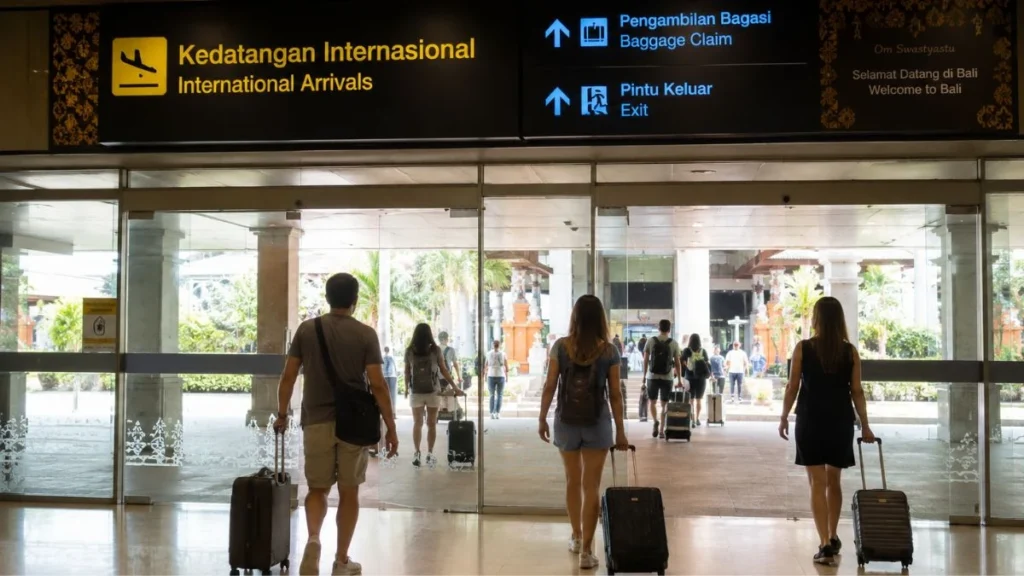
Is Bali safe to travel right now: Yes — Bali is safe to visit in 2026. The island’s Traveler Safety Index sits at approximately 82. Local life and tourism continue operating normally. The concerns driving elevated search traffic are primarily about getting to Bali — flight disruptions from Middle East airspace closures — rather than about conditions on the island itself.
Is Bali safe to travel right now is the question that has dominated Bali search traffic in early 2026, driven by two specific events: Middle East airspace closures that disrupted Gulf carrier routes to Bali in February and March, and wet season flooding in parts of south Bali in February. Neither event constitutes a reason to cancel a Bali trip. Both are worth understanding before you book.
The short answer is clear. Bali remains safe for tourists in 2026. The island is thousands of kilometres from the Middle East conflict zone, and daily life — from temple ceremonies in Ubud to surf breaks in Canggu — continues uninterrupted.
The longer answer requires separating three distinct concerns that are currently conflated in most safety searches: the security situation on the ground in Bali, the flight disruption situation affecting certain routes, and the seasonal flooding that affected specific low-lying areas in February. Each has a different answer and a different implication for trip planning.
The Security Situation in Bali: What the Data Shows
Bali is safe to visit in 2026. Local life and tourism continue to operate normally. The island is far from any active conflict zone, its Tourist Safety Index stands at approximately 82, and it currently ranks as the number one tourist destination in multiple global travel rankings for 2026.
The Bali crime rate is relatively low, especially when compared to big cities in other countries. Serious crimes targeting tourists are rare. The local government takes safety seriously, especially in popular tourist hubs like Kuta, Seminyak, and Canggu, which have more security and tourist police.
Bali is generally safer than many Western cities when it comes to violent crime, but it comes with specific regional risks — especially traffic accidents, petty theft, health issues related to food and water, and occasional natural events.
The US State Department rating for Indonesia is Level 2 — “Exercise Increased Caution” — due to terrorism risk and natural disasters. This is the same level as France, the UK, and Germany. It is a standard advisory applicable to most tourist destinations globally, not a specific warning about current conditions in Bali.
The Flight Situation: What Actually Happened
Some flight disruptions occurred in late February and early March 2026, mainly affecting Middle East transit routes, but operations have largely resumed. Over 12,000 travelers were affected by delays (March 30, 2026), with Bali immigration providing emergency stay permits to assist stranded visitors.
Several airlines, including Emirates, have resumed routes such as Bali–Dubai as of March 8, 2026. Travellers booking from Australia, Southeast Asia, or East Asia were largely unaffected — the disruptions were concentrated on routes through Dubai, Doha, and Abu Dhabi.
Air connectivity to Bali’s Ngurah Rai International Airport continues to grow in 2026, especially from Australia. Indonesia AirAsia announced a new Melbourne–Bali route for 2026, with travel trade reports noting that daily services began operating in March 2026 at competitive promotional fares.
What this means practically: If you are travelling from Australia, New Zealand, Japan, South Korea, or Southeast Asia, the Middle East airspace situation does not directly affect your route. If you are travelling from Europe or the UK via a Gulf carrier (Emirates, Etihad, Qatar Airways), check current route status with your carrier before booking. The disruption was not to Bali itself but to specific transit hubs.
The Flooding Situation: Which Areas and When
February 2026 brought wet season flooding to parts of south Bali — specifically Denpasar, Jembrana, and Klungkung in the lowland areas. Not all of Bali is flooded. Places like Ubud, especially in the center and north, are mostly safe and open for visitors. Ubud is up in the hills and is known for its peaceful nature and art scene. The floods did not cause much damage in Ubud. Hotels, restaurants, and tourist spots are still open.
As of Bali flood today updates, there are no travel bans or rules stopping tourists from coming to Bali.
The flooding was a wet season event — the kind that occurs annually in Bali’s lowland areas when rainfall is heavy. It was not unusual in character, and it has largely resolved. For travellers planning trips in May through October (the dry season), flooding is not a practical concern.
The Real Risk Profile for Visitors in 2026
Setting aside the 2026-specific concerns, the risks that actually affect visitors to Bali are consistent across years:
Road accidents — the most significant actual risk for all visitors. Bali’s roads involve narrow lanes, speed bumps, potholes, and a mix of vehicles and inexperienced riders. Scooter accidents account for the majority of serious tourist injuries. This risk is entirely within your control: wear a helmet, carry an IDP, have insurance that covers motorbike riding, and do not ride in conditions beyond your competence. The renting a motorbike in Bali tips guide covers this in full detail.
Petty theft — bag snatching from motorbikes in crowded areas, money changer shortchanging, and transport overcharging. Concentrated in Kuta, Legian, and Denpasar. Manageable with standard awareness. The Bali scams guide covers the specific situations and how to handle them.
Health: food and water — tap water in Bali is not potable. Drink bottled or filtered water consistently. Food hygiene varies — genuine warungs cooking fresh daily are generally safer than tourist restaurants with longer food holding times. Stomach illness is the most common health issue for visitors and is usually mild and short-lived.
Mount Agung volcanic activity — Mount Agung is active. Eruptions occur occasionally, but major disruptions are rare. Authorities monitor activity closely. If levels rise, flight warnings happen well in advance. Agung has not produced major disruption to tourism since 2017–2018. Monitoring the activity level before a trip is standard preparation; cancelling a trip due to background volcanic activity that has been present for decades is not necessary.
Earthquakes — Indonesia lies on the Pacific Ring of Fire. Earthquakes occur but are usually minor in Bali. Theoretical risk exists, as with many coastal destinations. Bali itself has a more stable geological profile than Lombok (which experienced a significant earthquake in 2018) and the Java trench to the south.
What Government Travel Advisories Actually Say
Different governments rate Bali and Indonesia at different caution levels. All of them currently allow travel to Bali:
US State Department: Level 2 — Exercise Increased Caution (terrorism, natural disaster risk). No specific Bali warning. This level applies to dozens of popular tourist destinations globally.
UK FCDO: Advises normal travel precautions for Bali. Terrorism risk noted for Indonesia broadly. No specific Bali restriction.
Australian DFAT: Exercise normal safety precautions in Bali. Higher caution for some other Indonesian regions. No Bali-specific restriction.
Canadian Global Affairs: Exercise a high degree of caution in Indonesia due to terrorism risk. No Bali-specific travel restriction.
The pattern across all major Western government advisories: Bali is open for travel with standard caution. The terrorism risk noted in most advisories reflects Indonesia’s broad national risk profile, not specific recent incidents in Bali.
Practical Pre-Departure Checklist for 2026
Given the specific 2026 context, these are the preparation steps worth adding to standard Bali trip planning:
Check your flight routing. If your route transits Dubai, Doha, or Abu Dhabi, confirm with your carrier that the route is operating normally before departure. Most Gulf carrier routes have resumed as of April 2026, but checking 48–72 hours before departure is prudent.
Get comprehensive travel insurance. Given the ongoing Middle East situation, comprehensive travel insurance is essential for any Bali trip booked in 2026. Make sure your policy explicitly covers flight cancellations and delays due to geopolitical events or airspace closures. Also confirm motorcycle coverage if you plan to ride.
Check wet season timing. If your trip falls between November and April, the southern lowland areas of Bali (Denpasar, Kuta, Jimbaran) are more prone to flooding than highland areas. Ubud, Sidemen, Amed, and Munduk are at higher elevation and significantly less affected.
Register with your embassy. For trips during periods of geopolitical uncertainty, embassy registration takes five minutes and provides a contact point if emergency consular assistance becomes necessary.
Download the All Indonesia App. From September 2025 this replaced the previous arrival forms — complete it no earlier than 72 hours before arrival. The Bali entry requirements checklist covers the full pre-departure process.
The Bottom Line
Bali is not closed. It remains a dream destination for beach lovers, surfers and culture seekers. The safety queries driving elevated search interest in 2026 reflect two specific and largely resolved events — flight disruptions and localised flooding — rather than deteriorating conditions in Bali itself.
Tourism has fully rebounded. Bali welcomes millions of visitors annually. There are no widespread safety warnings against Bali from major Western governments beyond standard travel advice.
The risks that actually require preparation before a Bali trip are the same ones they have always been: road safety if you plan to ride a scooter, travel insurance that covers the specific activities you plan to do, and the standard awareness that any unfamiliar urban environment requires. Bali is not uniquely dangerous. It is not uniquely safe. It is a well-established international tourist destination with a consistent risk profile that careful preparation addresses effectively.
FAQ
Is Bali safe to travel right now in 2026?
Yes. Bali is safe for international visitors in 2026. Local life and tourism continue operating normally. The concerns that drove elevated safety searches in early 2026 were flight disruptions from Middle East airspace closures (affecting Gulf carrier routes, now largely resolved) and wet season flooding in some south Bali lowland areas in February. Neither constitutes a reason to cancel or avoid a Bali trip. The island’s Traveler Safety Index sits at approximately 82.
What are the current travel advisories for Bali in 2026?
The US State Department rates Indonesia at Level 2 (Exercise Increased Caution) due to terrorism and natural disaster risk — the same level as France, the UK, and Germany. The UK FCDO, Australian DFAT, and Canadian Global Affairs all allow normal travel to Bali with standard precautions. No major Western government has issued a specific Bali travel restriction in 2026.
Were Bali flights affected in 2026?
Yes — flight disruptions occurred in February and March 2026 affecting routes transiting the Middle East, particularly through Dubai, Doha, and Abu Dhabi. These disruptions were caused by airspace closures related to regional geopolitical tensions, not by conditions in Bali. Most Gulf carrier routes including Emirates Bali–Dubai resumed by early March 2026. Travellers on routes via Australia, Southeast Asia, or East Asia were largely unaffected.
Was there flooding in Bali in 2026?
Yes — wet season flooding affected parts of south Bali in February 2026, specifically Denpasar, Jembrana, and Klungkung in lowland areas. Highland areas including Ubud, Sidemen, Munduk, and Amed were unaffected. There are no travel bans or restrictions related to the flooding. The wet season typically runs November to April, with the most significant rain in January and February.
What is the biggest safety risk for tourists in Bali?
Road accidents. Scooter accidents account for the majority of serious tourist injuries in Bali. The risk is entirely manageable: carry an International Driving Permit with motorcycle endorsement, wear a helmet at all times, ensure your travel insurance explicitly covers motorcycle riding, and do not ride in conditions beyond your experience level. Petty theft, particularly in south Bali tourist corridors, is the second most common risk.