
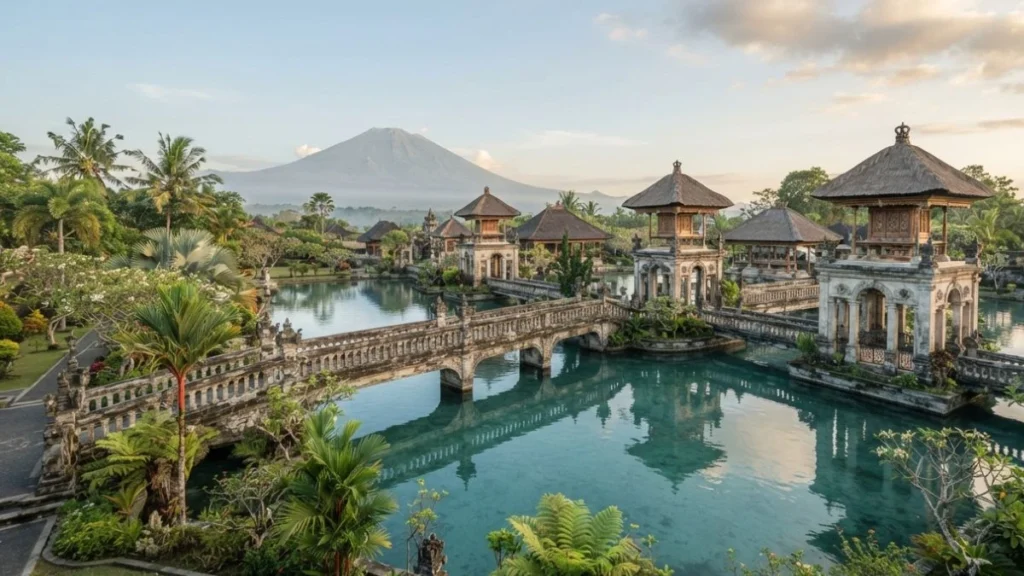
Taman Ujung sits about 20 minutes from Tirta Gangga in East Bali’s Karangasem regency, and the two get compared constantly — both former royal water gardens built by Karangasem kings, both photogenic, both regularly bundled into the same East Bali day trip. Taman Ujung is the larger, more architecturally elaborate of the two, blending Balinese, Chinese, and Dutch design in a way that’s genuinely unusual for Bali. It’s also, by a meaningful margin, the pricier of the two, and not everyone who visits comes away feeling it was worth the difference.
This guide covers the palace’s layout, its surprisingly dark early history, and the honest value question worth weighing before you add it to your itinerary.
Quick Facts
- Location: Tumbu village, Karangasem Regency, East Bali, roughly 20 minutes from Tirta Gangga
- Built: 1909–1921, by I Gusti Bagus Jelantik, the last King of Karangasem — the same king behind Tirta Gangga
- Entrance fee: reported inconsistently, IDR 75,000–100,000 for adults (increased in 2024 per some sources), with discounts for children, domestic visitors, and KITAS holders
- Hours: daily, roughly 7am/8am–6pm/7pm depending on source
- Dress code: none required — this is a historic leisure garden, not an active place of worship
- Also known as: Taman Soekasada Ujung, or “the Floating Palace”
A Palace With a Genuinely Dark Backstory
Before it became the elegant garden complex visitors see today, the site had a considerably darker original purpose worth knowing. The single pond that existed prior to the 1909 remodel was reportedly used as a form of trial by ordeal — those accused of practicing black magic, or suspected of betraying the king, were thrown into the water, with the outcome believed to reveal guilt or innocence. The full redesign into today’s multi-pond, multi-pavilion complex functioned, at least in part, as a deliberate clean break from that history, commissioned with the help of Dutch, Chinese, and Indonesian architects working together — an unusual collaboration for the period that’s directly responsible for the site’s distinctive mixed architectural style.
Today, none of that history is visible in the atmosphere itself — the grounds read as purely elegant and peaceful, with the story surviving mostly as a footnote most visitors never hear about.
What You’ll Actually See
The complex centers entirely on water — large ponds connected by long stone bridges, leading to pavilions positioned almost like islands within the ponds themselves. The main pool anchors the site, with a grand pavilion at its far end offering sweeping views back across the water toward Mount Agung on a clear day. A mini museum sits within one of the central pavilions, displaying photographs and details of the Karangasem royal family’s history for visitors who want more context than the gardens alone provide.
The highlight for many visitors is Bale Kapal, a ship-shaped pavilion at the highest point of the complex, reached by climbing 72 steps — a genuine effort, but one most people consider worth it for the panoramic view over the gardens and toward the mountain beyond. Most of the lower grounds are wheelchair accessible, though the climb to Bale Kapal and a handful of other elevated spots involve stairs with no alternative route.
Damage, Restoration, and What Survived
Taman Ujung wasn’t spared by Mount Agung’s major 1963 eruption, which caused real damage to the complex. What stands today reflects careful restoration rather than an unbroken century-old original — worth keeping in mind if you’re expecting every stone and pavilion to be exactly as built in 1921.
The Honest Value Question
Here’s the part worth sitting with before you commit: while some visitors find Taman Ujung’s scale and mixed architecture genuinely impressive, enough independent reviews describe leaving underwhelmed relative to the entrance fee that it’s worth setting realistic expectations. More than one visitor has directly compared the cost unfavorably to Lempuyang Temple’s ticket price, suggesting the experience — pleasant gardens, a nice stroll, good photos — doesn’t necessarily match the premium price tag once you’re standing in it. This doesn’t mean skip it; plenty of other visitors describe a genuinely worthwhile couple of hours, particularly with a knowledgeable driver or guide who can add context the site itself doesn’t provide. But go in treating it as a scenic stroll and photo opportunity rather than expecting a transformative cultural experience, and you’re less likely to feel shortchanged either way.
Taman Ujung vs. Tirta Gangga
If you’re deciding between the two rather than visiting both, Taman Ujung is generally the larger and more architecturally distinctive of the pair, worth prioritizing if you’re short on time and can only fit one into your day. Tirta Gangga, by contrast, tends to feel cozier and more intimate, with its own signature stepping-stone pond and swimming option that Taman Ujung doesn’t offer. Given they sit only about 20 minutes apart, most visitors with a full day in East Bali combine both rather than choosing definitively between them.
FAQ
How much does it cost to enter Taman Ujung?
Reported prices vary, roughly IDR 75,000–100,000 for adults, with some sources noting a price increase in 2024. Domestic visitors and KITAS holders typically receive a discount.
Is Taman Ujung worth visiting?
Opinions genuinely differ. Some visitors find the scale and architecture impressive; others feel the entrance fee is steep relative to what you actually get. Treating it as a scenic stroll rather than a must-see landmark helps manage expectations either way.
How far is Taman Ujung from Tirta Gangga?
Roughly 20 minutes by car, making the two an easy pairing for the same East Bali day.
Do I need a sarong to visit Taman Ujung?
No. Like Tirta Gangga, this is a former royal leisure garden rather than an active place of worship, so no specific dress code applies.
Is Taman Ujung wheelchair accessible?
Most of the lower grounds are accessible, though reaching Bale Kapal at the highest point of the complex requires climbing 72 steps with no alternative route.
Final Thought
Taman Ujung delivers genuine scale and an unusual mix of architectural influences, but it’s fair to go in with tempered expectations given the mixed reviews on value for the entrance fee. Pair it with nearby Tirta Gangga to make the most of the trip out, and treat the climb to Bale Kapal as the highlight worth prioritizing if your time is limited. For the rest of this corner of East Bali, our Tirta Gangga guide and Lempuyang Temple guide cover what else fits into the same day.