
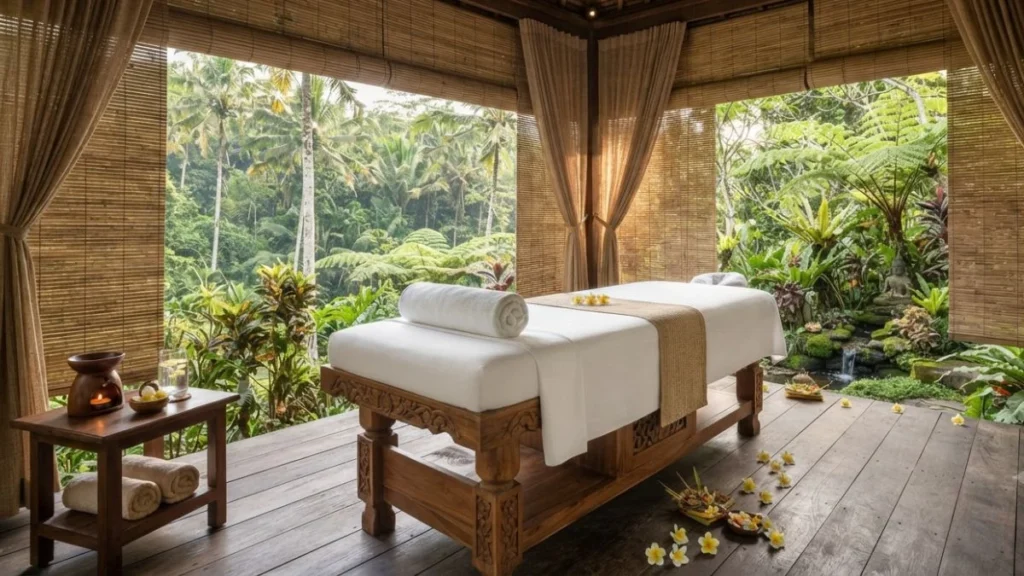
A Balinese massage Ubud trip almost always includes at least one, and often several — this is a town where spas genuinely outnumber convenience stores, ranging from a $10 treatment in a family-run village compound to a $200 couples ritual with sparkling wine at a five-star resort. The honest reality is that price and quality don’t track together as reliably as you’d hope, and there’s a specific upsell pattern worth knowing before you book.
This guide covers what a real Balinese massage actually involves, what a fair price looks like at each tier, and the consumer-side details that make the difference between a genuinely relaxing hour and a slightly frustrating one.
Quick Facts
- Budget village spas: IDR 150,000–260,000 ($10–17) for a 60-minute traditional massage
- Mid-range Ubud spas: roughly $20–40 for a full-body massage, often with tea and a flower bath included
- Luxury resort spa packages: $100–200+, particularly for multi-treatment or couples experiences
- What’s often not included in the advertised price: government tax and service charge, typically adding up to around 21% at some venues
- Tipping: not obligatory, but IDR 20,000–50,000 per therapist is a common and appreciated gesture
What a Traditional Balinese Massage Actually Involves
A genuine traditional Balinese massage combines long, firm strokes with skin rolling, acupressure at specific points, and gentle stretching, aimed at improving circulation and easing muscle tension rather than the lighter, more surface-level style common in Western spa chains. Most treatments run 60 or 90 minutes and use warmed massage oil, with therapists generally asking your pressure preference at the start — Balinese massage has a reputation for being firmer than many first-timers expect, so speak up if you want it gentler.
Common add-ons worth knowing about: a “boreh” or “lulur” scrub, a traditional exfoliating paste often made from rice, turmeric, and spices, followed by a yoghurt application to soften skin; and a flower bath, a warm tub scattered with fresh petals, usually offered as the finishing touch to longer packages rather than a standalone treatment.
The Price Range, Honestly Explained
Budget doesn’t automatically mean lower quality here, which is part of what makes Ubud’s spa scene genuinely different from many other destinations. Small, family-run village spas — often located just outside the busiest central streets — regularly deliver treatments on par with far more expensive resort spas, at a fraction of the price, precisely because their costs are lower rather than their skill. A 60-minute traditional massage at these spots commonly runs IDR 150,000–260,000, and many offer complimentary transport if you book ahead, since they’re intentionally tucked into quieter neighborhoods.
Mid-range spas in central Ubud, often with more polished decor and a wider treatment menu, land in the $20–40 range for a full massage, typically including a welcome tea and foot soak. At the top end, resort spas and elaborate multi-hour packages (massage, scrub, facial, flower bath, sometimes lunch included) run $100–200 or more, and can be genuinely worth it for a special occasion — just know you’re paying substantially for setting and polish on top of the treatment itself, not necessarily for a better massage.
The Upsell and Hidden Fee Pattern Worth Knowing
Here’s the practical warning worth carrying into any booking: some venues advertise a treatment price that doesn’t include government tax and service charge, which can add roughly 21% to your final bill — a detail that’s easy to miss until you’re looking at the receipt. It’s also worth reading reviews before committing to any single spa, since more than one previously well-regarded Ubud spa has drawn recent complaints about being pushed toward longer, pricier treatments once you’ve arrived, alongside declining maintenance in treatment rooms despite rising prices — a genuine pattern of formerly great spots coasting on reputation rather than current quality. Checking recent reviews (within the last few months, not just the overall rating) is a more reliable signal than a spa’s general star rating built up over years.
Booking directly via WhatsApp, which most Ubud spas now support, often gets you a clearer, all-inclusive price upfront and sometimes a better rate than walking in off the street, along with the option to confirm exactly what’s included before you show up.
Choosing Based on What You Actually Want
If pure value and an authentic local feel matter most, a smaller village spa slightly outside the center delivers the best value, often with more personal attention from therapists who take time to understand what you need before starting. If setting and polish matter more — jungle valley views, riverside sound, an elaborate multi-treatment ritual — a mid-range or resort spa is worth the premium, provided you check recent reviews first. Either way, a traditional Balinese massage genuinely earns its reputation when you find the right spot, which in Ubud usually means prioritizing recent reviews and word-of-mouth over flashy marketing photos.
FAQ
How much should a Balinese massage in Ubud cost?
Budget village spas run IDR 150,000–260,000 ($10–17) for 60 minutes. Mid-range central Ubud spas run $20–40. Luxury resort spa packages run $100–200 or more, particularly for multi-treatment experiences.
Is a cheaper massage in Ubud lower quality?
Not necessarily. Many of Ubud’s best-reviewed traditional massages come from small, family-run village spas charging a fraction of resort prices — the difference is often overhead and setting, not skill.
Are there hidden fees at Ubud spas?
Sometimes. Government tax and service charge, often around 21% combined, isn’t always included in the advertised treatment price. Confirm the full price, including tax, before booking.
Should I tip my massage therapist in Ubud?
It’s not obligatory but is a common and appreciated gesture, typically IDR 20,000–50,000 per therapist for a standard treatment.
How do I avoid a spa that’s gone downhill despite good reviews?
Check recent reviews specifically, within the last few months, rather than relying on a spa’s overall historical rating, since some previously well-regarded spots have drawn recent complaints about upselling and declining maintenance.
Final Thought
A Balinese massage in Ubud can be one of the genuine highlights of a trip, and it doesn’t have to mean paying resort prices to get a great one. Check recent reviews, confirm the full price including tax, and don’t be afraid to try one of the smaller village spas over the more heavily marketed options. For more on planning a slower, wellness-focused stretch of your trip, our yoga in Ubud guide rounds out the rest of the town’s wellness scene.