
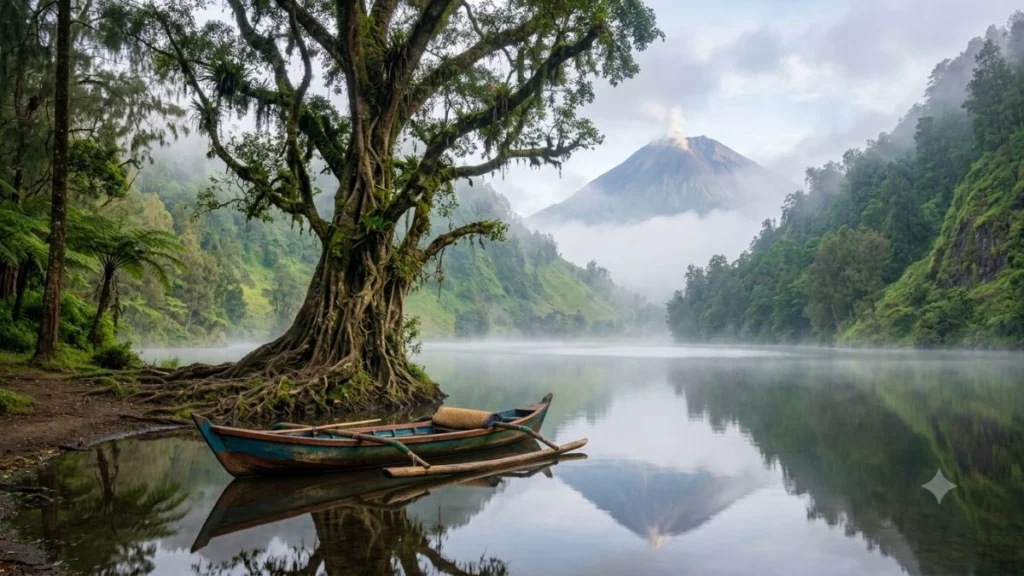
Trunyan village sits on the isolated eastern shore of Lake Batur, reachable only by boat, and it holds one of the most distinct cultural traditions left in Bali — a community that neither cremates nor buries its dead underground, but leaves them to decompose naturally above ground beneath a sacred tree. It’s a genuinely significant window into Bali Aga culture, the island’s pre-Hindu indigenous traditions, and it’s also a site that comes with real practical baggage: reports of inflated boat prices, pressure tactics, and a local community that has, at times, expressed real fatigue with tourism here.
This guide covers what the Trunyan tradition actually is, how to visit respectfully and without getting overcharged, and an honest section on whether a visit is the right call for you at all.
Quick Facts
- Location: eastern shore of Lake Batur, near Kintamani, roughly 1.5–2 hours from Ubud
- Access: boat only, departing from Kedisan or Toya Bungkah harbour on the lake
- Typical cost: historically ranges widely, roughly IDR 300,000–500,000 per boat trip including a village donation — negotiate and confirm the full return trip upfront
- Time needed: 30–60 minutes at the site itself
- Commonly paired with: a Kintamani or Mount Batur day out, since the harbour sits close to the crater rim
What the Trunyan Tradition Actually Is
The people of Trunyan village belong to the Bali Aga, descendants of Bali’s original inhabitants who predate the Hindu migration from Java and retain animist traditions distinct from the rest of the island. Their funeral rite, called Mepasah, involves washing and dressing the deceased, wrapping the body in white cloth with the face left exposed, and placing it beneath a bamboo frame at the cemetery to decompose naturally in the open air, rather than through burial or cremation. Locals attribute the absence of strong odor at the site to a large, centuries-old banyan tree — Taru Menyan, from which the village’s name likely derives — that they believe neutralizes the smell.
Not everyone qualifies for this particular rite. Villagers who died of natural causes, who were married, and whose bodies weren’t damaged or mutilated are eligible for the open-air cemetery; those who died by accident, suicide, or as unmarried adults, along with young children with their milk teeth still intact, are buried in a separate, more conventional cemetery elsewhere in the village. Once a body has fully decomposed, the bones are cleared to make space for the next, with the skull placed on a nearby stone ledge — which is what visitors typically see at the site: rows of skulls and bones rather than fresh bodies, alongside occasional recent remains depending on timing.
Getting There and the Honest Cost Situation
Trunyan is reachable only by boat across Lake Batur, typically departing from Kedisan or Toya Bungkah. Be aware going in that this specific site has a documented reputation for overpriced tours and, in some reported cases, outright pressure tactics — travelers have described being asked for additional payment mid-trip under dubious pretenses, and prices quoted informally can vary enormously by whoever you happen to negotiate with at the dock.
The more reliable approach is booking through the village’s official boat cooperative counter rather than an informal tout who approaches you on the road, and confirming the complete price — including the return trip — before you get in the boat, not after. Traveling with a private driver who has been here before, or joining a small group to split the cost, both help avoid the worst of the price inflation solo travelers report.
Etiquette: What Respect Actually Looks Like Here
This is a working cemetery for a living community, not a museum exhibit, and it’s worth treating it accordingly. Don’t touch, move, or take any bones or personal belongings left with the deceased — items placed alongside the remains, sometimes including photos or personal effects, belong to that person’s memory, not to visitors. Photography of human remains up close is a genuinely sensitive line; some guides will invite you to hold or photograph a skull directly; that’s a personal decision, not an obligation, and it’s entirely reasonable to decline if it doesn’t sit right with you, regardless of what’s offered.
Dress and behave as you would at any sacred site — modest clothing, quiet voices, no loud conversation or performative reactions for photos. If a funeral rite happens to be in progress during your visit, follow your guide’s direction on whether it’s appropriate to be present at all.
Should You Visit at All?
Worth asking honestly: media coverage and social sharing of Trunyan have grown substantially in recent years, and some locals have spoken publicly about the friction this has created — describing pressure to accommodate tourist demand for a site that’s fundamentally a sacred burial ground for their own families, alongside genuine discomfort with the more sensationalized “skull island” framing the site has picked up online. Some travelers who’ve been advised against visiting by Balinese guides and locals themselves have chosen to skip it entirely on that basis.
There’s no single right answer here. If you go, go with the intention of respectful cultural learning rather than shock value, keep your visit brief, pay a fair price without complaint, and follow the site’s rules without exception. If the framing you’ve seen online — “skull island,” morbid curiosity, viral videos — is the main draw, that’s worth sitting with before you book.
FAQ
How do you get to Trunyan village?
By boat only, typically departing from Kedisan or Toya Bungkah harbour on Lake Batur, near Kintamani. There’s no road access to the cemetery itself.
Why don’t bodies at Trunyan smell?
Locals attribute this to the large banyan tree at the site, Taru Menyan, which they believe neutralizes the odor of decomposition. No scientific explanation has been widely documented; it remains part of local belief.
Is Trunyan village a scam?
The village and its tradition are genuine, but the site has a documented history of inflated boat pricing and, in some reported cases, pressure tactics from informal operators. Booking through the official village cooperative and confirming your full price upfront, including return transport, is the safer approach.
Is it disrespectful to visit Trunyan?
It can be, depending on how you approach it. Treating it as morbid entertainment or ignoring guidance around touching remains and photography is genuinely disrespectful. Visiting briefly, respectfully, and with genuine cultural interest is generally welcomed by those in the community who continue to host visitors.
Can women visit the cemetery?
Yes, women are generally welcome at the site as long as no active funeral rite is taking place at the time — check with your guide on arrival.
Final Thought
Trunyan village holds a genuinely rare cultural tradition, and visiting it responsibly means putting the community’s comfort ahead of curiosity about skulls and viral photos. If you go, keep it brief, pay fairly, and follow the rules without exception. For more on Balinese beliefs around death and ceremony, our guides to Balinese cremation ceremonies and Balinese Hindu beliefs offer useful context, and if you’re combining this with the nearby crater, our Kintamani volcano guide covers the rest of that day.