
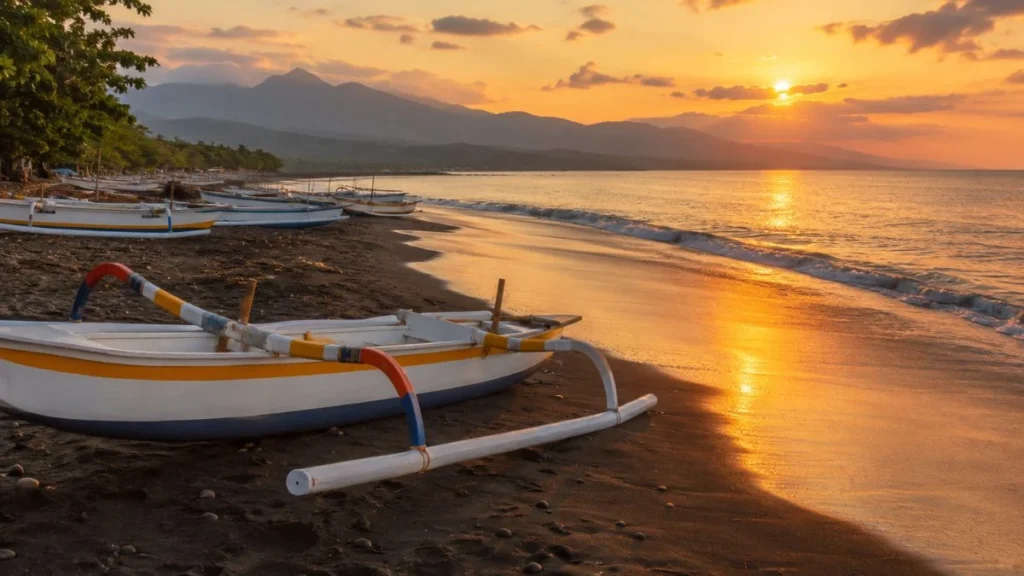
Lovina Bali sits on the island’s north coast, roughly 2 to 3 hours from Ubud, and it’s built its entire reputation on one thing: wild dolphins that swim close to shore most mornings. That reputation is genuinely deserved and genuinely complicated at the same time, and this guide isn’t going to pretend otherwise. Before you book a dolphin tour in Lovina Bali, there’s something worth knowing that most operators won’t volunteer: the standard sunrise tour, the one every tout in town is selling, involves dozens of boats converging on the same small pod of dolphins, engines roaring, at six in the morning.
That’s the honest starting point for Lovina Bali. The rest of the town is a genuinely calm, black-sand, low-key alternative to the south — this guide covers how to see the dolphins in a way that doesn’t make you part of the problem, plus what else Lovina actually offers once you’re up there.
Quick Facts
- Distance from Ubud: roughly 75–90 km, 2–3 hours by car through Bedugul or Kintamani
- Dolphin tour price: IDR 100,000–350,000 per person depending on operator and boat type
- Beach type: calm black volcanic sand, not a surf beach
- Nearby hot springs: Banjar Holy Hot Spring, ~30 minutes away, entrance ~IDR 45,000
- Best for: slow travel, escaping crowds — not for nightlife or beach clubs
The Dolphin Tours: What’s Actually Happening at 6am
Here’s what nobody tells you before you book: the default Lovina Bali dolphin tour has become genuinely controversial, and for good reason. Every morning before sunrise, dozens of small wooden jukung boats head out from the beach and converge on the same pods of dolphins, chasing them for the best photo angle. Buleleng’s local government introduced rules in recent years requiring boats to stay at least 25 metres from dolphins and turn off engines nearby — solid rules on paper, inconsistently followed in practice. Travelers who’ve done the standard tour describe it less as wildlife watching and more as a “fuel-powered game of chase,” and it’s hard to disagree once you’ve seen it happen.
If you still want to see the dolphins — and Lovina Bali genuinely does have wild pods close to shore most mornings, which is rare and worth respecting — a small number of operators do it differently. They leave later than the 5:30–6am rush, head further along the coast away from the crowd of boats, and don’t chase. Expect to pay a bit more, roughly IDR 300,000 per person, for this kind of tour, and book directly with the operator by WhatsApp rather than through a street tout, since the calmer, later departures aren’t the ones being pushed on you at every corner in town.
Be honest with yourself about the ethics either way: even the “better” operators sometimes still allow swimming with wild dolphins, which conservationists generally advise against regardless of how calm the boat is. If watching from a respectful distance rather than getting in the water matters to you, ask directly before booking.
Lovina’s Black Sand Beach: What to Expect
Outside of the dolphin hours, Lovina Bali’s beach is long, calm, and made of dark volcanic sand rather than the white sand of the south. The water is unusually still here — good for swimming, not for surfing — and the midday sun on black sand runs hotter underfoot than you’d expect, so sandals matter more than they do elsewhere in Bali.
Don’t come to Lovina expecting south Bali’s beach club scene. Nightlife is minimal, restaurants are mostly local warungs and low-key beachfront cafes, and that’s genuinely the appeal for the kind of traveler this guide is written for. Late afternoon, roughly 4:30–6:30pm, is when the beach is at its best — cooler air, a proper sunset over the water, and a fraction of the people you’d find at a comparable hour in Canggu or Seminyak.
Banjar Hot Springs: The Easy Add-On
About 30 minutes from Lovina Bali, Banjar Holy Hot Spring is a natural sulfur spring with three tiered pools of varying depth, set in a green, tree-shaded compound. The sulfur smell is noticeable — a bit eggy, honestly — but the water itself is soothing after a day of driving or an early dolphin tour. Entrance runs about IDR 45,000, with lockers and toilets costing extra, so bring small cash. It’s become more popular in recent years, so early morning or later afternoon avoids the worst of the crowds.
Getting to Lovina Bali From Ubud
The drive from Ubud takes 2 to 3 hours depending on your exact route, and most people go via Bedugul, which means you can reasonably combine the trip with a stop at Ulun Danu Beratan temple on Lake Beratan, or the Twin Lakes viewpoint further along. If waterfalls are your thing, Gitgit Waterfall sits right on the route close to Singaraja, an easy detour without adding much time.
A private driver for the day runs roughly IDR 600,000–800,000, which is worth it given how winding the mountain roads get — motion sickness is a real consideration if you’re prone to it. Self-driving by scooter is possible for confident riders but adds real fatigue over that distance; renting a scooter one-way from Lovina back toward the south is also an option some travelers use if they’re continuing their trip rather than returning to Ubud.
Is Lovina Bali Worth the Detour?
Only if slow, quiet, and a little rough around the edges appeals to you more than convenience. Lovina Bali isn’t trying to be a bucket-list stop, and if you’re tight on time in a 10-day itinerary based mostly in the south, it can feel like a genuine detour rather than a quick add-on. But if you’re already exploring North Bali — Munduk, Bedugul, the highland lakes — extending that loop to include a night or two in Lovina, done with an ethical dolphin operator or skipped entirely in favor of the black sand beach and hot springs, rounds out the north coast side of the island in a way most south-based itineraries never see.
FAQ
How far is Lovina Bali from Ubud?
Roughly 75–90 km, taking 2 to 3 hours by car depending on the route and traffic, most commonly via Bedugul.
Are Lovina dolphin tours ethical?
The standard sunrise tour, with dozens of boats chasing the same pod, is widely criticized by conservationists and travelers alike. A small number of operators run later, quieter tours that keep distance from the dolphins — worth seeking out specifically and booking directly rather than through a street tout.
What is there to do in Lovina besides dolphin watching?
The black sand beach itself, Banjar Hot Springs about 30 minutes away, and nearby waterfalls like Gitgit on the route back toward Ubud. It’s a slower destination overall, built around relaxing rather than a checklist of activities.
Is Lovina worth visiting if I’m short on time?
Only if you’re already planning a North Bali loop through Munduk or Bedugul. As a standalone detour from a south-based Bali trip, the 2–3 hour drive each way is a real time commitment.
What’s the best time of day to visit Lovina’s beach?
Late afternoon, roughly 4:30 to 6:30pm, when the heat has eased and the sunset over the water is at its best.
Final Thought
Lovina Bali rewards travelers who genuinely want the slower version of the island — but go in with clear eyes about the dolphin tours, and choose an operator that treats the animals with real respect rather than the cheapest option in town. If you’re building this into a longer North Bali route, our guides to Munduk Bali and Bali water temples beyond Ubud cover the stops that naturally connect on the way up.