
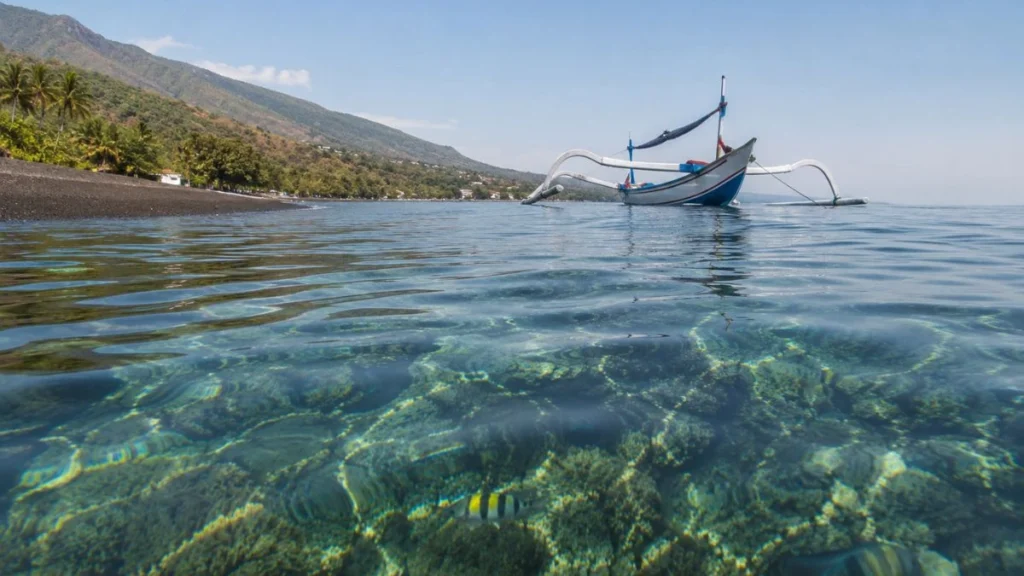
Amed Bali vs Candidasa snorkeling: For snorkeling, Amed wins on access — you walk off the beach directly into the water at Jemeluk bay. Candidasa requires a boat to reach its best sites. For accommodation and dining choice, Candidasa has the edge. The right answer depends on whether snorkeling is the primary reason for the trip or one of several.
The amed bali vs candidasa snorkeling question is one of the most practical decisions facing travellers planning an East Bali coastal stay. Both are in Karangasem regency, both are quiet relative to south Bali, and both attract visitors who want something slower than Canggu or Seminyak. The difference between them is more specific than most comparison articles admit — and it comes down to one practical variable: how important is it to you to snorkel directly from the beach without a boat.
For the broader East Bali picture including both areas in the context of a longer trip, the Bali slow travel itinerary 2 weeks covers how both fit into a circuit that also includes Sidemen and Ubud.
Amed: What the Snorkeling Is Actually Like
Amed covers roughly 10km of coastline running northeast from Culik through several distinct bays — Amed village, Jemeluk, Bunutan, Lipah, and Selang. Each has its own character, accommodation cluster, and water access point. The beaches are black volcanic sand, sometimes coarse gravel — not the white sand of south Bali and not what photographs typically suggest when someone says “beach.”
The snorkeling case for Amed rests almost entirely on Jemeluk bay. The coral garden at Jemeluk starts in approximately 2–3 metres of water and extends to 15–18 metres. The shallow section is accessible to non-swimmers with a life jacket and reachable by anyone comfortable in the water without any boat, boat fee, or operator involvement — you walk in from the beach. The marine life is consistent: reef fish in variety, occasional turtles in the shallower sections, and the coral density is higher than most accessible shore-entry sites in Bali.
Lipah beach, 2km further northeast from Jemeluk, is sandier and calmer — better for families or less confident swimmers. The snorkeling is adequate rather than exceptional, but the entry is gentle and the water is typically clear.
The USAT Liberty shipwreck at Tulamben — 15 minutes west of Amed — is the most frequently cited snorkeling site in East Bali. The bow section starts at 5 metres and is reachable by snorkellers without diving certification. It is accessible from shore. The wreck draws day-trippers from south Bali, which means it is busiest between 10am and 2pm — arrive before 8am or after 3pm for significantly fewer people.
Practical point: snorkeling equipment rental is available at every bay in Amed for IDR 50,000–75,000 per day. No advance booking required. Guided snorkeling trips to Tulamben from Amed cost IDR 200,000–350,000 per person including transport and equipment.
Candidasa: What the Snorkeling Is Actually Like
Candidasa’s coastal situation is more complicated than Amed’s. The town’s beach was severely eroded by coral extraction decades ago — the same coral that once protected the shoreline was mined for construction material, removing the natural barrier and allowing waves to undercut the remaining sand. What is left in most of Candidasa’s central stretch is a sea wall, stone jetties, and a narrow strip of beach at low tide that disappears at high tide. Several guesthouses and hotels sit beachfront with direct water access obstructed by the seawall rather than a swimmable beach.
This matters for snorkeling because shore-entry snorkeling in central Candidasa is not straightforward. The water hits the wall rather than a gradual sand entry. The exception is the small lagoon behind certain hotels — calm, shallow, and accessible, but limited in marine life.
The better snorkeling near Candidasa requires a boat. The small islands visible offshore — Gili Tepekong, Gili Mimpang, and Gili Biaha — have strong snorkeling and diving with good coral and occasional sharks and rays. Blue Lagoon, accessible by a 10-minute jukung ride from Padangbai (25 minutes south of Candidasa), has calmer water and varied reef fish. The boat trips cost IDR 150,000–300,000 per person depending on the operator and number of stops.
The honest framing: Candidasa’s snorkeling is better than its immediate shore suggests, but it requires a boat and an operator — which adds cost, logistics, and the variable of sea conditions affecting access.
The Direct Comparison
| Amed | Candidasa | |
|---|---|---|
| Shore-entry snorkeling | Yes — Jemeluk bay, direct from beach | Limited — sea walls obstruct most central beach |
| Best snorkeling site | Jemeluk coral garden, Tulamben wreck | Gili islands offshore, Blue Lagoon (Padangbai) |
| Boat required for best snorkeling | No (Jemeluk) / Optional (Tulamben) | Yes for offshore islands |
| Coral health | Good at Jemeluk and Tulamben | Variable — offshore islands better than inshore |
| Marine life highlights | Reef fish, turtles, Tulamben wreck | Sharks, rays at Gili Tepekong; fish at Blue Lagoon |
| Beach quality | Black volcanic sand, sometimes coarse | Minimal beach in centre; better at Virgin Beach 8km east |
| Accommodation range | Small guesthouses and dive resorts | More variety including mid-range hotels |
| Dining choice | Limited — good warung, few restaurants | More options, slightly more variety |
| Distance from Ubud | ~2.5 hours | ~2 hours |
| Pace | Very slow — fishing village character | Slow — transit town feel in parts |
The Honest Verdict
For snorkeling as the primary activity, Amed is the correct choice. Shore-entry snorkeling at Jemeluk requires no boat, no operator, and no advance planning. You arrive, rent equipment for IDR 50,000, and walk in. The Tulamben wreck adds a second world-class site within 15 minutes of any Amed base. The combination of the two makes Amed the stronger snorkeling destination for visitors who want flexibility and value.
Candidasa makes more sense as a base if snorkeling is one of several activities rather than the main reason for being there. The town’s proximity to Tirta Gangga (15 minutes north), Tenganan traditional village (5 minutes west), and Lempuyang Temple (45 minutes north) makes it the better base for East Bali cultural exploration. The accommodation range is wider and the dining scene has more variety than Amed’s concentrated warung cluster.
Omar had been debating the choice for three days on a travel forum before a Balinese diver replied to his thread with four words: “Amed for snorkeling. Candidasa for everything else.” He went to Amed for three nights, did Jemeluk every morning before breakfast, drove to Tulamben on day two, and spent his last afternoon at Tirta Gangga on the drive back toward Ubud. He did not visit Candidasa. He said afterward he would go to Candidasa on his next trip, specifically because he would want a base for the temples and villages and not need the beach to be a swimming beach.
If You Have Time for Both
The drive between Candidasa and Amed takes approximately one hour along the coastal road. If your East Bali stay is five nights or longer, splitting the time — three nights in Amed, two in Candidasa — gives you direct beach snorkeling access from Amed combined with the cultural infrastructure of Candidasa for day trips. The route between them passes through Amlapura and Tirta Gangga, making the move between bases a half-day of sightseeing rather than a transit.
Practical Notes
Getting to Amed: 2.5 hours from Ubud by scooter or car via Klungkung and the coastal road. The road is well-surfaced. No public transport covers the full route — scooter or private driver.
Getting to Candidasa: 2 hours from Ubud via Klungkung. Shared minibuses (bemo) run between Denpasar’s Batubulan terminal and Amlapura, passing through Candidasa — slow but possible. Scooter or driver is more practical.
Best season: May to October for the clearest water visibility. Wet season (November to April) brings reduced visibility and occasional strong currents at the offshore sites near Candidasa. Amed’s Jemeluk is less affected by seasonal conditions than the open-water sites.
Equipment: Rental available at both locations. Quality varies — check mask seal before committing to a full-day rental. Bringing your own mask is worth it if you plan to snorkel daily.
FAQ
Is Amed better than Candidasa for snorkeling? Yes, for shore-entry snorkeling. Jemeluk bay in Amed allows direct beach access to a coral garden without a boat or operator. Candidasa’s central beach is compromised by past coral extraction and a sea wall — the best snorkeling near Candidasa requires a boat to reach offshore islands. For cultural sightseeing and accommodation variety, Candidasa has an advantage.
Can you snorkel directly from the beach in Candidasa? In most of central Candidasa, no. The sea wall and erosion damage prevent easy shore entry. Some hotels have lagoon access that is swimmable, but the marine life is limited. A jukung boat trip to the offshore Gili islands or to Blue Lagoon near Padangbai provides significantly better snorkeling, at an additional cost of IDR 150,000–300,000 per person.
How far is Amed from Candidasa? Approximately one hour by car or scooter along the coastal road through Amlapura. The route passes Tirta Gangga water palace and is worth making even if you only drive it between bases rather than as a dedicated day trip.
What is the best snorkeling site near Amed? Jemeluk bay for coral and reef fish directly from shore. The USAT Liberty shipwreck at Tulamben (15 minutes west) for a second distinct experience — the bow section starts at 5 metres and is accessible to snorkellers without diving certification. Arrive at Tulamben before 8am to avoid day-tripper crowds from south Bali.