
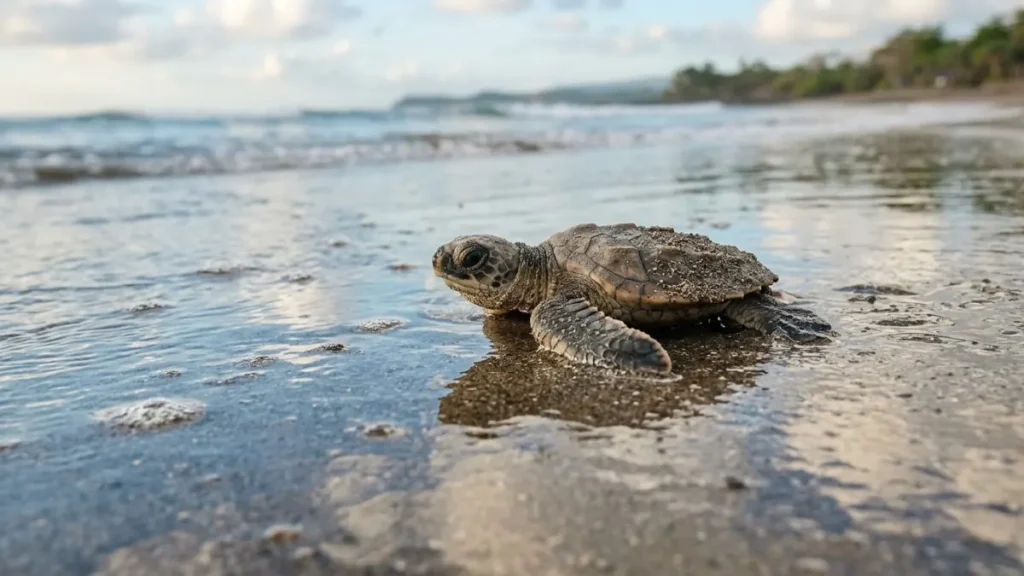
Six species of sea turtle nest and feed in Balinese waters — green, olive ridley, hawksbill, loggerhead, leatherback, and flatback — and for decades, a lot of them ended up in the illegal wildlife trade or as ceremonial offerings before conservation groups pushed back. That history is why “turtle release” tourism exists in Bali at all: it grew out of real rescue and education work, not out of a marketing idea. But the same popularity that funds these centers has also created exactly the kind of pressure that erodes good intentions — donation boxes that feel more like ticket prices, enclosures that look tighter than they should, and at least one well-documented pattern of centers keeping unusually large numbers of baby turtles on hand, which raises the obvious question of whether that’s about rescue timing or about guaranteeing something for visitors to hold.
None of this means skip it entirely. It means knowing which organizations have an actual conservation track record versus which ones have simply figured out that a baby turtle in your hands is a good Instagram moment, and choosing accordingly.
Quick Facts
- Species in Balinese waters: Green, Olive Ridley, Hawksbill, Loggerhead, Leatherback, Flatback
- Nesting/peak season: Dry season, roughly April to October
- Main centers: Turtle Conservation and Education Center (TCEC), Serangan Island; Bali Sea Turtle Society (BSTS), Kuta Beach; occasional releases in Sanur
- Cost: Entry is donation-based at most centers; holding/releasing a turtle sometimes carries an extra fee, sometimes just an encouraged donation
- Best for: Travelers who want a genuine, low-impact wildlife encounter and are willing to ask questions before paying
- Watch for: Upsell pressure (annual “adoption” subscriptions), oversized turtle inventory, and undersized enclosures for injured/disabled animals
The Legitimate Backstory
The Turtle Conservation and Education Center on Serangan Island was established in 2006, partly with WWF involvement, specifically to end the illegal turtle trade that Serangan itself was historically part of. Rather than just shutting that trade down, the center worked with the local community to replace turtles used in Hindu ceremonies with symbolic replicas — a genuinely significant shift, since ceremonial demand had been one of the drivers of the trade in the first place. TCEC also functions as an active rescue and rehabilitation facility: turtles seized from illegal traders by Bali Police, often injured from being tied up during capture, are brought here for treatment before release. A batch of 21 rescued green turtles went through exactly this process in mid-2026 before being released at a protected site in North Bali, after being confiscated from smugglers in Buleleng.
Bali Sea Turtle Society, founded by a Balinese local, Wayan Wiradnyana, in 2001, runs a smaller, community-based operation out of Kuta — collecting eggs from local beaches, incubating them, and hosting free public release events (with donations encouraged, not required) when hatching season produces a new batch. It has a solid reputation for staying closer to its original conservation purpose than some of the more visited centers.
Where the Concerns Come In
The honest complication is that TCEC’s popularity has outpaced its original scale. Visitor reports describe genuinely useful education displays and rescue work sitting alongside some uncomfortable details: rehabilitating turtles kept in containers too small for proper swimming, noticeably large numbers of baby turtles on-site (more than a strict rescue-and-release timeline would obviously produce), and a sales push toward annual “adoption” subscriptions that feels more like a membership program than a conservation ask. Independent reviewers, including World Animal Protection, have flagged similar ethical concerns across the majority of Bali’s turtle hatcheries generally, not TCEC alone — it’s a pattern across the model, not one bad operator.
None of that erases the legitimate conservation history. It does mean treating any single turtle center as automatically ethical because it uses the word “conservation” is the wrong instinct. The same skepticism that applies to elephant camps or civet-cage kopi luwak farms elsewhere on this site applies here.
How to Actually Tell the Difference
A few practical checks before you hand over a donation:
- Ask how long the turtles have been there and why. A legitimate rescue center can usually give a specific, recent answer (a seizure date, an injury description). Vague answers are a signal.
- Look at enclosure size relative to animal size, especially for anything described as injured or disabled — proper rehabilitation space looks different from a display tank.
- Notice the sales pressure. A genuine donation ask feels optional; a hard push toward a subscription or repeat visit does not.
- Prefer smaller, community-run operations when you can verify their track record — Bali Sea Turtle Society’s history and local-founder model is a useful benchmark for what a lower-pressure version of this looks like.
Getting There and Practical Notes
TCEC sits on Serangan Island, about 20 minutes from Sanur or 30 minutes from Kuta by motorbike or car via the Serangan bridge. One detail worth knowing before you go: some ride-hailing drivers (Gojek/Grab) are reportedly reluctant to enter parts of the Serangan area due to informal local pressure against ride-hailing pickups — a local taxi or your own transport is the more reliable option for the return trip. Sanur’s turtle releases happen less predictably and aren’t heavily publicized; asking at a beachfront café near the release area is often the most reliable way to find out if one’s scheduled during your stay.
FAQ
Is releasing a baby turtle in Bali ethical, or is it exploitative?
It depends entirely on the organization. Community-based, transparent operations with a documented rescue history (like Bali Sea Turtle Society) are generally considered ethical. Larger centers with heavy visitor traffic deserve more scrutiny — ask questions about the animals’ history rather than assuming the activity itself is automatically fine.
What’s the difference between TCEC and Bali Sea Turtle Society?
TCEC is a larger, WWF-linked facility on Serangan Island combining rescue, rehabilitation, and public education, with a real history of ending illegal turtle trade in the area. Bali Sea Turtle Society is a smaller, community-founded operation in Kuta focused specifically on egg protection and hatchling release, generally regarded as lower-pressure and more transparent.
When is the best time to see a turtle release in Bali?
Nesting and hatching activity peaks during the dry season, roughly April to October, which is when release events are most frequent. Outside that window, sightings and releases become less predictable.
Do I have to pay to see or release a turtle in Bali?
Most centers operate on a donation basis rather than a fixed entry fee, though releasing a turtle specifically sometimes carries an additional cost or a more strongly encouraged donation. It’s reasonable to ask upfront what a specific amount actually funds.
Are there wild turtles I can see without visiting a center at all?
Yes — some operators around Tanjung Benoa run boat trips to see turtles in their natural habitat rather than at a shore-based facility, which sidesteps captivity concerns entirely, though it introduces its own question of how close boats should get to wild animals.
If ethical wildlife tourism is a theme you’re paying attention to on this trip, it’s worth reading alongside Elephant Riding in Bali: The 2026 Ban and Kopi Luwak Ethics — the same pattern of good intentions colliding with visitor demand shows up in all three.