
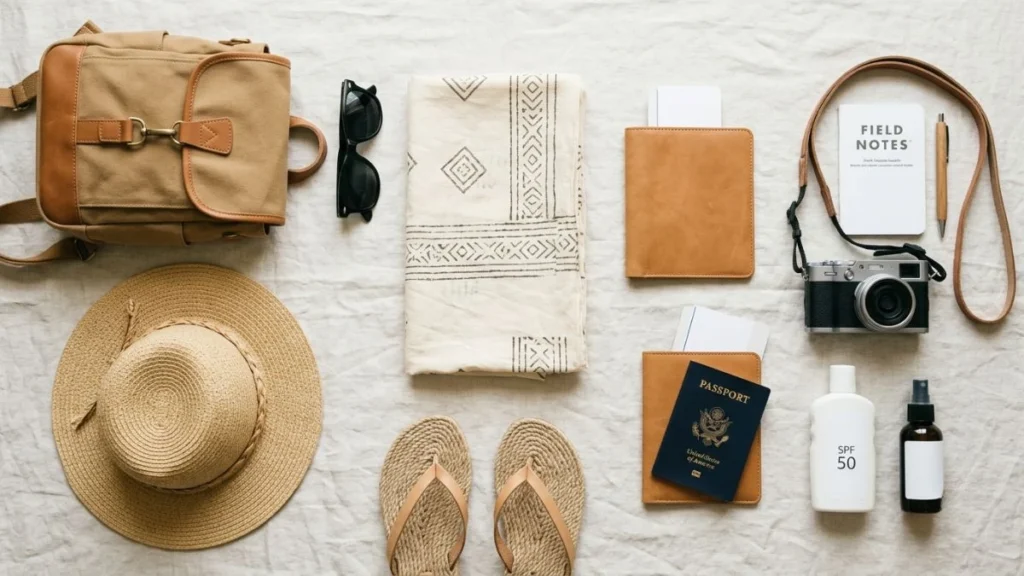
Most bali packing list articles tell you to bring sunscreen and a sarong. This one assumes you already know that and goes further: what you’ll actually use versus what takes up space, what’s cheaper and better to buy in Bali than to bring from home, what the dry season requires versus the wet season, and the specific items that make a meaningful difference to how the trip feels.
Bali is a warm, tropical island with a well-developed tourist infrastructure. Almost everything you forget can be bought on arrival. This changes the packing calculation significantly — the goal is a bag that covers your actual needs without carrying things Bali will provide more cheaply and conveniently than your home country.
Quick Facts
- Climate: Tropical — hot and humid year-round, distinct dry (Apr–Oct) and wet (Nov–Mar) seasons
- Dress code: Conservative at temples — sarong and sash required
- Currency: IDR — buy basics on arrival, don’t overpack toiletries
- Bag type: Soft-sided, lockable, under 20kg checked or 7kg carry-on depending on airline
- What to buy in Bali: Sarong, sash, light clothing, sunscreen, mosquito repellent, toiletries
The Core Packing Principle for Bali
Bali has a functional, affordable supply chain for almost everything a traveller needs. Pharmacies (apotek) in every town. Convenience stores (Indomaret, Alfamart) on most main roads. Markets and clothing shops in every tourist area selling light clothing, sarongs, and basic gear at prices well below what you’d pay at home.
The practical implication: pack for your first 24 hours and trust that Bali will supply the rest. A sarong bought at Pasar Seni Ubud for IDR 50,000 is as good as one packed from home and takes up one slot in your bag instead of arriving pre-occupied. Sunscreen is widely available, though SPF 50+ brands can be harder to find outside major tourist areas — bring enough for the first few days.
What Bali cannot replace: prescription medication, specific technical gear (decent hiking boots, a quality dive computer), and any electronics or chargers above the budget tier.
Clothing: What to Pack and How Much
Bali is hot. The clothing that works is light, breathable, and quick-drying. Cotton and linen work well for daily wear. Synthetic fabrics dry faster after swimming or rain, which matters more in the wet season.
For the dry season (April–October):
Light tops and t-shirts — 4 to 5 is enough if you’re washing every few days, which is easy and cheap in Bali (laundry services everywhere, IDR 15,000–25,000 per kg). Shorts or light trousers. One pair of long trousers or a maxi skirt/dress for temple visits and cooler Ubud evenings. Swimwear — 2 pieces covers most trips. A light cotton layer for Ubud evenings and air-conditioned restaurants, where the temperature gap between outside and inside can be significant.
For the wet season (November–March):
Add a lightweight packable rain jacket. Not a heavy waterproof — something that folds into its own pocket and covers a sudden afternoon downpour. A dry bag or waterproof cover for your day bag is useful if you’re on a scooter. Everything else is the same as dry season — the wet season in Bali is warm and wet, not cold.
What to leave home:
Jeans. Heavy shoes. Multiple formal outfits. Bali’s dress culture is casual except at temples, and even the smarter restaurants in Seminyak and Ubud operate on a relaxed standard.
Footwear: Three Is Enough
Sandals — the primary footwear for most of Bali. Birkenstocks or equivalent quality hold up better than cheap flip-flops on uneven temple steps and village paths. A pair of reef sandals or water shoes is worth adding if you’re planning beach time on rocky coastlines or snorkelling.
Trainers or light walking shoes — for the Campuhan Ridge Walk, Mount Batur trek, or any time you’re covering serious ground. One pair is enough.
Leave home: Heels, heavy boots, dress shoes. They won’t be used and they’re heavy.
The Temple Kit: Don’t Arrive Without This
Every temple in Bali requires a sarong and sash. Both are available to rent at major temples, but if you’re visiting more than two or three temples across your trip, carrying your own is more convenient and only marginally more expensive.
A sarong bought in Ubud or at any market costs IDR 50,000–100,000. A sash is often included or sold separately for IDR 20,000–30,000. Lightweight, compact, doubles as a beach cover-up, picnic blanket, or extra layer on overnight transport.
One sarong per person is enough. Buy it in Bali on day one rather than packing from home.
For full detail on what to wear and why it matters, the Bali temple etiquette guide covers the specifics.
Sun Protection: More Important Than Most Visitors Expect
The UV index in Bali runs at 10–12 (extreme) through most of the year. This means serious sunburn is possible in under 20 minutes without protection, even on overcast days. Most travellers from temperate climates significantly underestimate this.
Sunscreen — bring SPF 50+ from home for the first few days. It’s available in Bali but quality SPF 50+ brands are patchier outside major tourist areas and more expensive than at home. Budget one bottle per person per week of beach time.
Sun hat — wide brim, packable. More effective than sunscreen alone for face and neck protection during long outdoor days. Available in Bali but quality varies.
Sunglasses — bring from home. Cheap sunglasses without UV protection are worse than none.
Rashguard or long-sleeve swim top — highly recommended for snorkelling, surfing, or long beach days. More effective than applying sunscreen to your back every 90 minutes in the water.
Medications and Health Kit
Bali has pharmacies (apotek) in every major town stocking a reasonable range of common medications. The things worth bringing from home:
Prescription medications — bring more than you need, in original packaging with prescription documentation. Getting prescription medication in Bali is possible but time-consuming.
Antihistamines — useful for insect bites, which are a real daily reality particularly in rice terrace areas and at dusk. Available in Bali but bring your preferred brand.
Oral rehydration salts — useful for the stomach adjustment that affects some visitors in the first few days, particularly those eating widely at local warungs. Available in Bali.
Diarrhoea medication — Imodium or equivalent. For the moments when you need it, having it in your bag rather than needing to find a pharmacy matters.
Travel insurance documentation — not a medication, but goes in the same mental category. Print a copy and keep it separate from your phone.
What you don’t need to bring: Basic pain relief (paracetamol, ibuprofen), antiseptic, plasters, antifungal cream — all available cheaply at any apotek in Bali.
Mosquito Protection
Mosquitoes in Bali carry dengue fever — a real risk, not a theoretical one. Dengue cases in Bali are consistently reported year-round, with higher incidence during and after the wet season when standing water is more prevalent.
DEET-based repellent (30%+) — bring from home. The local brands available in Bali tend to be lower concentration and less effective. Apply from dusk onward and during any time spent near rice fields or jungle areas.
Clothing — long sleeves and trousers at dusk in rice terrace areas are more effective than repellent alone. Worth the slight discomfort in Ubud and rural areas.
Accommodation — check that your room has either air conditioning (which keeps windows closed) or mosquito nets. Most tourist accommodation does; some budget guesthouses in rural areas don’t.
Electronics and Power
Indonesia uses Type C and Type F plugs (European round pin, 220V). Travellers from the US, UK, Australia, and most of Asia need an adapter. A universal travel adapter covers all bases.
Power bank — useful for full-day excursions away from accommodation. Particularly relevant for Mount Batur pre-dawn treks and long driving days where your phone is navigating continuously.
Waterproof phone case or dry bag — for scooter rides, boat transfers to Nusa Penida or Nusa Lembongan, and any water activity. A simple zip-lock dry bag from a dive shop works as well as an expensive case.
Camera — bring what you’re comfortable with. The light in Bali is extraordinary in the early morning and late afternoon. A phone camera is entirely sufficient; a mirrorless camera with a 35mm prime lens is the most versatile dedicated setup for the combination of temples, terraces, and low-light performance venues.
Documents and Money
Passport — minimum 6 months validity beyond your travel dates. Indonesian immigration is strict on this.
Visa — e-VoA purchased before travel via the Molina portal is faster than the airport queue. IDR 500,000 (approximately USD 35). For full details on current visa requirements and the All Indonesia App, the Bali travel advisory 2026 has the current picture.
Cash (IDR) — Bali is predominantly cash-based outside hotels and upmarket restaurants. ATMs are widely available in tourist areas; less so in rural East Bali and North Bali. Withdraw a working float on arrival at Ngurah Rai before leaving the airport. Small denominations (IDR 10,000–50,000) are more useful than large notes at markets and warungs.
Cards — a no-foreign-transaction-fee card (Wise, Revolut, Charles Schwab) saves meaningful money over a standard bank card on ATM withdrawals.
What to Buy in Bali Instead of Packing
This list saves space in your bag before you go:
- Sarong and sash — buy on arrival, IDR 50,000–100,000
- Light clothing — Bali’s markets have good quality basics at low prices
- Flip-flops / cheap sandals — if yours break, replacements are everywhere
- Toiletries — shampoo, conditioner, body wash available at any Indomaret or apotek
- Mosquito coils — available at every minimarket, useful for guesthouse rooms
- Snacks and water — Indomaret and Alfamart on most main roads
- Sunscreen (after day 3) — available, though SPF 50+ is patchier in rural areas
FAQ
What should I pack for Bali for 2 weeks?
For two weeks: 5–6 light tops, 2–3 bottoms, 2 swimsuits, one light layer for evenings, one pair of walking shoes, one pair of sandals. A sarong, sun hat, SPF 50+ sunscreen, DEET repellent, and your health kit. Everything else is available in Bali cheaper than at home. Keep the bag under 10kg if you can — you’ll be glad of it.
Do I need to bring a sarong to Bali?
No — you can buy one on arrival in Bali for IDR 50,000–100,000. If you’re visiting temples from day one, pick one up at the airport arrivals area or at any shop in your first hour in town. Major temples also have rentals at the gate.
Is Bali suitable for carry-on only travel?
Yes, for trips of up to two weeks if you’re disciplined about what you pack. The combination of cheap laundry services and easy local shopping makes carry-on entirely viable. The main exception: if you’re bringing technical dive or surf equipment, a checked bag is unavoidable.
What not to pack for Bali?
Jeans, heavy footwear, multiple formal outfits, bulky towels (most accommodation provides them), hair dryers (most accommodation has them), large amounts of toiletries (all available locally). And valuables you’d be devastated to lose — petty theft in tourist areas is real, and a market bag is a more sensible daily carry than an expensive handbag.
Do I need travel insurance for Bali?
Yes. Medical evacuation from Bali, if required, costs tens of thousands of dollars. Hospital care for serious injuries — scooter accidents are the most common cause — can be expensive even at local rates. Travel insurance with medical coverage and emergency evacuation is not optional if you’re travelling sensibly.
The bali packing list that actually serves you is shorter than most guides suggest and more specific in a few places. Sun protection and mosquito defence matter more than most temperate-climate travellers expect. The temple kit — one sarong, one sash — is the only Bali-specific clothing requirement. Everything else is warm-weather common sense.
Pack light, trust that Bali has what you need, and use the bag space you save for what you bring back. The Ubud market guide covers what’s actually worth buying.