
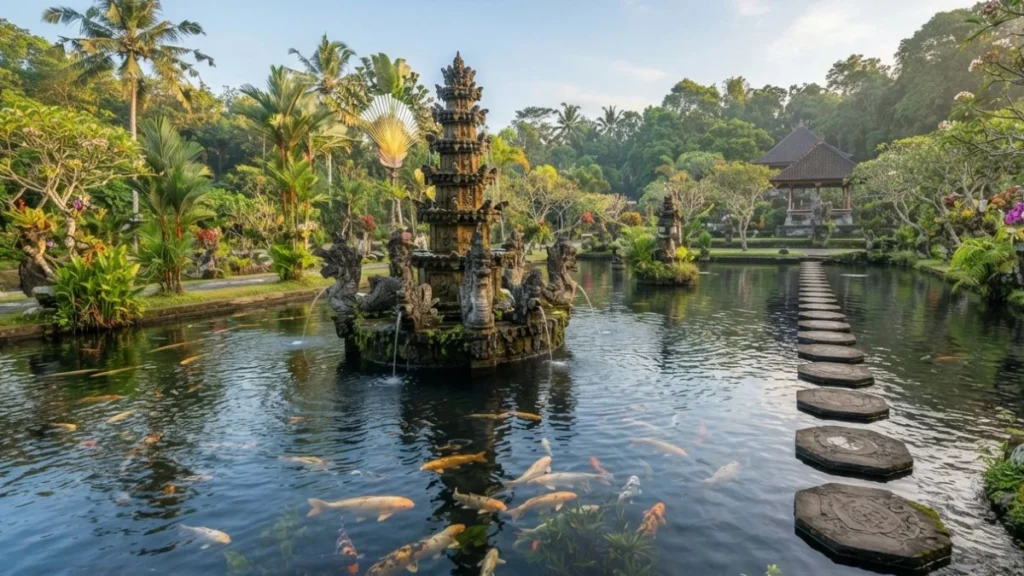
Tirta Gangga shows up in nearly every East Bali itinerary photo dump — a stepping-stone path across a koi-filled pond, a tiered stone fountain rising like a temple roof, manicured gardens that look considerably grander than the modest entrance fee suggests. Despite the name, this isn’t a temple at all; it’s a former royal water garden, built in the 1940s by the King of Karangasem, and unlike Bali’s sacred sites, no sarong or prayer etiquette is required here.
This guide covers the layout, realistic pricing (which varies more than you’d expect across sources), and how to fold it into a broader East Bali day.
Quick Facts
- Location: Ababi village, Karangasem Regency, East Bali, roughly 1.5–2 hours from Ubud (about 50 km)
- Distance from nearby bases: around 30 minutes from Amed, roughly 45 minutes from Candidasa
- Entrance fee: reported inconsistently across sources, roughly IDR 50,000–90,000 for adults, with lower rates for children and some sources citing senior discounts
- Extras: swimming in the pools (~IDR 10,000), a traditional boat ride (~IDR 20,000), fish food (~IDR 5,000), parking (IDR 5,000–10,000)
- Hours: daily, 6am–7pm
- Dress code: casual and respectful — no sarong required, since this isn’t an active place of worship
A Royal Garden, Not a Palace Building
Despite the name, don’t expect a grand indoor palace with halls and chambers — Tirta Gangga is better understood as a layered, landscaped garden complex: pools, fountains, stone statues, and pathways spread across roughly three distinct levels. The name translates to “Water of the Ganges,” referencing the sacred Indian river and reflecting the site’s spiritual undertones even though it functions today more as a scenic garden than a place of active worship. Built by the King of Karangasem in the 1940s, it originally served as a royal resting place and retreat, with the pools believed at the time to carry genuine healing properties tied to their spring-fed source.
The lowest level is where most visitors spend their time — manicured gardens, the largest koi ponds, intricately carved statues, and the site’s signature feature, a tiered stone water tower resembling a temple roof, rising close to ten metres above the main pond. Warrior statues line the main entrance, creating a formal, welcoming approach before you reach the gardens proper. The upper levels, quieter and less visited, offer a calmer version of the same landscaped style if you want to escape the crowd gathered around the main pond.
The Stepping Stones: Worth the Wait, Sometimes Literally
The most photographed feature here is the stepping-stone path crossing directly over a pond dense with genuinely large koi fish — walk across slowly, and it’s easy to see why this specific spot anchors nearly every Tirta Gangga photo online. Be prepared to wait your turn during busier hours, since this narrow path can only accommodate a few people at once, and it’s the one part of the visit where a large tour group ahead of you can meaningfully slow things down. Feeding the koi (fish food sold on-site for a small fee) is a popular add-on, though more than one visitor has noted the fish look well-fed enough already given how many hands are tossing pellets their way throughout the day.
Swimming, If You Want To
Unlike most East Bali attractions, Tirta Gangga offers an actual swimming option — spring-fed pools you can pay a small additional fee to use, provided you bring your own swimwear and towel. It’s a genuinely pleasant way to extend your visit beyond a quick photo stop, particularly on a hot day, though it’s worth checking whether any ceremony is taking place first, since swimming isn’t appropriate during active religious use of the pools.
Best Time to Visit
Arrive before 9am if avoiding crowds matters to you — tour groups build steadily through the late morning, and the stepping stones specifically get congested fast once several groups arrive at once. Late afternoon, closer to golden hour, offers a second good window with warmer light for photos, trading slightly higher heat for better crowds than midday. There are no ATMs nearby, so bring enough cash for entrance, any extras, and the on-site cafe or nearby restaurants before you arrive.
Pairing With the Rest of East Bali
Tirta Gangga sits within easy reach of several other East Bali highlights, and most visitors treat it as one stop in a longer day rather than a standalone destination. It’s commonly combined with Lempuyang Temple’s Gates of Heaven photo spot, Taman Ujung Water Palace (a separate, larger royal water complex nearby with a similar history), or a broader loop through Amed and Candidasa. Given the driving distances involved from Ubud, building Tirta Gangga into an East Bali day rather than a single dedicated round trip makes the most of the journey out.
FAQ
How much does it cost to enter Tirta Gangga?
Reported prices vary by source, roughly IDR 50,000–90,000 for adults, with lower child pricing and some sources citing senior discounts. Confirm current pricing at the entrance.
Do I need a sarong to visit Tirta Gangga?
No. Unlike Bali’s active temples, Tirta Gangga is a former royal garden rather than a place of worship, so casual, respectful clothing is fine.
Can you swim at Tirta Gangga?
Yes, for a small additional fee, in the spring-fed pools. Bring your own swimwear and towel. Swimming isn’t appropriate during active ceremonies at the site.
How far is Tirta Gangga from Ubud?
Roughly 1.5 to 2 hours by car, around 50 km, through scenic rice terrace and village roads.
What else pairs well with a Tirta Gangga visit?
Lempuyang Temple, Taman Ujung Water Palace, and the broader Amed and Candidasa area are all within reasonable driving distance and commonly combined into the same East Bali day trip.
Final Thought
Tirta Gangga delivers close to what the photos promise — koi ponds, stepping stones, and a genuinely striking water tower, all without the sarong, crowds, or pressure tactics that come with some of East Bali’s more sacred sites. Go early for the calmest version of it, and fold it into a broader loop rather than treating it as a single-purpose trip. For the rest of what East Bali offers on the same route, our Lempuyang Temple guide and Amed travel guide cover what naturally pairs with a Tirta Gangga stop.