
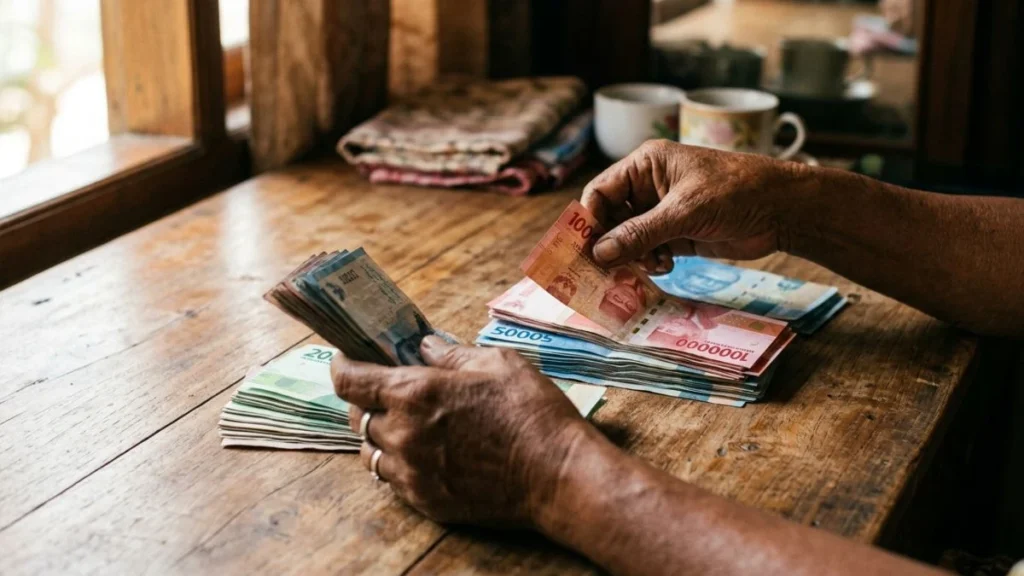
Bali scams tourists should know: The most common scams in Bali are not elaborate schemes — they are predictable, situational, and almost entirely avoidable once you know what to look for. Most involve cash handling, transport, and the airport arrival window.
These are the bali scams tourists should know before landing — not to create anxiety about visiting, but because the difference between a stressful first day and a smooth one is often a single piece of information known in advance. Bali is a genuinely safe destination. The Balinese are, by any reasonable measure, among the most hospitable people on the planet. What exists here is a small number of predictable situations where visitors unfamiliar with local pricing, systems, and customs can be taken advantage of — usually within the first 48 hours of arrival.
Most of these situations are not violent or aggressive. They are opportunistic. And they are almost entirely concentrated in the south Bali tourist corridor: the airport, Kuta, Legian, Seminyak, and the major temple sites. Slow travellers based in Ubud, Sidemen, or Amed will encounter most of these far less frequently than visitors staying in Seminyak or near Kuta. For a broader picture of where to base yourself to minimise tourist-trap exposure while maximising authentic experience, the best areas to stay in Bali for slow travel covers the trade-offs by region.
The Money Changer Sleight of Hand
This is the most financially costly common scam in Bali and the one most worth understanding before you arrive. The setup: a money changer displays a rate significantly better than the banks or ATMs. You hand over your currency. The counter staff counts out the rupiah — then, through some combination of folded notes, dropped bills, switched denominations, or a rigged calculator — hands you back significantly less than the displayed rate should have yielded.
The technique varies but the outcome is consistent: you walk out with 20–40% less than you should have received. The speed of the transaction and the unfamiliarity of Indonesian currency denominations (which range from IDR 1,000 to IDR 100,000 notes) makes it easy to miss.
How to avoid it: Use ATMs attached to actual bank branches — BCA, BNI, Mandiri, CIMB Niaga. Avoid standalone ATMs in mini-marts, alleyways, or unmarked kiosks. If you prefer cash exchange, use PT Central Kuta or Dirgahayu — the most consistently reviewed licensed money changers in the south. Count every note yourself, do not let the counter staff recount after you have finished, and be the last person to touch the money before leaving. Any changer who rushes the counting or tries to distract you mid-count is running the sleight-of-hand version.
Fake Tourist Tax Websites
Covered in more detail in the Bali tourist tax guide, but worth repeating here: scam websites mimicking the official government payment portal have charged visitors two to three times the real IDR 150,000 levy. Some advertise on Google and Instagram, appearing above the official site in search results.
The only legitimate platform is the official Bali tourist levy portal — Indonesia’s .go.id domain is the official government identifier. Any other website accepting payment for the Bali tourist tax is unauthorised. Pay before you fly, use only the official portal, and save the QR code to your phone.
Airport Transport
The moment you exit Ngurah Rai airport arrivals, you enter the highest density of transport scams on the island. Unlicensed drivers position themselves at the exit and quote prices that can be three to five times the going rate, particularly to passengers who are tired, unfamiliar with rupiah, and have not pre-arranged transport.
What actually works:
- Book a private transfer in advance through your accommodation or a platform like Klook — the price is fixed and the driver is waiting with your name.
- Use Grab or Gojek from the official ride-hailing pickup point inside the airport. Both apps show the fare before you confirm. The pickup area is signposted inside the terminal.
- If you use a metered taxi at the airport, use only Blue Bird (light blue with the bird logo). Insist the meter is running before you close the door.
Do not accept help from anyone who approaches you in the arrivals hall or outside the terminal doors before you reach the official transport zone.
The Motorbike Damage Scam
You rent a scooter, return it at the end of the day, and the rental operator points to a scratch or dent they claim you caused — and demands a payment significantly larger than your deposit to cover the “damage.”
The scratch was there before you rented it.
Prevention is simple: Before you ride away, photograph every existing scratch, dent, and damage on the scooter — front, back, both sides, and the undercarriage. Do this with the rental operator present. Send the photos to yourself immediately so they are timestamped. If a damage dispute arises on return, you have documented proof of the pre-existing condition.
Rent from operators with consistent recent reviews. Avoid the cheapest option on an unmarked side street. The IDR 20,000 per day saving is not worth the IDR 500,000 damage claim on return.
Mandatory Donation at Temples
You approach a temple and someone — appearing official, sometimes wearing a sash or carrying a clipboard — tells you a donation is required before you can enter, quotes a specific amount, and gestures toward a box or guestbook.
This person is not temple staff. The donation is not mandatory.
Major Balinese temples have official ticketed entry, paid at a clearly marked counter with printed receipts. The amounts are fixed and posted publicly. At Tanah Lot, Uluwatu, Besakih, and Tirta Empul, there is no legitimate “donation before entry” system operated by individuals standing outside the gate.
What to do: Walk past, proceed to the official ticket counter, pay the listed fee, and ignore anyone who pursues the conversation. A polite “Tidak, terima kasih” (no, thank you) repeated calmly and consistently is usually sufficient.
Free Guide at the Temple Entrance
A variation on the above: someone offers to show you around the temple for free. The tour is occasionally genuinely informative. It is never free. At the end — sometimes after an hour — they present a bill or insist on a “donation” that is, in effect, a fee. The amount is rarely stated upfront and is usually higher than what a legitimate licensed guide would charge.
If you want a guide at a major temple, book one through your accommodation, a licensed tour operator, or directly through the temple’s official visitor services. Agree on the fee in advance. In writing if possible.
Commission Drivers
Your driver — friendly, helpful, apparently trustworthy — suggests a restaurant, a shop, or a tour operator. The recommendation is genuine in spirit but financially motivated: the driver receives a commission from the establishment when they bring you in. The price you pay at the restaurant or shop reflects that commission.
This is not unique to Bali and is not illegal. It is, however, worth understanding. The restaurants and shops with the most drivers recommending them are not necessarily the best or the most fairly priced — they are the ones paying the highest commission rates.
How to handle it: Use your driver’s knowledge for navigation, timing, and local conditions. For food and shopping, trust your own research. Ask locals at your accommodation rather than drivers for restaurant recommendations, since accommodation staff typically have less financial incentive to steer you toward commission-paying establishments.
ATM Card Skimming
ATM skimming — the installation of a device that copies card data — exists in Bali as it does across Southeast Asia. The risk is concentrated in standalone ATMs in tourist areas, particularly in Kuta and Legian, and in machines that are not directly attached to a bank branch.
Use ATMs inside bank branches during staffed hours. Cover your hand when entering your PIN regardless of circumstances. Consider using a Wise or Revolut card for travel — both have strong fraud protection and limit international ATM fees.
Spiked Drinks
Less common than the scams above but worth stating clearly: drinks spiked with drugs or excessive alcohol exist in Bali’s nightlife zones, primarily Seminyak, Legian, and Kuta. The risk is highest at unlicensed bars and street-side drink vendors.
Additionally, some cheap cocktails in Bali’s budget nightlife establishments have been found to contain arak — locally distilled alcohol — substituted for branded spirits. At responsible concentrations, arak is safe. At high concentrations in unregulated settings, it has caused serious medical incidents.
Practical position: Drink at establishments with clearly visible licensed operations. Watch your drink being prepared. Do not accept drinks from strangers. If you are in a group, do not leave drinks unattended.
Currency Exchange on the Street
A variant of the money changer scam that operates in public spaces rather than at a kiosk: a friendly stranger approaches and asks to see your home currency, claiming curiosity about foreign notes. An accomplice may distract you. Notes are swapped, stolen, or replaced with counterfeits during the exchange.
The rule here is simple: do not let strangers handle your money under any circumstances, regardless of the framing.
A Practical Summary
| Scam | Where it happens | How to avoid |
|---|---|---|
| Money changer shortchange | South Bali tourist areas | Use bank ATMs or licensed changers; count yourself |
| Fake tourist tax websites | Online, before arrival | Only use lovebali.baliprov.go.id |
| Airport transport overcharge | Ngurah Rai arrivals | Pre-book or use Grab/Gojek from official pickup zone |
| Motorbike damage claim | Scooter rental shops | Photograph all existing damage before riding |
| Fake temple donation | Temple entrances | Pay only at official ticketed counters |
| Free guide fee | Major temple sites | Agree price upfront or book through accommodation |
| Commission drivers | Throughout south Bali | Use driver for navigation; research food/shops independently |
| ATM skimming | Standalone ATMs | Use bank branch ATMs only; cover PIN |
| Spiked drinks | Nightlife zones | Licensed venues, watch your drink |
| Street currency exchange | Kuta, Legian | Never let strangers handle your money |
The honest framing for all of this: the vast majority of Bali interactions with locals are straightforward, warm, and transactionally fair. The situations listed above are predictable and concentrated in specific contexts — mostly cash handling, transport, and the first 48 hours of arrival when you are most disoriented. Knowing what to expect does not require suspicion of everyone you meet. It requires recognising the specific situations where a pause, a question, or a refusal is the right response.
For the practical side of getting around Bali independently without falling into the transport traps described above, the Bali off-the-beaten-path travel circuit covers navigation strategies that avoid most of the high-scam-density tourist zones by design.
FAQ
Is Bali safe for tourists? Yes. Bali is consistently rated among the safer tourist destinations in Southeast Asia. Violent crime targeting tourists is rare. The scams that exist are almost entirely financial and opportunistic rather than dangerous — and almost entirely avoidable with basic awareness.
Where do most scams happen in Bali? The highest concentration is in south Bali’s tourist corridor — Kuta, Legian, Seminyak, and the airport arrival zone. Major temple sites are the next most common location, particularly for the fake donation and free guide scenarios. Areas like Ubud, Sidemen, Amed, and Munduk have significantly lower scam exposure.
What should I do if I think I’ve been scammed? For significant financial fraud, report to the Bali Tourism Police (Polisi Pariwisata), who have English-speaking officers specifically for tourist complaints. For minor overcharges, decide whether the time and stress of pursuing it is worth the amount involved — often it is not. Document everything and report patterns to platforms like TripAdvisor or Google Reviews so future visitors benefit from the information.
Is bargaining expected in Bali markets? Yes, at markets and with street vendors, bargaining is standard. Starting at 40–50% of the asking price is typical. Fixed-price shops and restaurants do not expect negotiation. Restaurants and cafés with printed menus should be charged at the listed price.
How do I tell a licensed money changer from an unlicensed one? Licensed money changers display their Bank Indonesia authorisation certificate visibly. PT Central Kuta is the most consistently recommended licensed operator in south Bali. Any changer without visible licensing, operating from inside a souvenir shop or an alley, should be avoided regardless of the displayed rate.